

Maddy summaryHB 4248 creates a 50% tax credit for Michigan taxpayers who donate to community foundation endowment funds, effective for tax years beginning January 1, 2025. Individual taxpayers can claim up to $100 (or $200 for joint returns), while estates/trusts get a credit capped at 10% of their tax liability (max $5,000). To qualify, donations must be to certified community foundations (requiring at least $1 million in assets) with a gift acknowledgment, and contributions cannot be deducted for federal tax purposes. The Michigan Department of Treasury must annually report total credits claimed to tax committees.
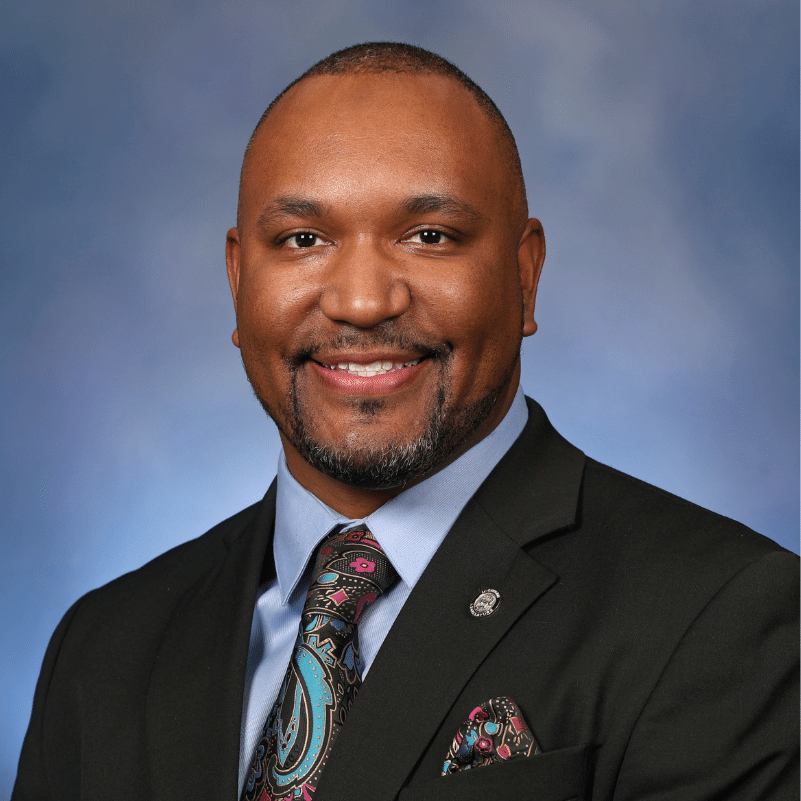
Rep. Jimmie Wilson
Sponsored bills
Maddy summaryThis bill requires Michigan employers to pay employees for any accrued but unused paid vacation leave when employment ends. It applies to workers who have earned vacation time but didn't use it before leaving a job, such as through resignation or termination. Employers must pay this out unless the separation was a furlough (a temporary shutdown under specific conditions) or the employer provided unlimited vacation leave. The law will take effect on January 1, 2027.
Maddy summaryHB 4250, the "Public Library Freedom to Read Act," requires Michigan public libraries (excluding school and district libraries) to adopt policies governing material selection and removal. It mandates that libraries establish clear standards for adding or removing books, DVDs, and other materials, and creates a formal process for residents to request reconsideration of materials. Crucially, the law prohibits libraries from removing materials based on an author’s protected characteristics (like race or religion) or the material’s viewpoint, allowing removal only if material is legally obscene or unprotected by the First Amendment. Libraries must adopt compliant policies within 90 days, and residents or the attorney general can seek court orders to enforce the law or restore removed materials. This directly affects public libraries and residents seeking to challenge library collections.
Maddy summaryHB 4264, the "Job Applicant Credit Privacy Act," bans most employers in Michigan from using an applicant's credit history to make hiring decisions or asking about it during the recruitment process. It directly affects all job seekers and employers, except for specific roles in banking (state/nationally chartered banks, savings institutions, credit unions), licensed financial services, or casinos. The bill also prohibits employers from retaliating against applicants who oppose violations or participate in investigations, and bans any requirement for applicants to waive their rights under this law. Violators face civil lawsuits allowing for damages, injunctions, or attorney fees.
Maddy summaryHB 4251, the "District Library Freedom to Read Act," requires Michigan district libraries to establish clear policies for selecting and removing materials from their collections. It prohibits libraries from removing books or media based on protected characteristics (like race, religion, or viewpoint) or the material's subject matter, except if a court deems it obscene. The bill mandates that libraries adopt compliant policies within 90 days, including procedures for residents to request reconsideration (with requirements like verifying they’ve read the material) and restrictions on how often the same material can be challenged. Violations can be addressed through legal action by the attorney general or residents. This directly affects public district libraries under Michigan law, excluding school or special libraries.
Maddy summaryThis resolution directs the Clerk of the House to present nine specific bills - passed by both legislative chambers in December 2024 and "enrolled" (formally prepared for the Governor) - to the Governor. It follows a court ruling (February 2025) that confirmed Michigan’s Constitution requires all passed bills to be presented to the Governor within 14 days, rejecting the House’s prior refusal to act. The resolution overrides a previous House attempt (Resolution 41) to delay this process and mandates immediate compliance with the court’s order. It affects the House Clerk, Governor, and the nine bills’ legislative timeline, ensuring they can proceed toward becoming law.
Maddy summaryHB 4206 modifies Michigan's deer hunting regulations by allowing hunters with a valid base license to obtain two antlerless deer permits annually at no cost, effective March 1, 2014. The bill also establishes a $5 nonrefundable application fee for additional antlerless permits and requires kill tags (with license numbers) to be issued with each permit. It permits residents to purchase a second deer license (without senior discounts) and nonresidents to buy additional licenses for $170, with department-designated hunting zones. This directly affects Michigan hunters holding base licenses, reducing their cost for antlerless permits while maintaining standard licensing fees for regular licenses.
Maddy summaryHB 4194 removes the requirement for non-U.S. citizens to prove legal presence in Michigan to obtain a state identification card. This change directly affects non-citizen residents who currently need to submit immigration documents to apply for a state ID. The bill amends Michigan law to eliminate this verification step, allowing eligible non-citizens to access state IDs without proving immigration status. The policy change applies only to state ID cards, not driver's licenses or other documents.
Maddy summaryHB 4196 amends Michigan's Enhanced Driver License and ID Card Act (MCL 28.305) to update how personal information is handled for applicants. It specifies that facial images and signatures collected for these IDs may only be shared with law enforcement agencies, other states (as required by federal law), or with an individual's written consent, while prohibiting disclosure of Social Security numbers on the card itself. The bill also clarifies retention rules for facial images (1 year unless fraud is suspected) and strengthens privacy protections by restricting disclosure of sensitive documents. This directly affects Michigan residents applying for enhanced driver licenses or official state ID cards, ensuring their biometric data and personal information are used only under defined, limited circumstances.
Maddy summaryHB 4174 modifies Michigan's juvenile justice code to establish a presumption that self-incriminating statements made by juveniles during police interrogations are admissible in court if obtained through deceptive practices (e.g., false promises of leniency or misleading statements about evidence). The bill directly affects juveniles under 18 facing delinquency proceedings and law enforcement officers who may use deceptive tactics during interrogations. Keyly, it amends the Probate Code to add Section 17e, shifting the standard so such statements are presumed admissible unless the court finds the deception was "unreasonably coercive." This changes current practice by making it harder to exclude statements obtained through deception, impacting how juvenile confessions are handled in court.