

Maddy summaryThis bill allows local police departments in Michigan to request reimbursement from the state police for expenses incurred when responding to incidents on state-owned freeways and highways. The reimbursement is only available if the state police did not have officers available to respond, explicitly requested the local agency to respond, and the local department created an official report of the incident. Local agencies must submit reimbursement requests quarterly, and the state police director will set annual reimbursement rates and report on the number of reimbursed responses by county and local government type.
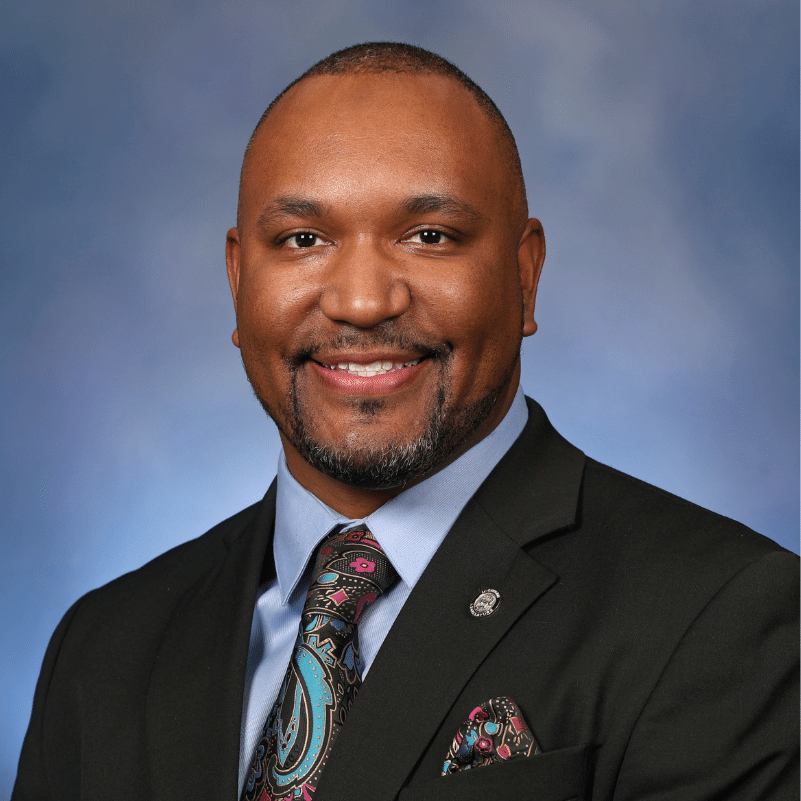
Rep. Jimmie Wilson
Sponsored bills
Maddy summaryThis bill proposes a constitutional amendment to change how members of the Michigan Public Service Commission are elected and set their salaries. It would require three commissioners to be elected for four-year terms and two for two-year terms starting in the 2028 election, with all future terms being four years long. The amendment also establishes that no one can serve more than 12 years total on the commission and creates a State Officers Compensation Commission to determine salaries for the commission members, subject to legislative approval. These changes would affect the structure and compensation of the Public Service Commission, which regulates utilities and other public services in Michigan.
Maddy summaryThis bill proposes amending the Michigan state constitution to replace the currently appointed Public Service Commission with a nonpartisan, elected commission. The new commission would begin operating on January 1, 2029, and would have the same powers and jurisdiction as the existing body. Members would be nominated by political party conventions and must meet eligibility requirements including U.S. citizenship, state residency, and no financial interest in public utilities. The amendment would be submitted to Michigan voters for approval at the next general election.
Maddy summaryThis bill requires nursing homes in Michigan to ensure all unlicensed staff members complete a fall prevention training program. The Michigan Department of Health and Human Services will develop and manage this training program in consultation with relevant health agencies. The law applies specifically to unlicensed personnel working in nursing home facilities, mandating they finish the required training. This change aims to standardize fall prevention education for non-licensed staff across the state's nursing homes.
Maddy summaryThis bill establishes a new process for electing members to the Michigan Public Service Commission, affecting current and future commissioners. It creates new eligibility requirements, including a 12-year term limit and restrictions on financial interests in public utilities, while also defining specific grounds for removal from office. The legislation outlines a nomination system where political parties select candidates at state conventions, with nominees appearing on nonpartisan ballots and a staggered election schedule beginning in 2028.
Maddy summaryThis bill requires employers in Michigan to pay employees their regular hourly wage for time spent participating in mandatory fall prevention training programs. The law applies to any employer who must ensure their staff complete the fall prevention training established under state public health regulations. By compensating workers for this required training time, the bill aims to remove financial barriers that might prevent employees from completing safety education. The legislation creates a new legal requirement for wage payment specifically tied to fall prevention training participation.
Maddy summaryThis bill proposes replacing the Michigan Public Service Commission with a five-member elected body starting January 1, 2029, shifting member selection from gubernatorial appointment to public election. The legislation establishes eligibility requirements for commissioners, including residency and conflict-of-interest rules that prohibit employment by regulated utilities or political party roles during and after service. It also outlines procedures for filling vacancies, selecting a chairperson, and determining compensation, with the current commission structure remaining in place until the transition date. The bill requires passage of a companion bill to take effect and is currently in committee review.
Maddy summaryThis bill requires United States Immigration and Customs Enforcement agents working in Michigan to activate body-worn cameras when interacting with the public, except in private places where individuals expect privacy. The law mandates that these cameras record audio and video of the agents' activities during such interactions and establishes a civil infraction with a fine of up to $500 for non-compliance. Additionally, the bill specifies that agents who fail to pay the imposed fine would be deemed ineligible to work in the state until the debt is settled. The legislation applies specifically to federal ICE agents operating within Michigan's borders and creates a new regulatory framework for their use of recording technology.
Maddy summaryHB 5586 creates a new "Office of Community Violence Intervention and Prevention Services" within Michigan's Department of Health and Human Services. The office will administer grants to community-based nonprofits, track violence trends, set statewide goals to reduce shootings and homicides, and coordinate all state violence prevention efforts. It directly affects local governments, community organizations receiving grants, and state agencies managing the program. The bill establishes concrete requirements for data collection, technical assistance, and annual reporting to measure progress toward reducing community violence.
Maddy summaryHB 5580 prohibits Michigan insurers from considering a dog's breed when making decisions about home insurance. It bans using breed to deny coverage, cancel policies, increase premiums, or add exclusions for residential properties like houses, apartments, or condos. Insurers may still use other underwriting factors unrelated to breed. The law takes effect January 1, 2027, and applies to residential property liability insurance policies.