

Maddy summaryThis bill amends Michigan's enhanced driver license and identification card laws to allow individuals to voluntarily include a "communication impediment" designation on their ID. The designation is intended for people with conditions like deafness or autism that may hinder communication with police officers. Under the new rules, law enforcement personnel with authorized access to a specific state network would be able to view this designation. The bill also clarifies privacy protections, ensuring that Social Security numbers and other personal data are not printed on the front of the card. Additionally, it establishes procedures for the Secretary of State to cancel or revoke this designation if the underlying health condition no longer exists, following a notice and hearing process for the cardholder.
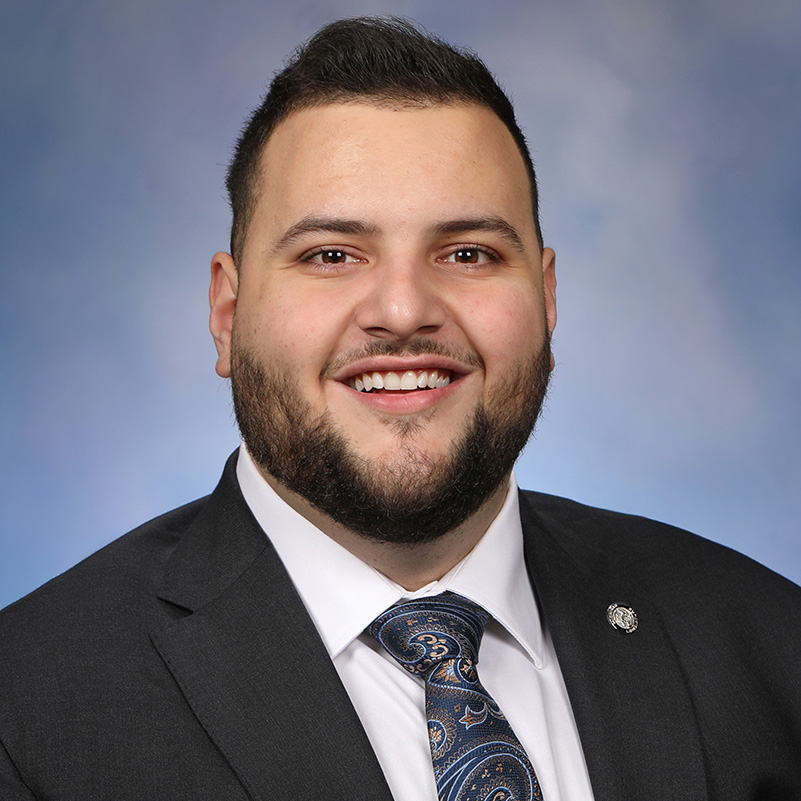
Rep. Alabas Farhat
Sponsored bills
Maddy summaryHB 5949 creates a new program allowing vehicle owners in Michigan to request a free 'communication impediment' decal for their windshield or license plate. This decal signals that the driver or a household member has a condition, such as deafness or autism, that might make communicating with police during a traffic stop difficult. To qualify, owners must submit a certification from a licensed medical professional confirming the communication barrier. The bill also updates existing vehicle registration laws to include a digital designation in state records for these individuals, while establishing penalties for fraud and procedures for revoking the designation if abuse is suspected.
Maddy summaryThis resolution declares May 2026 as Brain Tumor Awareness Month in Michigan to highlight the severity of brain tumors and the state's role in research and treatment. The bill does not change laws or allocate funding but serves as a symbolic gesture to raise public awareness about the disease's impact on patients and families. It recognizes Michigan's medical centers and the urgent need for better treatments given the limited number of approved therapies available.
Maddy summaryThis bill, titled the "Homes Are for People Act," prohibits hedge funds from purchasing or owning single-family homes in Michigan. It defines a hedge fund as an organization managing at least $50 million in assets and a single-family home as a property with one to four units that is not a vacant foreclosure or a government-funded project. While new purchases by these funds are banned, the law allows hedge funds to keep any single-family homes they already own when the act takes effect. Any property acquired in violation of this rule would be subject to legal forfeiture.
Maddy summaryThis bill modifies Michigan's laws regarding the seizure and forfeiture of property connected to criminal activities. It directly affects property owners, creditors, and law enforcement agencies by clarifying which assets can be taken by the government. The legislation updates rules on what constitutes forfeitable property, specifically protecting primary residences of spouses and children unless they knew about and agreed to the crime, while also detailing protections for homeowners with unpaid land contracts and security interests. Additionally, it sets limits on how much money can be recovered from substituted proceeds, ensuring the government only takes the value of the original crime proceeds plus specific legal costs. The bill will only become effective if two related companion bills are also passed by the legislature.
Maddy summaryThis bill updates Michigan's legal definitions regarding property forfeiture by specifying which crimes allow the government to seize assets. It directly affects individuals and businesses involved in offenses related to environmental protection, healthcare fraud, antitrust violations, securities law, and various criminal acts. The key mechanism is expanding the list of qualifying crimes to include specific violations of environmental and financial regulations, while also clarifying terms like "instrumentality," "proceeds," and "willful blindness" to ensure consistent application in court. By tying this legislation to companion bills, the measure ensures that these new definitions only take effect if the related procedural bills are also passed.
Maddy summaryThis resolution asks Michigan's representatives in Congress to support H.R. 7459, a bill designed to create a federal Coastal Storm Risk Management Trust Fund. The proposed fund would provide permanent money for coastal projects, such as beach nourishment, to help manage erosion along the Great Lakes. By encouraging the delegation to back this legislation, the bill aims to ensure a steady source of funding for protecting shorelines and public property. It does not directly allocate money itself but serves as a formal request to influence the congressional delegation's stance on the funding bill.
Maddy summaryThis bill updates Michigan's medical assistance program to streamline how people sign up and renew their coverage. It requires the state to use a faster enrollment method for minors and adults under 21, allowing the use of existing data from food and cash assistance programs to determine eligibility. The legislation also permits the state to automatically renew coverage for eligible individuals and gives the department authority to expand these data-driven methods to more people in the future. By relying on electronic records, the bill aims to reduce the paperwork and time needed for both initial applications and periodic eligibility checks.
Maddy summaryHB 5302 creates a $5 million annual competitive grant program for recovery community organizations in Michigan to expand services for people seeking long-term recovery from substance use disorders. The bill requires the state to fund at least 19 certified local recovery groups and qualifying nonprofit associations, with each grant capped at $250,000 (or 50% of an organization’s operating budget). Priority goes to groups offering specific services like recovery navigation, workplace education, and wellness activities (e.g., support groups, nutrition programs). Grantees must report annually on fund usage, participant metrics, and budget details starting in 2027, with the program set to expire on October 1, 2031.
Maddy summaryThis bill proposes adding a new section to the Michigan state constitution to guarantee every person an inherent right to a clean environment, including clean water, air, and soil. It establishes that the state and all its agencies must act as trustees for natural resources, which are declared the common property of all people, including future generations. The amendment would require the government to protect these rights equitably for everyone regardless of race, ethnicity, socioeconomic status, or location, and it allows citizens to directly enforce these rights in court. If approved by voters, this change would legally bind the state to conserve and maintain natural resources while preventing any actions that infringe upon environmental rights.