

Maddy summaryThis bill requires electric utilities in Michigan to include project labor agreements or collective bargaining agreements for all construction and maintenance work on qualified data centers. A project labor agreement is a pre-hire contract that sets standard employment terms, prevents strikes, and ensures labor-management cooperation for specific construction projects. The measure applies to facilities designed to house data center equipment for storing and processing information. The legislation will only take effect if several related bills are also passed into law.
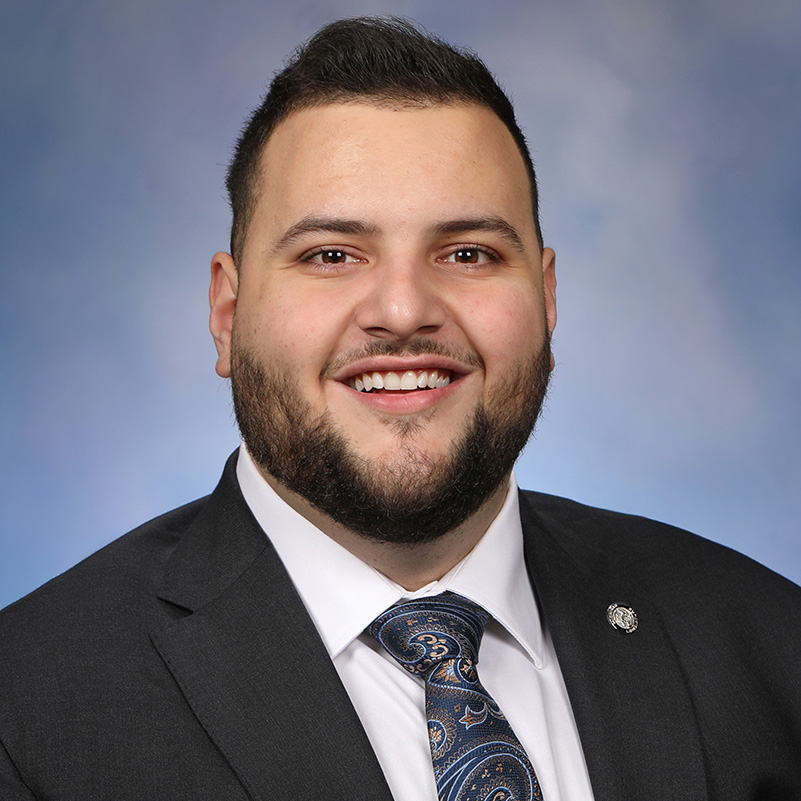
Rep. Alabas Farhat
Sponsored bills
Maddy summaryThis House resolution urges the Trump Administration to stop using Naval Station Guantánamo Bay for detaining migrants, including any future surges from Cuba. It calls for the immediate suspension of the migrant detention program and the permanent closure of the facility, citing concerns over past abuses, legal challenges regarding due process, and the high financial cost of the operation. Additionally, the bill asks the federal government to lift economic sanctions and a fuel blockade against Cuba that the text claims have worsened the island's humanitarian crisis and driven mass emigration. Finally, it requests that the administration abandon any plans for military action against Cuba to prevent further instability and suffering.
Maddy summaryThis bill requires the state treasurer to create a monthly report tracking whether the federal government owes Michigan money due to ignored court orders and calculating any future payments Michigan must make to the federal government. The report will detail specific financial items such as federal taxes owed by state employers, debt offsets, and grant repayments, and it must be prepared in consultation with the state budget director. Additionally, the bill mandates that the state treasurer withhold federal payments if the amounts owed by the federal government exceed the amounts Michigan is required to pay. This legislation is currently tied to a companion bill, meaning it will not take effect unless both are passed by the legislature.
Maddy summaryThis bill requires the state treasurer to calculate and report specific monthly funds to various legislative committees and state budget offices. The funds in question are those designated for withholding from payments made to the federal government, as previously outlined in the state's management and budget act. The legislation does not take effect unless it is passed together with a companion bill, HB 6122, which addresses the actual withholding of those federal payments. Essentially, this measure establishes a reporting process to ensure that the legislature is informed about the amounts the state intends to withhold from federal transfers.
Maddy summaryThis bill proposes to expand Michigan's medical assistance program to cover transportation services for individuals with behavioral health needs. It requires the state department to pay for these transport costs for eligible people and mandates that transport providers follow existing mental health code regulations. The legislation defines behavioral health transport as travel to and from treatment facilities and specifies that only approved agencies can provide this service. Importantly, the bill will not become law unless it is passed together with a companion bill, HB 5943.
Maddy summaryThis bill establishes a new licensing framework in Michigan for agencies that provide specialized transportation services for individuals experiencing mental health crises. It creates specific definitions for these services, which are designed to move medically stable people who do not require physical or chemical restraints to the nearest facility capable of meeting their needs. The legislation mandates that licensed agencies operate under medical supervision, maintain detailed logs of every trip, and implement strict safety and hygiene protocols for their vehicles and staff. Additionally, the bill requires agencies to submit annual reports to the legislature detailing the number of transports, police interventions, and any investigations into staff misconduct.
Maddy summaryHB 5120 eliminates fees for serving documents in personal protection order (PPO) cases. It amends Michigan's civil procedure law to prohibit charging fees for serving process under the Extreme Risk Protection Order Act or for any order issued in a PPO case, including petitions, orders, and related documents. This directly affects PPO petitioners (who no longer pay service fees) and process servers (who cannot charge for these specific services). The bill also clarifies that law enforcement may charge a $50 flat fee from a dedicated fund for multiple PPO-related documents served at once, but not per document. The change aims to remove financial barriers for individuals seeking protection orders.
Maddy summaryHB 5121 eliminates the cost for serving personal protection orders (PPOs) in Michigan. It directly affects individuals seeking PPOs to protect against harassment, stalking, or sexual assault by removing the requirement that petitioners pay for service of the order on the respondent. The bill amends Michigan’s court procedures to eliminate this fee, making it easier for petitioners - especially those with limited resources - to obtain and enforce PPOs without upfront costs. This change applies to all PPOs filed under the specified sections of Michigan law, streamlining the process for victims.
Maddy summaryThis bill establishes a new Office of American Freedmen Affairs within the Michigan Department of Civil Rights to support descendants of individuals emancipated from slavery. The office would be led by a five-year director appointed by the governor and tasked with researching disparities, advising state leaders on policies, and improving access to resources for this community. Key duties include developing economic opportunities, assisting with genealogy and historical research, and submitting annual reports on the social and economic conditions of American Freedmen in the state.
Maddy summaryThis bill creates the American Freedmen reparations commission within the Michigan Department of Treasury to study and propose reparations for individuals with ancestors who were enslaved and denied rights due to the Dred Scott decision. The commission will consist of nine members appointed by the governor, legislative leaders, and grassroots organizations, tasked with gathering historical evidence of slavery and discrimination in the state. Its primary duties include analyzing the lasting effects of slavery, recommending data collection methods to track disparities, and submitting a report with findings and recommendations to the legislature within 18 months. The legislation defines reparations broadly to include monetary payments, programs to close the racial wealth gap, and the creation of educational institutions similar to land-grant colleges.