

Maddy summaryThis bill updates Michigan's sentencing guidelines for firearms-related crimes by modernizing references to existing laws. It directly affects individuals charged with firearm offenses and legal professionals who apply sentencing rules. The legislation amends specific sections of the state's criminal procedure code to ensure current legal citations are accurate and consistent. No new penalties or restrictions are introduced; the changes are purely administrative to align with prior legislative updates.
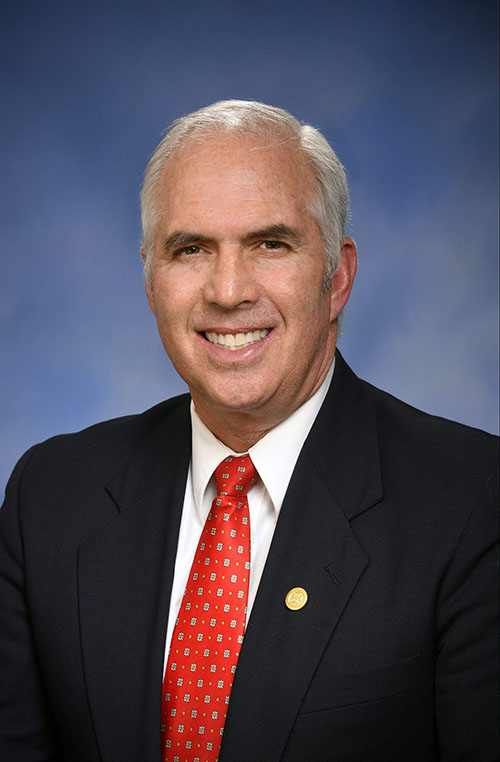
Rep. Jim DeSana
Sponsored bills
Maddy summaryThis bill updates Michigan's firearm licensing laws by modernizing references to other statutes and clarifying requirements for obtaining a license to purchase, carry, possess, or transport firearms. It directly affects individuals seeking firearm licenses, law enforcement agencies issuing those licenses, and the Department of State Police administering the program. The key provision requires licensing authorities to issue licenses to qualified applicants without unnecessary delay, while specifying that applicants must meet criteria such as being at least 18 or 21 years old, being a legal Michigan resident, and not being subject to certain protective orders or mental health restrictions. The bill also maintains existing rules prohibiting unlicensed firearm transactions and outlines procedures for licensing military personnel returning to Michigan.
Maddy summaryThis bill updates the Natural Resources and Environmental Protection Act to clarify firearm transport rules for individuals in areas frequented by wild animals. It maintains the requirement that hunters generally need a license to carry firearms in wildlife areas but explicitly allows licensed concealed pistol carriers and those with specific legal exemptions to transport loaded pistols. The bill also clarifies that these transport provisions do not authorize individuals to hunt wild animals without proper hunting licenses.
Maddy summaryThis bill updates legal references in Michigan's Corrections Code to align with current criminal statutes, specifically modernizing citations for various firearm-related offenses. It directly affects prisoners convicted of crimes listed in the bill, such as those involving illegal possession or use of firearms, by clarifying the legal sections they are subject to under parole eligibility rules. The bill does not change parole eligibility requirements themselves but ensures the referenced criminal codes are correctly cited in the corrections law. It includes a provision that requires another related bill to pass first before this update takes effect.
Maddy summaryHB 5596 amends Michigan's Zoning Enabling Act (MCL 125.3205) to require local zoning ordinances to comply with the Data Center Regulation Act. This change directly affects data center developers and local governments by integrating data center regulatory standards into zoning decisions. The key provision adds the Data Center Regulation Act as a mandatory framework under Section 205(1)(e), ensuring zoning rules align with state data center regulations. This policy change clarifies that local zoning cannot override state data center oversight, streamlining approvals while maintaining regulatory consistency.
Maddy summaryHB 5594 creates a temporary moratorium on new data center development in Michigan, prohibiting local governments and the state Department of Environment, Great Lakes, and Energy from approving site plans, permits, or licenses for new data centers from its effective date until April 1, 2027. It also bans any person from beginning operation of a new data center during this period. Violations of the operation ban carry daily civil fines of up to $1,000, enforceable by county prosecutors or the Attorney General. The bill directly affects data center developers, operators, and related businesses seeking to establish new facilities in Michigan during the moratorium. Note: This bill requires companion legislation (HB 5596) to take effect.
Maddy summaryHB 5635 amends Michigan's School Code (MCL 380.1177) to prevent schools or health departments from requiring stricter exemption documentation than state law allows for student immunizations. It directly affects students entering school for the first time or in grade 7, and their families seeking exemptions based on religious beliefs or other objections. The bill ensures schools can only accept the three standard exemption options: a physician's statement, a parent's religious exemption, or a statement showing the child is in process of compliance. It does not change existing immunization requirements but prohibits additional barriers to claiming exemptions beyond those specified in state law.
Maddy summaryHB 5595 imposes a moratorium on Michigan's Public Service Commission approving new energy contracts for data centers. It prohibits the commission from approving any contract, tariff, discount, or rate between electric utilities and "qualified data centers" (defined as facilities housing equipment for centralized data storage and processing) from its effective date until April 1, 2027. This directly affects electric utilities and developers planning new large-scale data center projects in Michigan. The bill adds Section 10ii to the state's utility law, halting regulatory approvals for these energy agreements during the specified moratorium period.
Maddy summaryHB 5634 prevents Michigan's health department from creating stricter rules or requiring additional paperwork for school immunization exemptions. It preserves only two existing exemption types: medical (certified by a physician) and religious/philosophical (via a parent's written statement). The bill explicitly blocks the department from mandating new exemption forms or imposing extra requirements beyond these two categories. This directly affects schools, parents seeking exemptions, and the health department's regulatory authority. The legislation maintains the current exemption framework without expanding or altering it.
Maddy summaryHB 5572 modifies Michigan's property tax exemption rules to expand eligibility for certain nonprofits. It adds a new exemption for conservation organizations maintaining nature areas open to the public for activities like hiking and bird watching. The bill also clarifies that nonprofits providing healthcare services (such as nursing homes, skilled nursing facilities, or adult foster care) qualify for tax exemptions if they meet specific licensing requirements. This change directly affects nonprofit hospitals, educational institutions, conservation groups, and healthcare providers seeking property tax relief.