

Maddy summaryThis bill expands property tax relief for Michigan homeowners who are seniors and living in poverty by establishing a new exemption category. To qualify, residents must own and occupy their home as a principal residence while meeting specific federal poverty guidelines or alternative local income standards. The legislation requires applicants to submit annual documentation, such as tax returns or affidavits, and allows local boards to grant either full or partial tax reductions based on these criteria. Additionally, the bill permits certain individuals with fixed incomes from public assistance to maintain their exemption status for up to three years without needing to reapply annually.
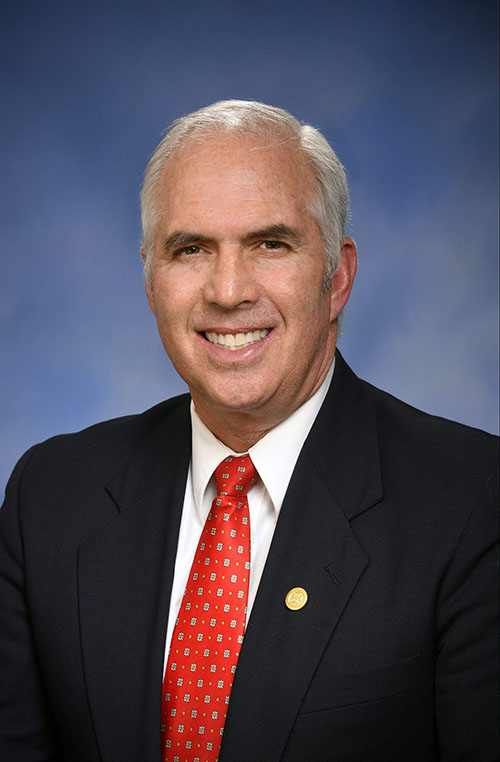
Rep. Jim DeSana
Sponsored bills
Maddy summaryThis bill amends Michigan's zoning enabling act to require local zoning ordinances to comply with several state laws, including the digital asset act, while explicitly preventing counties and townships from regulating oil and gas drilling operations. It also establishes a legal framework for mining valuable natural resources, allowing extraction unless it would cause very serious consequences, and shifts the initial burden of proof to anyone challenging a zoning decision regarding such resources. Additionally, the legislation protects renewable energy projects that received special land use approval after January 1, 2021, by classifying them as prior nonconforming uses that cannot be revoked or modified if substantial construction or specific expenditures have occurred. Local governments retain the ability to regulate operational details like noise, dust, and traffic, provided these rules reasonably accommodate customary mining activities.
Maddy summaryThis bill establishes the Digital Asset Act to regulate the use of cryptocurrencies and digital assets in Michigan while protecting specific rights for individuals and businesses. It prohibits local governments from taxing digital assets used for payment, restricting how people store their assets in wallets, or interfering with home and industrial digital asset mining operations. The legislation also bans state and local entities from accepting central bank digital currency as legal payment and prevents them from requiring it for taxes or services. Additionally, the bill limits noise complaints related to mining activities to general sound pollution rules and offers a legal remedy of treble damages for violations.
Maddy summaryThis bill proposes to exempt specific residential and agricultural properties from the state education tax starting in 2025. It would allow owners of single-family homes classified as residential real property to avoid this tax. Additionally, it would grant tax relief to owners of qualified agricultural land who live in a single-family dwelling on that land and are actively farming, provided they do not claim a principal residence exemption elsewhere. The measure requires the passage of a related bill to become effective.
Maddy summaryThis bill prohibits the manufacture, sale, or offering for sale of cultivated meat within Michigan. Cultivated meat is defined as meat produced from animal cells grown in a laboratory outside of the living animal. The legislation amends existing food safety laws to add this specific ban while maintaining current labeling requirements for other meat products. If a person violates this prohibition, they could face misdemeanor charges, fines, or imprisonment.
Maddy summaryThis bill proposes adding a new section to the Michigan state constitution to formally recognize the right of all citizens to hunt, fish, trap, and harvest wildlife. The amendment states that this right is subject only to regulations designed to promote sound conservation and management, while also declaring public hunting as a preferred method for managing nonthreatened species. It explicitly clarifies that these constitutional changes do not alter existing laws regarding trespass, private property rights, eminent domain, or firearms unrelated to hunting. Ultimately, the bill seeks to enshrine these outdoor activities as a protected heritage right within the state's highest legal document.
Maddy summaryThis bill officially designates a specific stretch of M-53 in Macomb County as the "Officer Leroy Imus Memorial Highway" to honor a fallen law enforcement officer. The legislation affects the Michigan State Transportation Department by amending state laws to recognize this new name for the road segment running from 17 Mile Road to Hall Road. Once signed into law, the change immediately updates official records and signage to reflect the memorial title.
Maddy summaryThis bill proposes to explicitly state in Michigan election law that individuals who are not U.S. citizens are ineligible to register to vote or participate in any election within the state. The key provision adds a new section to the existing election code to clarify that non-citizens cannot vote in federal, state, or local races. By codifying this restriction, the bill aims to reinforce current legal standards regarding voter eligibility without changing the underlying requirement of citizenship.
Maddy summaryThis bill repeals the section of Michigan's Clean and Renewable Energy Act that previously allowed for expedited permitting of large-scale solar, wind, and energy storage facilities. By removing these specific provisions, the legislation effectively eliminates the special zoning exemptions and streamlined approval processes that were designed to accelerate the development of such projects. The bill does not alter other parts of the energy law, meaning requirements for renewable energy programs, net metering, and utility responsibilities remain unchanged. Its primary impact is to revert the regulatory framework for large-scale renewable infrastructure to the standard permitting procedures that existed before the 2018 amendments.