

Maddy summaryHB 4002 amends Michigan's Earned Sick Time Act to clarify eligibility and usage rules for workers. It expands the definition of "family member" to include domestic partners and specifies that employees must work at least 25 hours weekly (averaged over a benefit year) to qualify for sick time. The bill also defines key terms like "benefit year" (a 12-month period for calculating leave) and clarifies that employers with 50+ employees must provide sick time for health, family, or safety needs. These changes aim to make the law's implementation more consistent while maintaining existing requirements for covered workers.
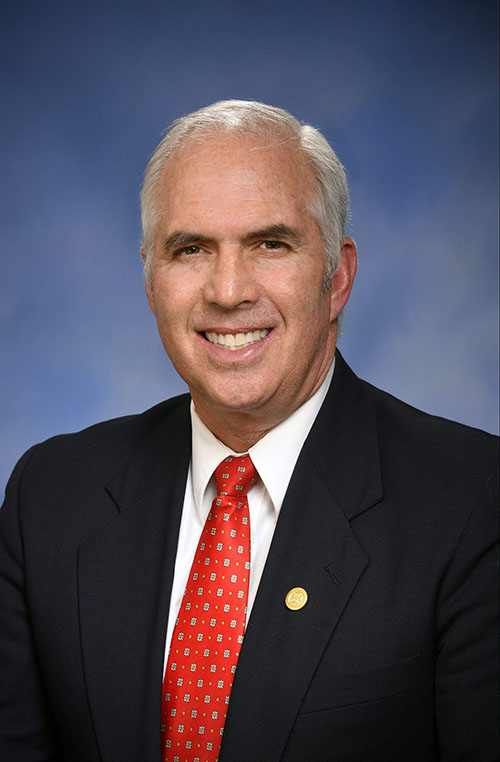
Rep. Jim DeSana
Sponsored bills
Maddy summaryThis is a ceremonial resolution, not a policy bill. It declares February 14, 2025, as "Frederick Douglass Day" in Michigan to honor the abolitionist's legacy. The resolution commemorates Douglass' life and contributions, including his birth date adoption and work for civil rights, but has no legal effect or impact on state laws or residents. It serves solely as a symbolic recognition.
Maddy summaryThis resolution declares February 15-22, 2025, as National FFA Week in Michigan. It encourages Michigan citizens to recognize the National FFA Organization's role in supporting agricultural education, youth leadership development, and career preparation for students in grades 7-12. As a symbolic resolution, it does not create new laws or allocate funds but formally acknowledges FFA's contributions to agricultural education programs across the state.
Maddy summaryThis bill proposes adding a constitutional right to hunt, fish, trap, and harvest wildlife for all Michigan citizens. It specifies this right is subject only to regulations promoting wildlife conservation and management, and requires the state to allow reasonable access for these activities. The amendment explicitly states it does not change existing laws regarding property rights, trespass, or firearms unrelated to hunting. The proposal must be voted on by Michigan voters at the next general election.
Maddy summaryThis constitutional amendment (HJR D) would limit Michigan's regular legislative sessions to 90 consecutive days starting in 2027, directly affecting state legislators and the session calendar. It requires the legislature to adjourn each regular session by a set date, with pending bills from odd-numbered years automatically carried over to the next session. The change applies only to regular sessions, not extraordinary meetings, and would require voter approval to become part of the state constitution. The proposal does not alter current session lengths for 2025-2026 or affect other legislative procedures.
Maddy summaryHB 4083 prohibits the production, sale, or offering for sale of lab-grown meat (defined as meat made from cultured animal cells outside the animal). This bill directly affects companies developing or selling cultivated meat products in Michigan. It amends Michigan's Food Law by adding a specific ban in Section 7129(7), making it illegal to manufacture or sell such products. The law does not change labeling requirements for traditional meat but explicitly blocks lab-grown meat from the market. The bill is currently in committee for review after its introduction on February 12, 2025.
Maddy summaryHB 4049 allows homeowners in residential areas to keep egg-laying hens on properties of at least 1/4 acre, with specific limits: no more than 5 hens per 1/4 acre (capped at 25 hens total). It makes hen rearing a permitted use under zoning laws, meaning it doesn’t require special approval, though local rules on noise, traffic, or hours can still apply. The bill directly affects residential property owners seeking to raise small numbers of hens for eggs. It requires companion bill HB 4050 to pass first before taking effect.
Maddy summaryHB 4050 amends Michigan's Right to Farm Act to clarify standards for egg-laying hen operations in residential areas. It requires farms to follow "generally accepted agricultural and management practices" (GAAMPs) for odor, waste, and animal care, with complaint investigations requiring on-site inspections within 7 business days. If a farm uses GAAMPs, complaints are dismissed; if not, the farm must submit a 30-day implementation plan for changes. The bill also blocks local ordinances from imposing stricter rules than state GAAMPs, except when cities propose alternative standards after public review and state approval. This directly affects egg farms operating near homes and shapes how communities address farm-related complaints.
Maddy summaryHB 4001 updates Michigan's minimum wage schedule, setting new rates that increase to $12.00 per hour starting February 21, 2025, and reaching $15.00 by 2029. It replaces the previous 2018 law (PA 337) and adds an annual adjustment mechanism: starting in 2019, the wage will rise each January based on Midwest-region inflation data, capped at 3.5% per year. The bill also modifies youth wage rules, allowing employers to pay new workers under 20 a training rate of 75% of the minimum wage for their first 90 days, while prohibiting displacement of existing workers to hire at this lower rate. This directly affects all hourly workers in Michigan covered by state minimum wage laws, including young workers and employers subject to wage requirements.
Maddy summaryHB 4016 designates May of each year as "Huntington's Disease Awareness Month" in Michigan. This symbolic resolution aims to raise public and medical awareness about Huntington's disease, which affects thousands of Michiganders and has no cure. It does not create new funding, regulations, or policy changes - it simply aligns Michigan with national recognition efforts for this progressive neurological condition. The bill was introduced in January 2025 and referred to committee for further review.