

Maddy summaryHB 4062 restricts lobbying by former Michigan state legislators to prevent potential conflicts of interest. It prohibits former senators or representatives from engaging in paid lobbying activities for two years after leaving office, specifically banning them from spending money or receiving compensation for lobbying that meets the threshold requiring lobbyist registration. The law applies to legislators whose term began on or after January 1, 2025, and violations are punishable by a misdemeanor fine of up to $1,000 or 90 days in jail. This bill directly affects former lawmakers seeking to lobby government officials, aiming to limit immediate post-office influence in policy decisions.
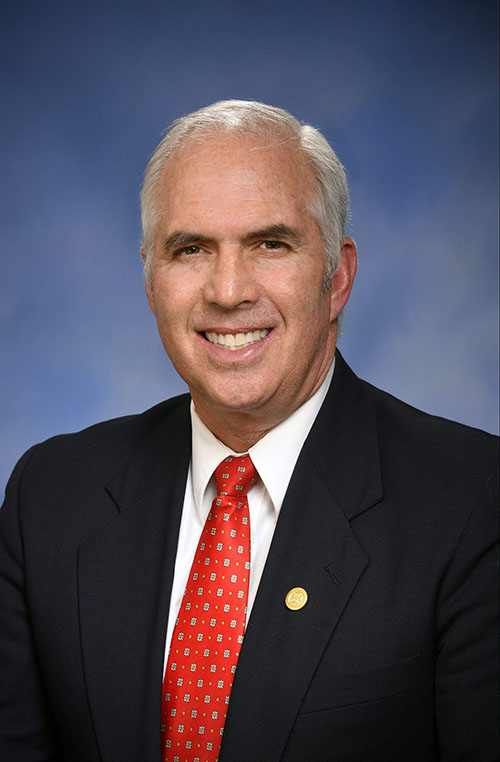
Rep. Jim DeSana
Sponsored bills
Maddy summaryHB 4063 prohibits former governors, lieutenant governors, and heads of major state departments from accepting payment or reimbursement for lobbying if their activities exceed the threshold requiring lobbyist registration. This 2-year restriction applies to officials whose terms begin on or after January 1, 2025. Violating the ban carries penalties of up to 90 days in jail or a $1,000 fine. The bill targets high-level former officials to limit potential conflicts of interest after leaving public office.
Maddy summaryHB 4350 amends Michigan's Natural Resources and Environmental Protection Act to allow individuals to feed wild birds and other wildlife under specific conditions. This bill permits such feeding if it occurs within 300 feet of a residence and the total amount of feed does not exceed two gallons. It clarifies that this allowance does not apply to activities like baiting for hunting, normal agricultural practices, or feeding conducted in a way that excludes deer and elk. This aims to create limited exceptions for recreational or preventative feeding of wildlife by residents.
Maddy summaryThis bill requires every public high school in Michigan to offer at least one computer science course starting in the 2027-2028 school year. The course must meet state education standards and be listed on the school's catalog, with a preference for in-person instruction unless a school operates entirely virtually. The legislation defines computer science as a field focused on creating new technologies rather than just using them, ensuring the curriculum covers principles, design, and societal impact.
Maddy summaryHB 4515 requires Michigan's Bridge Card (used for food assistance benefits) to include a recipient's digital photo and signature printed directly on the card. This change affects all recipients of the Michigan Bridge Card, which distributes food assistance benefits like SNAP. The bill amends state law to add this requirement, ensuring cards display both a photo and signature for identification purposes. The legislation passed the House on September 17, 2025, with immediate effect.
Maddy summaryThis bill creates a new system for recommending salaries for the heads of Michigan's principal executive departments. It requires both majority and minority party leaders in the state legislature to appoint unpaid panelists who will evaluate department heads on their work quality and cost-effectiveness. These panelists will submit ratings to the House fiscal agency, which will use a specific formula based on those scores and the governor's current salary to calculate recommended pay amounts. The final salary recommendations will be sent to key legislative leaders and the governor for consideration.
Maddy summaryThis bill extends the state of energy emergency in Michigan by an additional 77 days, effective July 1, 2026. The measure allows the sale of E15 fuel in several counties where current regulations previously restricted it to lower vapor pressure gasoline. By suspending these fuel requirements, the extension aims to increase fuel supply options and help manage rising gas prices for consumers and businesses. The resolution requires approval from both the House and Senate before being sent to the Governor.
Maddy summaryThis bill expands the authority of local governments to regulate land development on property owned by the University of Michigan. Specifically, it updates state law to allow municipalities to apply zoning rules to university land acquired on or after January 1, 2027. The legislation enables local units of government to control the location, size, and use of university buildings and structures to align with community needs for housing, industry, and public services. By extending existing zoning powers to future university acquisitions, the bill ensures that campus expansion can be managed alongside local planning goals.
Maddy summaryThis bill modifies the rules governing the state university system to require regents to follow local zoning laws when purchasing land acquired on or after January 1, 2027. It also maintains a specific provision ensuring that at least one professor of homeopathy remains in the department of medicine. The legislation does not take effect until a separate constitutional amendment is approved, linking its implementation to a broader change in the state constitution.
Maddy summaryThis bill proposes a change to the state constitution to require the University of Michigan to follow local zoning laws and ordinances for any land it acquires on or after January 1, 2027. Currently, the university operates with significant autonomy over its property, but this amendment would shift that authority to local governments for future land purchases. The rule applies specifically to the Regents of the University of Michigan and does not affect other state universities like Michigan State or Wayne State. If passed by voters, the change would ensure that new university campuses align with the planning rules of the cities or counties where they are built.