

Maddy summaryHouse Bill 4382 amends Michigan's campaign finance act to prohibit specific contributions from regulated natural gas and electric utilities, as well as associated individuals and entities. These "covered persons" are forbidden from making donations to candidate committees, political party committees, political committees, independent committees, separate segregated funds, and certain 501(c)(4) or 527 organizations linked to state officials or candidates. A "covered person" includes principals of regulated utilities, their holding companies, and related individuals like executives, board members, and certain lobbying firms contracted by utilities. Violations of these prohibitions would result in civil fines ranging from 5 to 10 times the amount of the unlawful contribution.
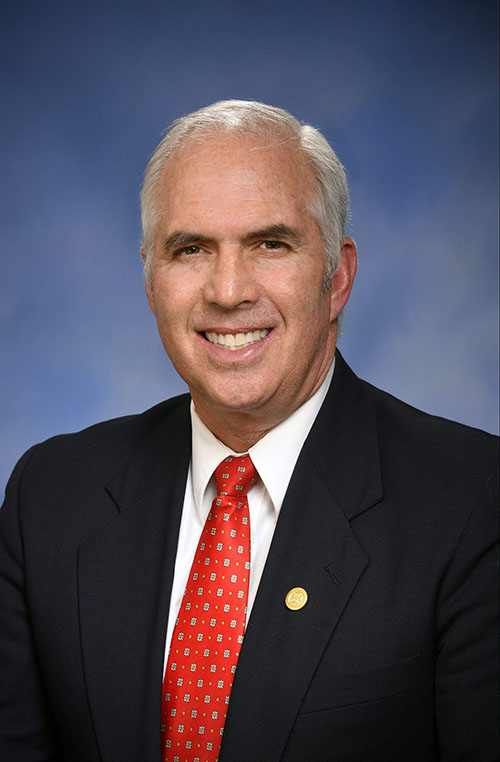
Rep. Jim DeSana
Sponsored bills
Maddy summaryHouse Bill 4384 proposes to prohibit Michigan state agencies from awarding contracts to entities whose "principals" have made certain political donations or contributions. Specifically, it bans contracts if these principals contributed to candidate committees, party committees, or certain 527 or 501(c)(4) committees within 18 months before the contract is signed, or during and after the contract term. Contractors would be required to attest to this policy. Violations could result in the contract being voided and the entity being barred from state contracts for three years, though donations returned promptly would not count as a violation. This bill includes exceptions for smaller contractors and certain types of agreements like loans or collective bargaining.
Maddy summaryHouse Bill 4381 prohibits electric and natural gas utilities, along with individuals and entities closely associated with them ("covered persons"), from making donations or contributions to specific political organizations. These prohibited recipients include 501(c)(4) and 527 organizations that are controlled by or employ state officials, candidates, or their affiliates, as well as various candidate and political party committees. The bill requires utilities to attest to their compliance in general rate case applications. Violations can result in civil fines ranging from 5 to 10 times the amount of the unlawful contribution, and potentially additional penalties for utilities, such as the denial of rate increase requests.
Maddy summaryHouse Bill 4366 proposes to amend Michigan's Code of Criminal Procedure. Specifically, it modifies section 13c of chapter XVII (MCL 777.13c), which outlines sentencing guidelines. The bill aims to adjust the sentencing guidelines for certain offenses related to excess discharges into the waters of the state. This change would directly affect individuals or entities convicted of such environmental violations, impacting how their sentences are determined by the courts.
Maddy summaryHouse Bill 4374 proposes to exempt certain properties from the state education tax, effective for taxes levied after December 31, 2025. This bill directly affects owners of residential real property and specific agricultural properties. To qualify, agricultural property must have a single-family dwelling occupied by an owner actively involved in farming who has not claimed a principal residence exemption on other property. The bill will only take effect if House Bill 4373 is also enacted into law.
Maddy summaryHouse Bill 4379 proposes to amend the general property tax act to exempt principal residences owned and occupied by senior citizens from general property taxes. This exemption would apply to taxes levied after December 31, 2025. Instead of the general property tax, these properties would be subject to a specific tax under a separate "senior citizens principal residence specific tax act." The bill defines "principal residence" and "senior citizen" as those terms are established in that related specific tax act, and its enactment is dependent on House Bill 4372 also becoming law.
Maddy summaryHouse Bill 4372 proposes a new tax system for principal residences owned and occupied by senior citizens (age 65 and older) in Michigan, effective after December 31, 2025. It would exempt these properties from the existing general property taxes. In their place, the bill levies a new "senior citizens principal residence specific tax." This new tax would be calculated at 50% of the amount that would otherwise be assessed under the general property tax act. The bill's enactment is tied to the passage of House Bill 4379.
Maddy summaryHouse Bill 4373 proposes to amend the State Education Tax Act by creating new property tax exemptions. Beginning in 2026, the bill would exempt residential real property from the state education tax. It would also exempt certain qualified agricultural property that includes a single-family dwelling, provided the owner actively uses the land for agriculture and has not claimed a principal residence exemption on other property. This change directly affects owners of qualifying residential and agricultural properties by removing their obligation to pay the state education tax.
Maddy summaryHouse Bill 4365 amends Michigan's Natural Resources and Environmental Protection Act concerning discharges of untreated or partially treated sewage. It expands the list of parties that sewer system operators must notify immediately (within 24 hours) after a discharge begins, including additional county officials and local newspapers in potentially affected counties. The bill also clarifies requirements for testing affected waters for E. coli to assess public health risks. Violations of these updated notification and testing requirements are subject to existing civil fines ranging from $2,500 to $25,000 per day.
Maddy summaryHouse Resolution 30 is a resolution urging the United States Congress to enact legislation that would remove the gray wolf from the endangered species list. This action would transfer the authority for managing gray wolf populations from the federal government back to individual states.