Maddy summaryHouse Resolution No. 102 declares May 11-17, 2025, as Police Week in the state of Michigan. This resolution aims to honor law enforcement officers who serve and those who have lost their lives in the line of duty.
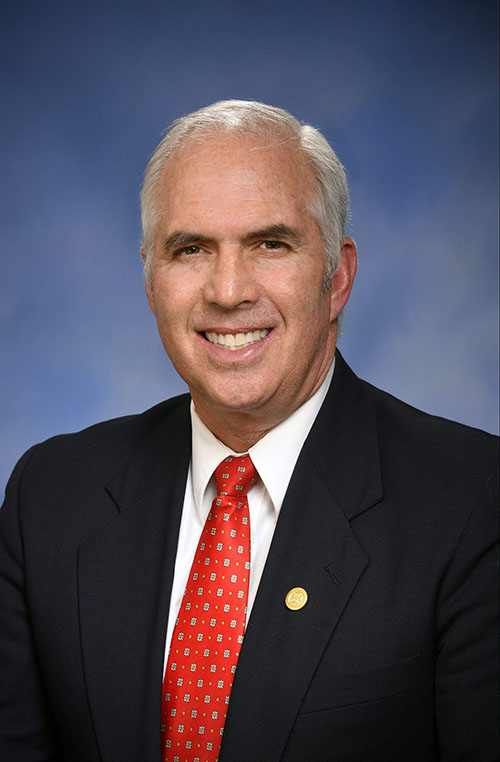
Rep. Jim DeSana
Sponsored bills
Maddy summaryHB 4007 amends Michigan's Clean and Renewable Energy Act (2008 PA 295) by expanding the definition of "clean energy system" to include natural gas plants using carbon capture and storage (at least 90% effective) and certain existing natural gas facilities that can meet clean energy standards by 2030 through carbon capture and removal technologies. This change directly affects electric providers required to meet the state's clean energy standard, as it broadens the types of energy sources that qualify toward their compliance targets. The bill specifies that carbon capture must permanently store carbon dioxide (excluding enhanced oil recovery), and permits for new facilities may require higher capture rates if deemed necessary under federal standards. This definition update provides additional pathways for natural gas projects to count toward Michigan's clean energy goals.
Maddy summaryHouse Bill 4342 amends Michigan's state revenue sharing act, introducing a new condition for withholding state funds from local governments. Beginning October 1, 2025, the state treasurer would withhold all revenue sharing payments from any city, village, township, or county. This would occur if the local government enacts or enforces a law, ordinance, policy, or rule that violates the "local government sanctuary policy prohibition act" or the "county law enforcement protection act." Payments would be withheld for as long as the violating policy remains in effect. This bill is tied to the enactment of House Bills 4338 and 4339.
Maddy summaryHouse Bill 4027 proposes to amend the Michigan Zoning Enabling Act. The bill would remove a provision that requires local zoning ordinances to be subject to Part 8 of the Clean and Renewable Energy and Energy Waste Reduction Act. This change means that local zoning authorities would no longer be directly bound by this specific part of the state's clean energy law when creating or enforcing their zoning regulations. The bill aims to alter the relationship between local land use planning and state renewable energy mandates.
Maddy summaryHouse Bill 4028 proposes to eliminate specific state-level provisions regarding the zoning and siting of large-scale solar, wind, and energy storage facilities. The bill achieves this by repealing Part 8 of the Clean and Renewable Energy and Energy Waste Reduction Act (2008 PA 295). This action would remove state authority over the certification and regulation of such facilities, effectively returning primary zoning control to local governments. It also amends the title of the existing act to reflect these changes.
Maddy summaryThis bill proposes a constitutional amendment requiring Michigan voters to verify U.S. citizenship before registering to vote or casting a ballot. It directly affects new voters registering after December 18, 2026, who must provide proof of citizenship (like a birth certificate) to election officials or have the Secretary of State verify it using federal records. The amendment mandates the Secretary of State to systematically check citizenship status annually, remove unverified non-citizens from voter files within 60 days of notice, and allow provisional ballots only if citizenship is verified within six days after an election. It also requires annual reports on verification results and removals. The bill does not affect current registered voters.
Maddy summaryHouse Bill 4400 proposes to prohibit vehicle dealers and distributors in Michigan from selling, offering for sale, or operating vehicles designed, developed, or manufactured by a "foreign entity of concern." The bill defines a "foreign entity of concern" to include specific countries such as China and Russia, as well as entities designated as foreign terrorist organizations or those involved in certain national security-related activities. Dealers or distributors found in violation could face a civil fine of up to $50,000 per violation, and the vehicles involved are subject to seizure and forfeiture. This legislation would amend the Michigan vehicle code to implement these restrictions.
Maddy summaryHouse Bill 4404 grants civil immunity to individuals who use or threaten to use deadly or non-deadly force in self-defense or defense of another, provided they acted in compliance with the state's self-defense act. This means they cannot be sued for civil damages, such as personal injury or death, by the person against whom force was used or by related parties. The bill establishes a presumption of immunity if criminal proceedings related to the force used resulted in actions like a grand jury declining indictment or a criminal charge being dismissed or leading to acquittal. Additionally, if an individual is sued and found to be immune under these provisions, the court must award them attorney fees, court costs, lost income, and other expenses.

Maddy summaryHouse Bill 4245 amends the state's Food Law to change licensure requirements for certain maple syrup and honey producers. The bill exempts both the retail outlet and the processing facility of these producers from needing a license under the act. This exemption applies to producers whose annual gross sales of honey or maple syrup are $15,001.00 or less. However, products sold under this exemption must still carry labels similar to those required for cottage food products.
Maddy summaryHouse Bill 4383 prohibits principals of contractors and prospective contractors from making certain political donations. This applies to individuals associated with businesses seeking or holding state or local government contracts valued at $250,000 or more. The bill bans contributions to candidate committees, political party committees, 527 committees, and specific 501(c)(4) committees. This restriction is active for 18 months before seeking a contract until 18 months after the contract ends. Violations may result in contract cancellation or disqualification from future government contracts for three years.