

Maddy summaryHB 4223 requires all public and nonpublic schools in Michigan to develop and implement a school safety and security training plan starting with the 2026-2027 school year. The bill mandates that school resource officers, safety personnel, crisis response team members, and all school staff complete this training. The specific training content is defined in existing Section 1308f of the Revised School Code. This policy directly affects every school employee in Michigan's public and private schools, requiring them to undergo standardized safety training before the 2026-2027 school year.
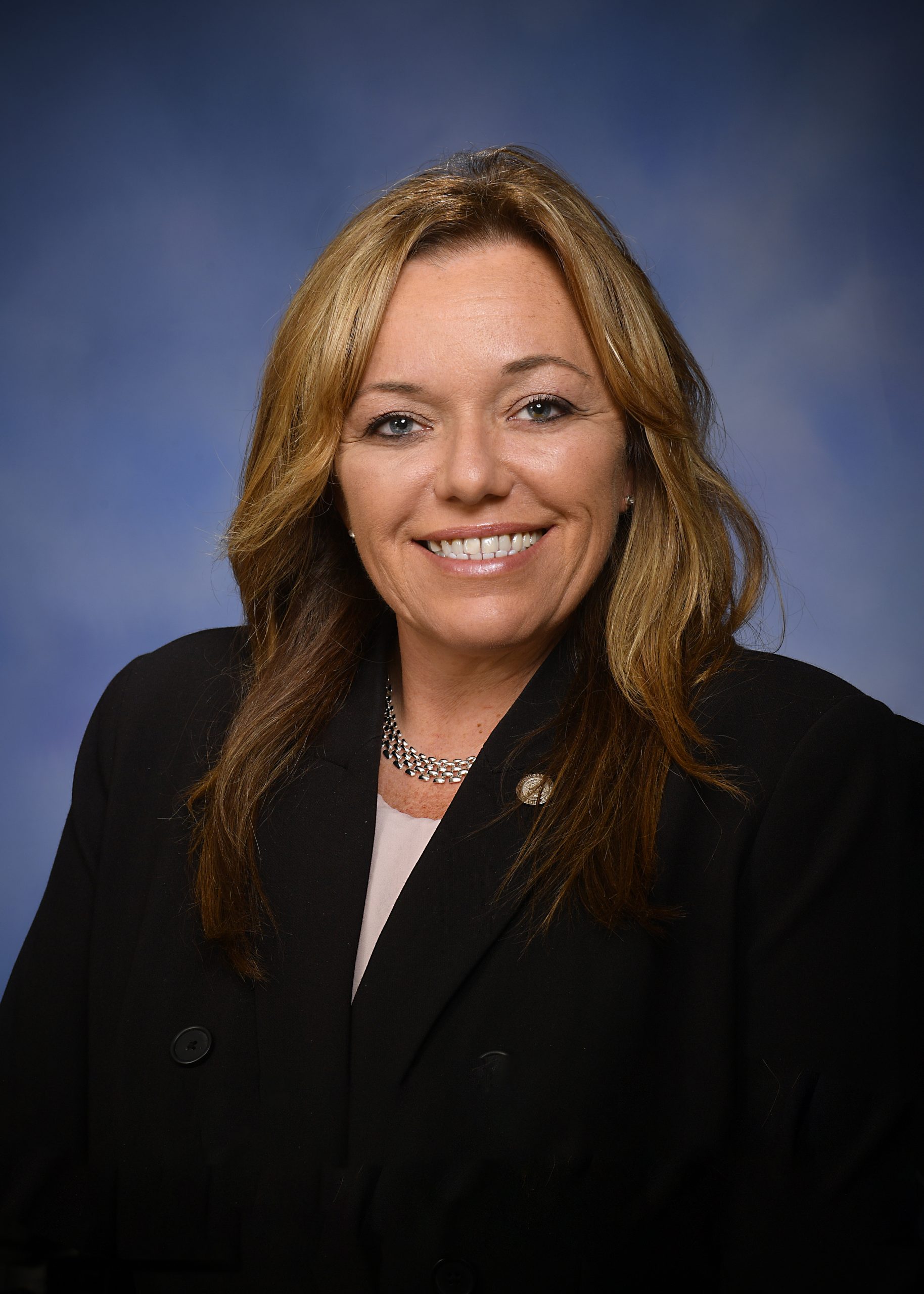
Rep. Jamie Thompson
Sponsored bills
Maddy summaryHouse Bill 4500 establishes a grant program for a research institution to conduct a pilot program in Michigan. This program aims to assess the levels of PFAS (per- and polyfluoroalkyl substances) in the blood of qualified participants and study their health effects. A dedicated PFAS pilot program fund will be created to cover grants, blood testing, and the development of educational materials. The Department of Health will oversee the program, select the research institution, and submit reports to the legislature on the program's findings and recommendations.
Maddy summaryHB 4225 requires public schools serving grades 6-12 to include a 24/7 suicide prevention hotline number and contact information for Michigan's OK2SAY program (a confidential student safety reporting system) on student identification cards starting July 1, 2026. Nonpublic schools serving the same grades are encouraged to do the same. The bill amends Michigan's "Save our Students Act" to mandate this inclusion, ensuring students have immediate access to mental health resources and safety reporting tools. It applies to all public school districts, public school academies, and intermediate school districts, with liability protections for schools that comply.
Maddy summaryHB 4226 requires Michigan K-12 schools to conduct specific safety drills annually, including a minimum of 7 fire drills (with 3 by December 1), 2 tornado safety drills (one in March), and 4 secure building drills (with one by December 1 and one after January 1). Schools must document each drill with details like date, type, and attendance, then post this information online within 30 days for at least 3 years. The bill also mandates schools to coordinate drill schedules with local emergency management and allows rescheduling for unavoidable disruptions like severe weather. These requirements apply to all public schools operating grades K-12 and aim to standardize safety preparedness.
Maddy summaryHouse Bill 4499 proposes to amend the Public Health Code by establishing a pilot program to assess the effects of perfluoroalkyl and polyfluoroalkyl substances (PFAS). This program would focus on "qualified study participants," defined as individuals who, on or after January 1, 2012, resided in specific counties while under 11 years old and used well water or a public water supply with elevated PFAS levels. The bill defines the criteria for these participants and the population ranges for the "qualified counties." It also outlines the involvement of eligible research institutions and a dedicated PFAS pilot program fund.
Maddy summaryHB 4229 requires Michigan's Office of School Safety to compile and share quarterly reports of tips received under the Student Safety Act (2013 PA 183) with the School Safety and Mental Health Commission. This bill amends existing law to add this specific reporting duty to the Office's responsibilities, directly affecting how school safety data is tracked and shared. The key provision mandates that the Office compile these reports and provide copies to the Commission, ensuring transparency in handling school safety tips. This change focuses on administrative reporting rather than new funding or program creation.
Maddy summaryHB 4222 requires Michigan public school districts, intermediate school districts, public school academies, and nonpublic schools to develop and update emergency operations plans every three years (starting July 1, 2026) in collaboration with local law enforcement. These plans must address specific safety scenarios like violence, fire, intruders, weather emergencies, mental health training, building security, and crisis response protocols. Schools must adopt plans with public input and notify the state education department within 30 days of adoption or updates, with all plan details kept confidential under state law. The department will track compliance and notify non-compliant schools, ensuring consistent safety planning across all school buildings.
Maddy summaryHB 4118 amends Michigan's Drain Code to require that lands owned by the Department of Natural Resources (DNR) be assessed for drainage project costs based on the benefits they receive, similar to how townships, cities, counties, and state highways are assessed. The bill clarifies that drainage costs must be apportioned among these entities according to specific benefit-based formulas, including DNR lands as a distinct category. It also updates public notice requirements for bidding on drainage projects and reviews of cost allocations to ensure transparency. This change directly affects DNR lands and the entities responsible for funding drainage improvements, including local governments and state transportation authorities.
Maddy summaryHB 4491 revises the application process for Michigan's critical industry program and other economic development initiatives managed by the Michigan Strategic Fund. It requires businesses seeking state funding to complete a form attesting, under penalty of perjury, that their hiring and promotion practices are based solely on merit, defined by objective criteria like experience and education. False attestations carry a $5,000 civil fine and potential perjury charges. Additionally, the bill outlines specific criteria the fund must consider when awarding investments and mandates detailed terms for agreements with businesses, including job creation targets, performance benchmarks, and clawback provisions for non-compliance.
Maddy summaryHB 4489 modifies the rules for expenditures from the Strategic Outreach and Attraction Reserve (SOAR) fund. The bill adds new conditions for recipients of these funds, requiring them to use hiring practices and internal promotion schemes based on employee merit. "Merit" is defined as a reasonable expectation, based on objective criteria like experience and education, that an individual can perform job duties. These changes directly affect businesses and entities receiving SOAR fund expenditures by requiring them to adopt these merit-based employment practices.