

Maddy summaryHB 4999 creates the Michigan Nonprofit Development Fund (ND Fund) within the state treasury to support nonprofit organizations. The fund receives state appropriations and other assets, which the treasurer invests, with earnings credited back to the fund. Money in the fund can be used for grants to statewide nonprofit organizations, interest-free micro bridge loans, or administrative costs (up to 10% of annual funding), with excess funds over $5 million annually transferred to the general fund. This bill directly affects qualifying nonprofits receiving grants or loans, providing a dedicated funding mechanism for their services.
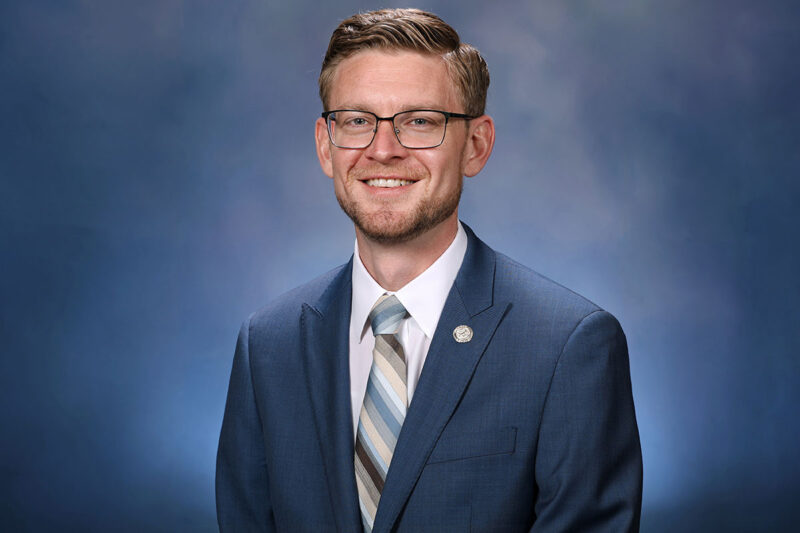
Rep. Peter Herzberg
Sponsored bills
Maddy summaryHR 173 is a resolution passed by the Michigan House of Representatives to condemn all forms of political violence and reaffirm the body's commitment to civility, safety, and peaceful democratic engagement. It does not create new laws or policies but serves as a formal statement expressing the House's stance against violence targeting public officials and citizens. The resolution cites recent incidents of political violence across the U.S., including attacks on elected leaders and events like the 2025 assassination of activist Charlie Kirk. It will be transmitted to the President, Michigan Governor, and congressional leaders as a non-binding expression of the House's values.
Maddy summaryHB 4936 limits late fees charged by privately owned toll bridge operators for unpaid tolls in Michigan. It prohibits these operators from charging late fees exceeding five times the original toll amount. The law applies specifically to privately owned toll bridges and excludes international crossings and publicly owned bridges. This change directly affects drivers who miss toll payments and privately operated bridge operators, setting a clear cap on additional charges.
Maddy summaryHB 4856 requires Michigan public school districts and intermediate school districts to allow homeschooled or nonpublic school students to participate in extracurricular activities like sports teams, theater, band, and debate. It prohibits school boards from blocking these students' participation and mandates that districts avoid joining athletic conferences or associations with exclusionary policies. The bill defines an "eligible child" as one residing within the district, homeschooled or attending a nonpublic school, and meeting standard eligibility requirements. This directly affects homeschooled and nonpublic school students seeking access to school-run activities. The law amends the Revised School Code (MCL 380.1 et seq.) by adding Section 1290.
Maddy summaryThis resolution (HR 164) addresses the July 2025 detentions of 16 Hmong and Laotian refugees in Michigan by U.S. Immigration and Customs Enforcement (ICE), who were unexpectedly taken into custody during routine check-ins and later deported to Laos without adequate notice or due process. It demands federal transparency regarding the legal basis for these detentions, urges ICE to provide timely legal counsel and family notification for detainees, and calls for case-by-case reviews of individuals with strong Michigan ties. The resolution specifically highlights concerns about rapid transfers across facilities and the lack of a U.S.-Laos repatriation agreement requiring travel documents. It is directed to the U.S. Department of Homeland Security and Michigan’s congressional delegation, seeking improved oversight and humane treatment.
Maddy summaryHB 4828 amends Michigan's Natural Resources Act to modify how recreation passport fee revenue is distributed to state parks, local recreation facilities, and forest systems. The bill changes the allocation formula based on the prior year's participation rate in the recreation passport program: if participation was below 55%, 50% of remaining funds go to park capital improvements, while 70% goes there if participation is 55% or higher. Funds also support park operations (30% or 2.75%), historic resources (2.75%), boating access promotions (0.25%), local recreation facilities (10% or 20%), and forest trails (7%). This directly affects Michigan state parks, local governments receiving recreation funds, and state forest campgrounds.
Maddy summaryHB 4832 amends Michigan's Public Health Code to establish a new licensure process for anesthesiologist assistants (AAs), directly affecting AAs seeking to practice in the state and the Michigan Board of Medicine. The bill adds new sections defining AA qualifications, supervision requirements, and scope of practice, while updating existing licensing statutes to include AAs as a distinct licensed profession. Key provisions require AAs to complete state-approved education programs and work under physician supervision, with specific standards for training and clinical responsibilities. This bill is procedural in nature, creating the regulatory framework for AA licensure rather than changing patient care standards. It was introduced on August 27, 2025, and referred to the Health Policy Committee.
Maddy summaryHB 4817 names a specific segment of I-75 in Troy (between Long Lake Road and Square Lake Road) as the "Specialist 4 Keith Lavoie Memorial Highway" to honor a military veteran. This bill amends Michigan's memorial highway law (2001 PA 142) by adding a new section designating this highway portion. The change is purely ceremonial with no policy, funding, or regulatory effects. It directly affects the highway signage and public recognition in that Troy location.
Maddy summaryHB 4804 would increase the annual registration fee for vehicles with four or more tires (including most passenger cars, trucks, and SUVs) in Michigan. It directly affects vehicle owners who register these vehicles under the current fee structure. The bill amends Section 801 of the Michigan Vehicle Code to implement this fee increase, modifying the existing registration fee schedule. This change would generate additional revenue for the state's transportation fund through higher registration costs for affected vehicles.
Maddy summaryThis bill proposes a constitutional amendment requiring immediate removal from office for any elected public officer convicted of a felony during their term. It would amend Michigan's state constitution to automatically vacate the position upon a felony conviction, bypassing current processes that may allow officers to remain in office pending appeals. The change directly affects elected officials like state legislators, mayors, and county commissioners who face felony convictions while serving. The amendment must be approved by voters at the next general election to take effect.