

Maddy summaryHB 4032 permanently extends Michigan's participation in the Interstate Medical Licensure Compact by removing a scheduled expiration date (sunset) from the law. This change directly affects physicians in Michigan who use the compact to practice medicine across state lines, as it eliminates the need for periodic legislative renewal. The bill's key provision amends Michigan's Public Health Code to make the compact's terms permanent, ensuring uninterrupted eligibility for physicians seeking multi-state licensure. The compact allows doctors to obtain licenses in multiple participating states more efficiently, reducing administrative barriers for cross-state medical practice.
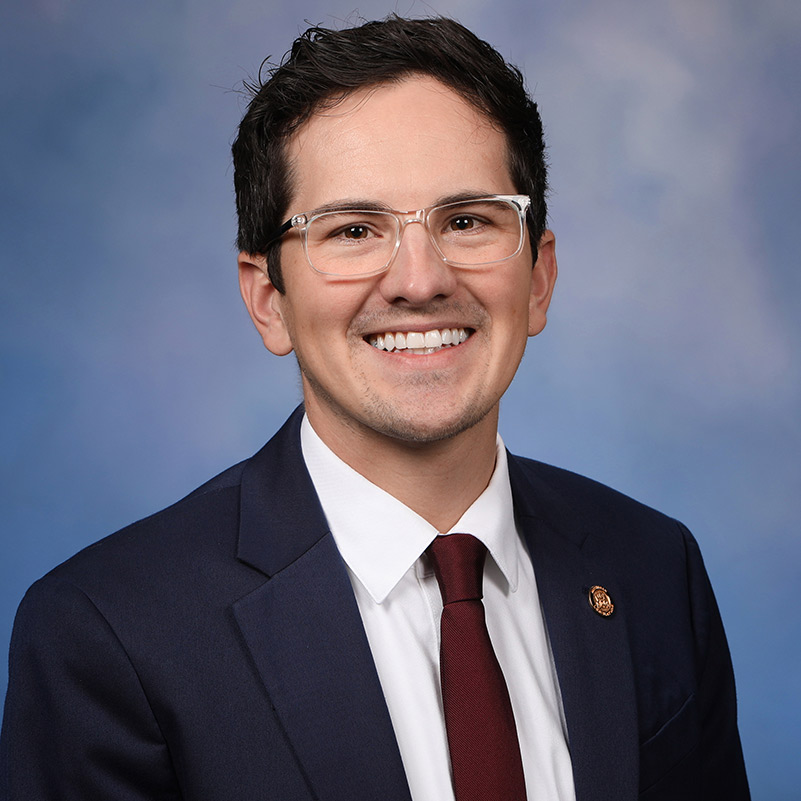
Rep. Jason Morgan
Sponsored bills
Maddy summaryHB 4175 modifies Michigan's high school diploma requirements by adding specific course credits students must complete. It requires all students graduating after 2023 to complete a half-credit personal finance course (fulfilling part of math, arts, or language requirements), while maintaining existing requirements for 4 math credits (including algebra I, geometry, and algebra II), 3 social science credits (including U.S. history and geography), 1 health/PE credit, and 1 arts credit. The bill also mandates two credits in a language other than English (including American Sign Language) for all students by graduation, with schools encouraged to offer language courses in early grades. These changes directly affect Michigan high school students and school districts responsible for implementing diploma standards.
Maddy summaryHB 4174 modifies Michigan's juvenile justice code to establish a presumption that self-incriminating statements made by juveniles during police interrogations are admissible in court if obtained through deceptive practices (e.g., false promises of leniency or misleading statements about evidence). The bill directly affects juveniles under 18 facing delinquency proceedings and law enforcement officers who may use deceptive tactics during interrogations. Keyly, it amends the Probate Code to add Section 17e, shifting the standard so such statements are presumed admissible unless the court finds the deception was "unreasonably coercive." This changes current practice by making it harder to exclude statements obtained through deception, impacting how juvenile confessions are handled in court.
Maddy summaryHB 4188 amends Michigan's Vehicle Code to clarify that operating a vehicle "in a careless or negligent manner likely to endanger any person or property, but without wantonness or recklessness" would be classified as a civil infraction. This change directly affects drivers whose behavior meets this specific standard - non-reckless, careless driving - by treating it as a civil matter rather than a criminal offense. The bill modifies Section 626b of the Michigan Vehicle Code (MCL 257.626b) to explicitly exclude cases involving "wantonness or recklessness," which would remain subject to more severe penalties. The amendment is procedural and aims to refine the legal definition of the infraction. The bill was introduced on March 6, 2025, and referred to the Judiciary Committee.
Maddy summaryThis proposed constitutional amendment (HJR F) would remove gender-specific language from two Michigan constitutional provisions. It would repeal Article I, Section 25 - which defined marriage as "the union of one man and one woman" - and amend Article X, Section 1 to make property rights language gender-neutral. If approved, it would eliminate the constitutional ban on same-sex marriage and update outdated references to gender in property law. The amendment would require voter approval at the next general election. (Note: The bill is currently in committee referral, with no further action taken as of March 2025.)
Maddy summaryHB 4169 creates a Rare Disease Advisory Council within Michigan's Department of Health to advise on research, diagnosis, and treatment of rare diseases. The council, composed of 12-18 members including physicians, patients, caregivers, insurers, researchers, and industry representatives, must identify policy priorities to improve access to care and reduce discrimination for individuals with rare diseases (defined as affecting fewer than 200,000 people in the U.S.). Key duties include researching cost-effective treatments, sharing best practices from other states, and developing a public webpage with rare disease resources by March 2026. The bill establishes a formal advisory body but does not change existing laws or funding.
Maddy summaryHB 4167 amends Michigan's sentencing guidelines to specifically address the illicit use of xylazine, a veterinary drug increasingly misused in illicit drug mixtures. The bill adds xylazine to the list of substances covered under sentencing guidelines (MCL 777.13m), meaning courts must now apply standardized sentencing ranges for convictions involving its unauthorized possession or use. This directly affects individuals convicted of xylazine-related offenses, including those using it alone or combined with other drugs. The change creates a clear, defined sentencing path for this specific offense, moving beyond general drug sentencing rules to address xylazine's growing public health impact. The bill was introduced on March 5, 2025, and referred to the Judiciary Committee.
Maddy summaryHR 36 is a non-binding resolution introduced by 18 House members urging the federal government to create a national strategy to address the bird flu outbreak. It highlights the outbreak's impacts - including over 150 million affected poultry, 1,000 dairy herds impacted, and 68 human cases - as justification for this request. The resolution does not create new programs or funding but formally calls on federal agencies to prioritize developing a coordinated response. It directly addresses the federal government, not specific communities or industries, though the outbreak affects agriculture and public health nationwide.
Maddy summaryHB 4166 prohibits the non-medical use of xylazine (a sedative sometimes mixed with drugs like fentanyl) in Michigan. It defines "illicit use" as any xylazine use not covered under "licit use," which includes legal veterinary applications, pharmaceutical manufacturing, or approved medical treatments. The bill amends Michigan's Public Health Code to make possessing or using xylazine for non-licensed purposes a felony, with penalties ranging from up to 20 years in prison or fines up to $1 million depending on the amount. This directly affects individuals using xylazine outside approved medical or veterinary contexts, aligning penalties with those for other controlled substances like opioids.
Maddy summaryHB 4134 amends Michigan's sentencing guidelines to establish specific penalties for crimes that prevent access to healthcare facilities, such as blocking entrances to clinics. It directly affects individuals convicted of obstructing access to medical care, including abortion providers or other healthcare services. The bill modifies existing sentencing guidelines (MCL 777.13n) to create new, higher sentencing ranges for these offenses. This change would apply to cases where someone intentionally interferes with lawful access to a healthcare facility. The bill is currently in committee review after its February 2025 introduction.