

Maddy summaryMichigan House Bill 6264, titled the "data center energy standards act," requires owners and operators of data centers in the state to source 100% of their annual energy use from clean or renewable sources by January 1, 2040. The bill allows facilities to meet this requirement through on-site generation, power purchase agreements, or other energy instruments approved by the Michigan Public Service Commission. Violations of these standards are subject to civil fines of up to $10,000 per day, which must be deposited into the state's general fund. This legislation only takes effect if seven companion bills from the 103rd Legislature are also enacted into law.
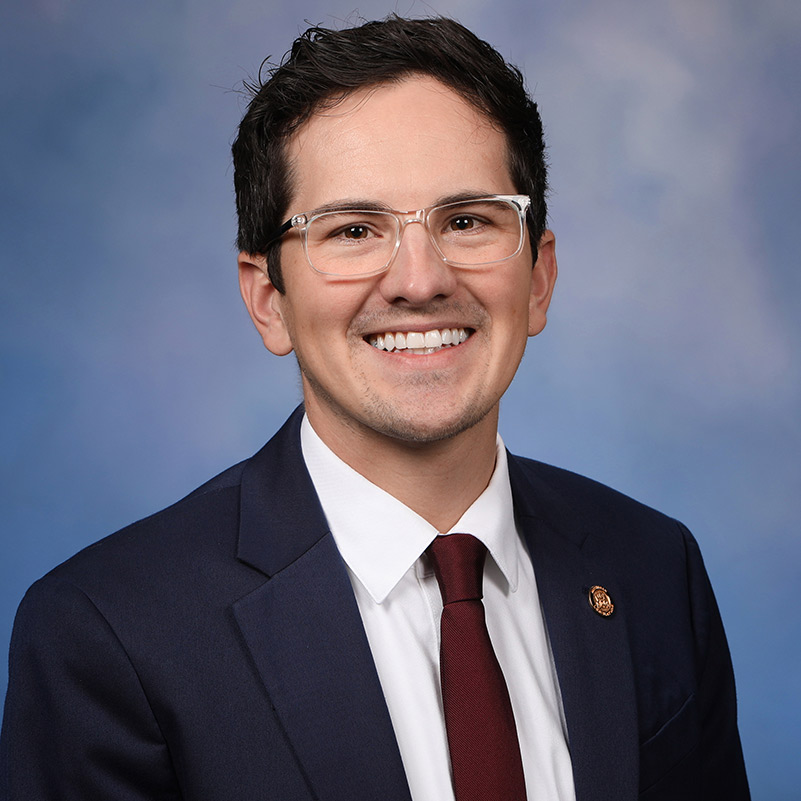
Rep. Jason Morgan
Sponsored bills
Maddy summaryThis bill updates Michigan's Natural Resources and Environmental Protection Act to clarify definitions and procedures for commercial fishing in the state's Great Lakes waters. It directly affects licensed commercial fishermen, fish dealers, and the Department of Natural Resources by establishing precise meanings for terms like "abandoned gear," "quota," and various types of fishing nets. The legislation also adds new definitions to improve record-keeping requirements for fish production, storage, and sale, ensuring that all commercial activities are clearly regulated. By amending multiple existing sections and adding a new one, the bill aims to provide a more structured framework for managing allowable catch limits and enforcing fishing privileges.
Maddy summaryThis bill prohibits health care providers in Michigan from charging facility fees for certain services starting January 1, 2027. It directly affects hospitals, urgent care clinics, and other health facilities that currently bill patients for facility fees separate from professional medical fees. The law bans facility fees for telemedicine services, services provided in non-hospital facilities, and outpatient hospital services except in emergency rooms or during observation periods. Providers must clearly identify facility fees on bills and inform patients about the fee amount before services are rendered. Patients who believe they were improperly charged can sue for damages, with court costs and attorney fees awarded to successful plaintiffs.
Maddy summaryThis bill modifies how tax revenue from internet sports betting in Michigan is distributed among various state and local funds. It requires that thirty percent of the tax go to the city where the betting operator's casino is located for uses such as hiring street patrol officers, neighborhood development, public safety improvements, and road repairs. The remaining revenue is allocated to the state, with specific mandatory payments to the compulsive gaming prevention fund, a first responder coverage fund, and tribal governments for essential services. Any money left over after these designated expenses must be deposited into the state school aid fund to support public education.
Maddy summaryThis bill modifies Michigan's internet gaming laws to update tax rates and specify how money from the internet gaming fund is spent. It establishes a graduated tax structure where non-tribal online gaming operators pay between 20% and 28% based on their annual earnings, while tribal operators follow existing rules. The legislation also details a spending order for the gaming fund, requiring payments for regulatory costs, bingo administration, and prevention programs before allocating fixed amounts to tribal governments and first responder health funds, with any remaining money going to public school aid.
Maddy summaryHB 4072 requires hospitals and freestanding surgical outpatient facilities to offer patients any unused eye drops or eye ointments after ophthalmic surgical procedures or medical care. This applies when the facility-provided medication was administered to the patient and is required for their ongoing treatment upon discharge. The bill details labeling requirements if a pharmacist dispenses the drug, and assigns the responsibility for patient counseling on its use to the prescribing doctor. This allows patients to take home remaining eye medications for continued care.
Maddy summaryHB 4103 adds a new section to Michigan's health occupations law to implement an occupational therapy licensure compact. This bill allows occupational therapists licensed in Michigan to practice in other participating states without obtaining separate licenses, and vice versa for therapists from other compact states. It directly affects occupational therapists seeking to work across state lines, reducing barriers to practice. The compact mechanism establishes standardized licensing requirements among participating states, streamlining the process for therapists to provide services in multiple jurisdictions.
Maddy summaryHB 4104 updates Michigan's occupational therapy licensing rules to join a multi-state licensure compact. This would allow occupational therapists licensed in Michigan to practice in other participating states without obtaining separate licenses. The bill modifies existing law to align with the compact's standards and adds new sections for implementation. It directly affects occupational therapists seeking to work across state lines within the compact.
Maddy summaryHB 4724 transfers a specific 0.586-acre parcel of state-owned property (located at 345 Northland Drive, NE, Rockford, Kent County) currently managed by the Michigan State Police. The bill authorizes the state administrative board to convey this property via sale, transfer, or trade to local governments or other state agencies, requiring fair market value appraisal and including a 30-year public use restriction if sold to local entities. Revenue from sales must be deposited into the state general fund, and the property transfer includes provisions for mineral rights revenue sharing (50% to the state) and preservation of aboriginal antiquities. This bill directly affects the State Police (as current custodian), Kent County local government (as potential buyer), and future public users of the property.
Maddy summaryHB 4101 establishes Michigan's participation in the Physical Therapy Licensure Compact, enabling physical therapists licensed in Michigan to practice in other participating states without obtaining separate licenses. This directly affects physical therapists seeking to work across state lines, particularly those in states already part of the compact. The key mechanism is adopting a standardized licensing framework that allows reciprocal practice privileges among participating states. The bill amends Michigan's public health code to align with the compact's requirements, creating a streamlined process for interstate practice. It does not change existing licensure standards within Michigan but facilitates mobility for licensed physical therapists.