

Maddy summaryMichigan House Bill 6292 establishes the Michigan Doctors in Underserved, Rural, and Systemic Equity Settings (MiDOCS) program within the state's Department of Health to address physician shortages in underserved communities. The bill requires the department to partner with medical schools to create at least one new primary care residency slot per school and to recruit physicians for these areas. In exchange for a two-year full-time service obligation in an assigned underserved community, the program provides participating physicians with loan repayment assistance paid annually upon completion of their service. Additionally, the legislation creates a dedicated state fund to finance the program and establishes an advisory commission composed of health sector representatives to guide its implementation and oversight.
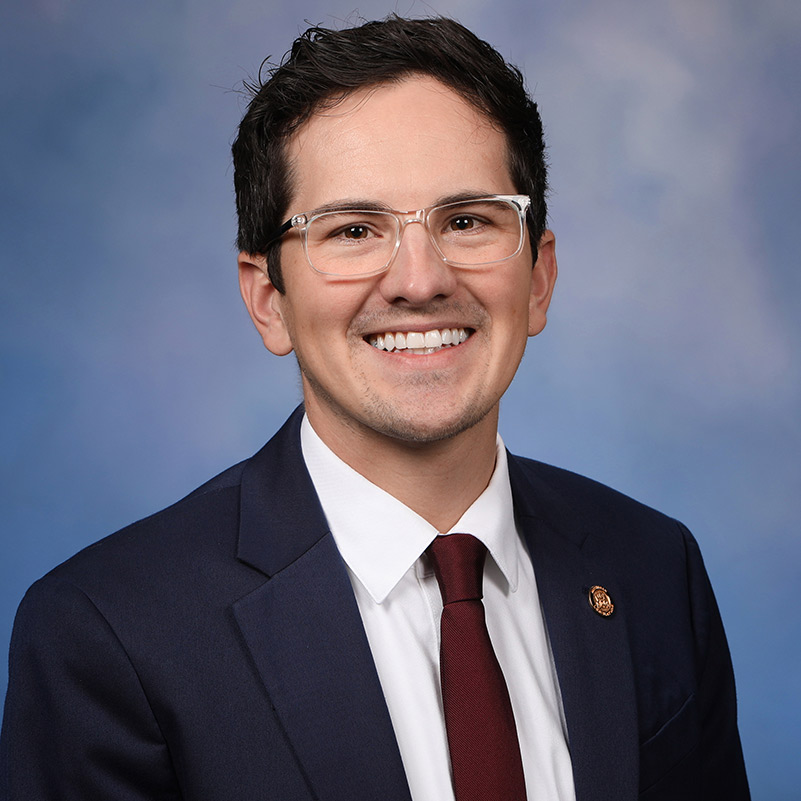
Rep. Jason Morgan
Sponsored bills
Maddy summaryMichigan House Bill 6295 creates a state grant program to help medical, nursing, and other health professions schools promote primary care careers to middle school and high school students. The Department of Health and Human Services would administer the program by awarding grants to eligible educational institutions that agree to conduct outreach activities targeting these younger student groups. A dedicated fund within the state treasury would support the grants, with money carried over from year to year rather than expiring. The department is also required to publish an annual public report detailing the program's cost-effectiveness, successes, challenges, and recommendations for future changes.
Maddy summaryHB 6289 establishes the Primary Care Access, Improvement, and Transformation Commission within Michigan's Department of Health and Human Services to advise on strategies for expanding access to affordable primary care. The commission will consist of 21 members appointed by the governor from lists provided by various medical, nursing, hospital, and advocacy organizations, representing a broad range of stakeholders including physicians, community health workers, insurers, and patients. Its key duties include recommending ways to increase state spending on primary care by at least 12%, analyzing other states' models and federal innovation programs, and publishing an annual report on workforce trends, payer spending, and the impact of artificial intelligence. The bill also requires the commission to hold regional meetings for public feedback and mandates a review of its continued necessity after eight years, with the act itself expiring ten years after it takes effect.
Maddy summaryMichigan House Bill 6291 establishes a new "medical education debt stabilization for students program" administered by the state's higher education loan authority. The bill authorizes loans specifically for residents enrolled in graduate-level medical, nursing, or physician assistant programs within Michigan who are training in high-demand specialties such as family practice, internal medicine, pediatrics, obstetrics, psychiatry, and emergency medicine. To be eligible, applicants must have already exhausted the maximum aggregate limit of federal student loans authorized under the Higher Education Act of 1965. This program aims to provide additional financial support to medical trainees in these specific fields who can no longer access further federal borrowing.
Maddy summaryThis bill amends Michigan's Freedom of Information Act to explicitly extend public records disclosure requirements to the state legislature and the governor's office, which were previously excluded from the definition of a "public body." It also updates key definitions within the law to include modern digital technologies, such as cloud storage and quantum computing systems, in the scope of what constitutes a "writing" or public record. The legislation takes effect on January 1 of the first odd-numbered year at least six months after enactment, provided that a companion bill, House Bill No. 6300, is also passed into law.
Maddy summaryMichigan House Bill 6278 amends the state's liquor control code to establish specific timelines for processing special license applications. It requires applicants to submit their paperwork at least 45 days before the desired event date and mandates that the commission approve or deny these requests no later than 10 days prior to that date. The bill also allows any individual authorized by the applying organization to sign the application form, rather than restricting signature authority. Additionally, it requires the commission to enable electronic submission of applications within 12 months of the law's effective date.
Maddy summaryMichigan House Bill 6290 establishes the Office of Primary Care Transformation within the Department of Health and Human Services to improve access to and the quality of primary care services. The office is tasked with providing technical assistance to medical practices, expanding the healthcare workforce, addressing patient social needs, and strengthening partnerships with community organizations. Additionally, the bill creates a dedicated primary care transformation fund in the state treasury to support these initiatives, with funds remaining available across fiscal years rather than lapsing. This legislation only takes effect if a related companion bill is also enacted into law.
Maddy summaryThis Michigan bill requires electric providers to offer a voluntary green pricing program that allows customers to choose how much of their electricity comes from renewable sources. It mandates that regulated utilities create a specific "clean technologies accelerator tariff" for commercial and industrial participants, ensuring these businesses directly pay for the renewable energy they procure rather than spreading those costs across all ratepayers. The legislation also protects customers who source at least half of their power through the program from paying certain compliance surcharges and requires providers to notify other participants about additional fees. The bill only takes effect if seven related companion bills are also enacted into law.
Maddy summaryThis Michigan bill amends the state's vehicle code to clarify that traffic violations designated as civil infractions cannot be treated as lesser included offenses of criminal charges. It establishes specific fine ranges for various driving and vehicle equipment violations, including a new provision that requires courts to waive fines and costs if a driver cited for an illegible registration plate provides proof of having obtained and installed a compliant plate before their court date. The legislation also mandates a $40 justice system assessment for most civil infractions and allows judges to order additional educational or rehabilitation programs alongside monetary penalties.
Maddy summaryMichigan's HB 6265 requires owners and operators of data centers to submit annual reports to the state public service commission detailing their total water and electricity consumption, along with the sources of that water and the percentage of electricity derived from renewable energy. These reporting obligations begin on March 1, 2028, and if the commission finds a submitted report inaccurate or incomplete, it must notify the operator to file corrected information within 30 days. The bill authorizes civil fines of up to $10,000 for each day a violation continues, with collected penalties deposited into the state general fund. This legislation only takes effect if several other specific bills from the current legislative session are also enacted into law.