

Maddy summaryHB 5263 requires Michigan veterans' facilities and the Department of Military and Veterans Affairs to forward written reports of abuse, neglect, or exploitation to the Michigan Veterans’ Facility Ombudsman. This directly affects veterans' facilities, their employees, and the ombudsman, who gains authority to independently investigate such reports without needing facility approval. The bill mandates that facilities immediately send reports to the ombudsman, who can then interview staff, contractors, or witnesses to probe issues affecting resident veterans’ safety. These changes aim to ensure prompt, impartial reviews of facility conditions that pose health or safety risks to veterans.
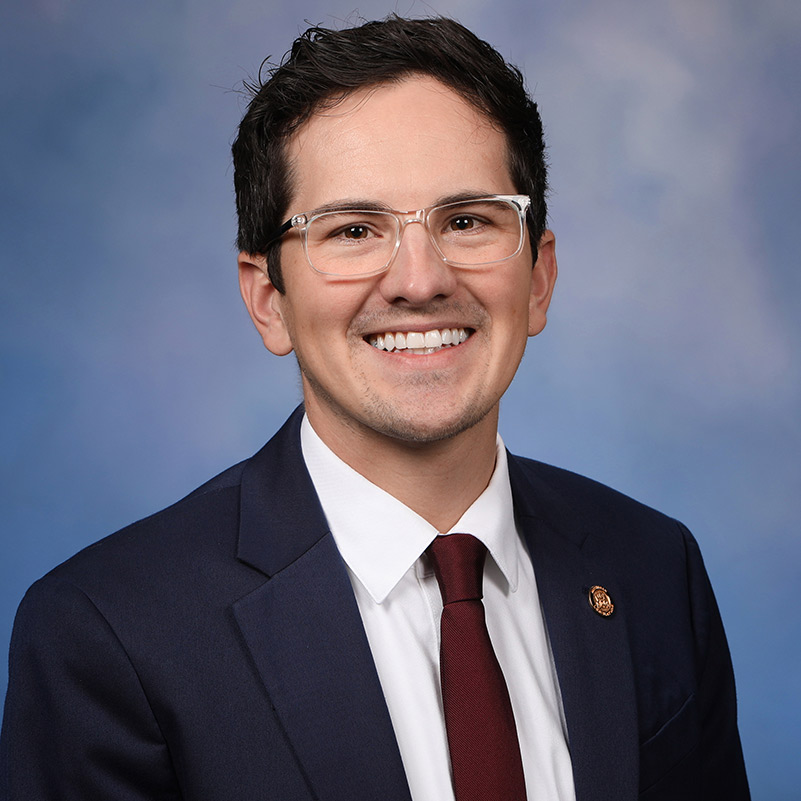
Rep. Jason Morgan
Sponsored bills
Maddy summaryHB 5264 creates a new Michigan Military and Veteran Services Support Fund within the state treasury to provide tax-deductible donations for military members, veterans, and their families. The bill establishes a 7-member board (including agency directors and appointed experts in fundraising) to manage the fund, which will maintain separate accounts for military service members/families and veterans/community support. Contributions stay in the fund year-to-year, and the board can allocate funds for direct grants or supplemental support to state veteran programs. This bill directly affects military personnel, veterans, and their families by creating a dedicated funding mechanism for their services.
Maddy summaryHB 5262 amends Michigan's definition of "veteran" to explicitly include members of the National Oceanic and Atmospheric Administration (NOAA) Commissioned Officer Corps and the Public Health Service Commissioned Corps who meet federal veteran criteria. It directly affects these uniformed service members by ensuring they qualify for state veterans' benefits and protections under Michigan law, similar to traditional military veterans. The key provision adds a new subsection defining "Veteran of the uniformed services" to cover these specific federal corps, mirroring federal eligibility under 38 USC 101. This change creates uniform recognition for these service members within Michigan's veteran support system. The bill is currently in committee referral after its introduction on November 12, 2025.
Maddy summaryHB 5271 establishes the Michigan Azimuth Bridge Program, requiring the Michigan Department of Military and Veterans Affairs to create a mental health transition program for service members and veterans. The program must be offered at least four times yearly, available within two months before and after military separation, and include resources on PTSD, depression, suicide prevention, and bridging military-to-civilian life. It mandates collaboration with nonprofits or government agencies, incorporates the Protecting Veterans Mental Health Act’s resource guide, and prohibits sharing personally identifying data. The bill directly affects Michigan National Guard members and veterans transitioning to civilian life who reside in the state.
Maddy summaryHB 5273 modifies Michigan's Veterans Trust Fund eligibility by removing the requirement that veterans must have served during a specific "period of war" (e.g., Vietnam era) to qualify for assistance. The bill amends Section 2 of the 1946 Veterans Trust Fund Act (MCL 35.602) and repeals the related Section 4a (MCL 35.604a), which previously defined these war periods. This change directly affects veterans who served honorably for at least 180 days but did not meet the prior war-period requirement - such as those with peacetime service or service in non-designated conflicts. The bill streamlines eligibility to include all qualifying veterans regardless of when their service occurred, while retaining other criteria like honorable discharge and Michigan residency.
Maddy summaryHB 5269, the "Veteran Abuse Reporting Act," requires state departments, law enforcement, and prosecutors to notify county veterans' affairs offices or county boards of commissioners within 24 hours of receiving reports of suspected abuse, neglect, or exploitation involving veterans. The notice must include the veteran's name, a description of the incident, and additional details like age or guardian information when available. This bill directly affects veterans who may be victims of abuse by ensuring their reports trigger a coordinated response from county veterans' affairs services. It mandates that counties contact the veteran or their legal representative and refer them to state veterans' services, creating a formal reporting pathway for veteran safety.
Maddy summaryHB 5270 establishes the Office of Mental Health and Suicide Prevention within Michigan's Department of Military and Veterans Affairs to address veterans' mental health needs. The office will collect data on veteran mental health conditions (including PTSD, traumatic brain injuries, substance use disorders, and suicide risk), create a free resource guide with self-assessment tools and local mental health service listings, and submit annual reports to state committees. This guide must be available at no cost to veterans and service members in print or digital formats, with all personally identifying information protected. The bill requires the office to ensure data accuracy and coordinate with existing programs like the "buddy-to-buddy" peer support initiative.
Maddy summaryHB 5279 expands Michigan's veteran designation on driver's licenses to include members of the NOAA Commissioned Corps (NOAACOC) and U.S. Public Health Service Commissioned Corps (USPHSCC). It amends the vehicle code to add these service members to the existing definition of "veteran" for license purposes, requiring the Secretary of State to provide a special veteran designation upon proof of service. This change directly affects current or former members of the NOAA and Public Health Service Corps who hold Michigan driver's licenses. The bill modifies Section 310 of the Michigan Vehicle Code and adds new sections (803v and 803w) to formalize this eligibility.
Maddy summaryHB 5275 modifies Michigan's property tax credit for individual income tax by changing the definition of "disabled veteran" and removing a limit on the credit amount for qualifying veterans. The bill amends sections 506 and 520 of the 1967 Income Tax Act (MCL 206.506, 206.520) to expand eligibility and eliminate a cap previously applied to this credit. This directly affects disabled veterans who claim the property tax credit, allowing them to receive the full credit amount without the prior limitation. The change is a specific policy adjustment to the tax code, not a new benefit.
Maddy summaryHB 5268 amends Michigan law to require the state veterans' facility ombudsman to directly forward reports finding verified abuse, neglect, or exploitation in veterans' facilities to the Department of Licensing and Regulatory Affairs (LARA). This change affects veterans' facilities and their residents, as it ensures LARA - responsible for facility licensing and oversight - receives these reports immediately. The bill modifies Section 10 of the existing ombudsman law to mandate this specific reporting pathway when abuse findings are deemed valid, rather than only sharing internally with the department of military and veterans affairs. This creates a clearer accountability step for serious facility safety concerns.