

Maddy summaryHB 5354 amends Michigan's Public Health Code to allow pharmacists and community-based organizations to dispense or administer opioid antagonists (like naloxone) under standing orders issued by the chief medical executive during public health emergencies or when prescription requirements conflict with public health needs. It specifies conditions for issuing these orders - such as protecting public health during emergencies or ensuring access without individual prescriptions - and requires detailed documentation in each standing order. The bill also provides liability protection for pharmacists, community organizations, and health department staff acting under these orders, unless the action involves willful misconduct or gross negligence. Standing orders expire after 1 year (for non-emergency uses) or 6 months (for emergencies), with extensions requiring public justification on the state health department website.
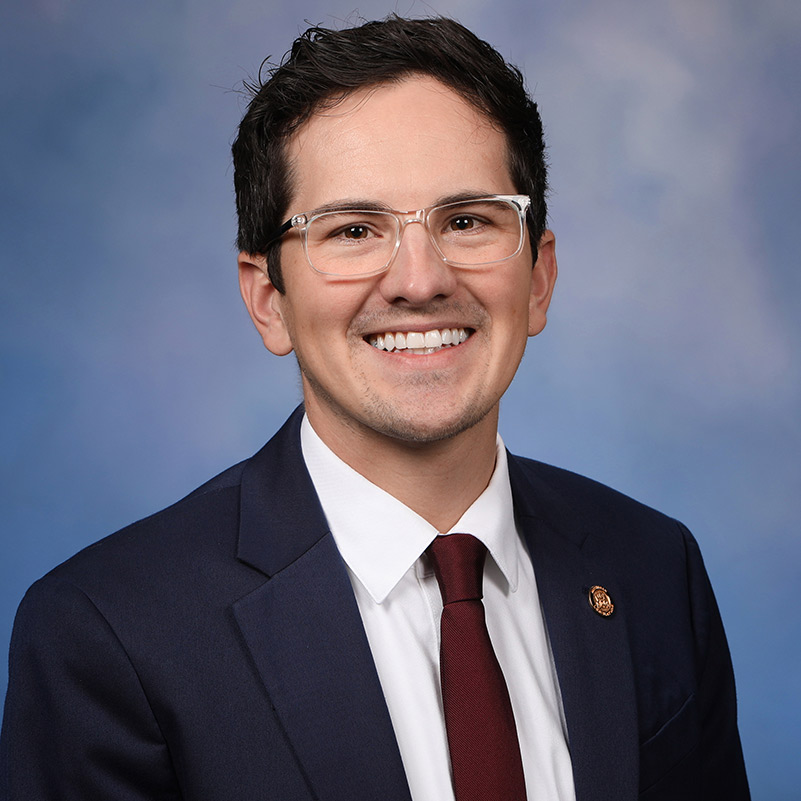
Rep. Jason Morgan
Sponsored bills
Maddy summaryThis House Resolution (HR 224) urges the Trump-Vance administration to reverse its denial of federal disaster relief funding for northern Michigan residents affected by a March 2025 ice storm. It specifically requests the full amount of funding requested under the Stafford Act for individual assistance, public utilities, and hazard mitigation after the storm caused widespread infrastructure damage and hardship. The resolution is non-binding and serves only to formally express congressional support for affected communities, directing copies to the President, FEMA, and Michigan's congressional delegation. It does not alter funding decisions or create new legal obligations.
Maddy summaryHB 5333 increases penalties for environmental violations related to landfills under Michigan's Natural Resources and Environmental Protection Act. It raises the maximum administrative, civil, and criminal fines for landfill owners or operators from $10,000 to $100,000 per violation (or per day of ongoing violation), and increases the total administrative fine cap for landfill operators from $100,000 to $1,000,000. The bill amends specific sections (5529, 5530, 5531) to implement these higher fines for violations including failure to obtain permits, noncompliance with permits, or other regulatory breaches. These changes directly affect landfill operators by imposing significantly higher financial penalties for violations. The bill does not create new requirements but increases enforcement consequences for existing regulatory breaches.
Maddy summaryHB 4220 amends Michigan's veterinary practice law (MCL 333.1101 - 333.25211) by adding a new section (18818) that establishes requirements for the veterinarian-client-patient relationship. The bill directly affects veterinarians and pet owners by defining the legal obligations within this relationship. Key provisions require veterinarians to maintain clear communication and documentation when providing care, ensuring patient welfare and professional accountability. The bill passed the House overwhelmingly (84-17) and was transmitted to the Regulatory Affairs Committee for further review.
Maddy summaryHB 4221 amends Michigan's Public Health Code to clarify and strengthen regulations for veterinarians and veterinary technicians. It specifically restricts the use of titles like "veterinarian," "DVM," or "veterinary surgeon" to only licensed professionals, and prohibits veterinary technicians from diagnosing diseases, prescribing treatments, or performing surgery. The bill ensures that only authorized individuals may use protected titles or practice within their licensed scope. These changes directly affect licensed veterinarians, veterinary technicians, and the public by maintaining clear standards for veterinary care.
Maddy summaryHB 5285 prohibits minors under 18 from using or possessing BB guns (defined as pneumatic guns firing BBs/pellets via spring, gas, or air) outside their home property without an adult over 18 present. It directly affects unaccompanied minors who might use such devices in public or non-residential areas. The bill creates penalties for violations, including up to 90 days in jail or a $500 fine, and clarifies that "pneumatic gun" includes common BB/pellet guns. The legislation is pending review by the Government Operations Committee after its introduction on November 13, 2025.
Maddy summaryHB 5290 requires public employers to negotiate minimum staffing levels as a mandatory topic in collective bargaining agreements for firefighters and other public employees covered under Michigan's 1969 firefighting safety law (MCL 423.231-423.247). This change applies specifically to units where employees face firefighting hazards, making staffing levels part of required negotiations. Employers may opt out of bargaining on staffing levels only if they face budget shortfalls from state revenue or property tax declines, or if a millage increase would be needed to cover costs. The bill amends sections 11 and 15 of Michigan's 1947 Public Employment Relations Act to update mandatory bargaining requirements.
Maddy summaryHB 5258 establishes a new "Iraq and Afghanistan veteran recognition certificate" for Michigan veterans who served honorably in those conflicts. To qualify, veterans must have been Michigan residents (or former residents) during their service, served during active combat periods in Iraq or Afghanistan, and received an honorable discharge. The certificate can be awarded only once per person, and family members may receive it if the veteran has passed away. This bill updates Michigan’s military recognition program to specifically honor veterans of recent conflicts, building on existing provisions for Vietnam War veterans.
Maddy summaryHB 5261 establishes a mental health support program within Michigan's Veterans Affairs Agency. It requires the agency to partner with the Department of Health and Human Services to conduct statewide outreach on mental health resources for service members, veterans, and their families (Section 322(1)(a)), develop materials to help families recognize mental health changes (Section 322(1)(b)), and collect data under the Protecting Veterans Mental Health Act (Section 322(1)(c)). The bill also creates a dedicated family support program for navigating mental health services (Section 322(2)) and allows digital platforms to connect veterans to resources (Section 322(3)), while protecting individual health records from public disclosure under the Freedom of Information Act (Section 322(4)). The bill is contingent on the passage of companion bill HB 5270.
Maddy summaryHB 5267 requires Michigan's veterans' facility ombudsman to notify specific parties within 10 business days when deciding to investigate complaints or reports of abuse, neglect, or exploitation in state veterans' homes. It directly affects resident veterans, their families, legal representatives, and the facilities themselves, as well as the Department of Military and Veterans Affairs and the Department of Licensing and Regulatory Affairs. The bill mandates written notification to complainants, affected veterans, and relevant departments upon initiating or declining an investigation, ensuring transparency in the process. This amendment to existing law (2016 PA 198) focuses on improving communication and accountability in handling facility abuse reports.