

Maddy summaryHB 5366 requires real estate wholesalers to provide mandatory disclosures to buyers when transferring purchase agreements. It defines "assignment fee" as the payment for such transfers and mandates clear disclosure of these fees to buyers before closing. The bill directly affects real estate wholesalers and brokers who facilitate these transactions, ensuring buyers understand all financial terms upfront. This change aims to increase transparency in real estate wholesaling without altering licensing requirements.
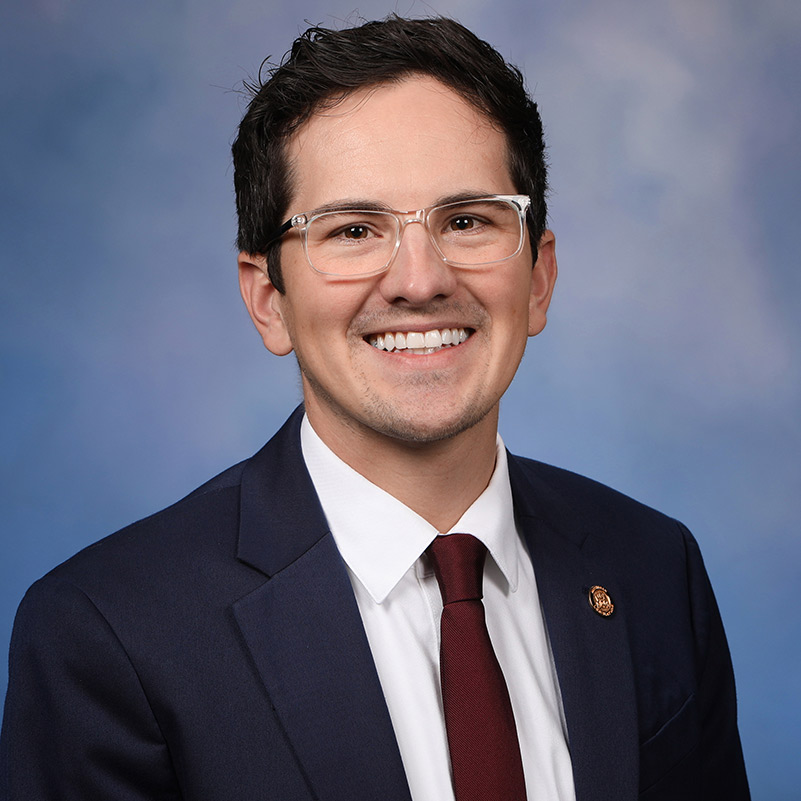
Rep. Jason Morgan
Sponsored bills
Maddy summaryThis bill amends Michigan's property recording rules to standardize formatting and privacy requirements for deeds, mortgages, and other property transfers recorded with county registers of deeds. Key changes include requiring documents to be printed on 20-pound white paper in 10-point font with clear addresses, obscuring the first five digits of Social Security numbers after specified dates, and mandating legible signatures with printed names beneath them. These rules apply to anyone submitting property documents for recording, ensuring consistent formatting and reducing privacy risks. The bill focuses on procedural clarity rather than substantive policy changes to property transactions.
Maddy summaryHB 5374 requires that workers on specific broadband service projects in Michigan be paid prevailing wages and fringe benefits, as defined by state labor law. This applies to broadband developers constructing, maintaining, or expanding infrastructure (like fiber optic lines) for new projects funded by state or local governments, but excludes projects receiving federal funding under the Infrastructure Investment and Jobs Act or the Coronavirus Capital Projects Fund. The bill amends Michigan’s existing prevailing wage law to explicitly include broadband service projects under the same wage standards as other state-funded construction work. It defines key terms like "broadband service project" and clarifies which federal programs are exempt from these requirements.
Maddy summaryHB 5365, the "SFR Tax and Economics Act," imposes a surtax on large investors (entities owning 50+ single-family homes) for acquiring, selling, or holding properties. It requires certified entities (like community land trusts or MSHDA-approved groups) to implement 15-year affordability covenants limiting rent/sale prices to 30-80% of local median income. The bill affects large real estate investors and entities receiving state benefits related to single-family homes, mandating reporting and compliance. Proceeds from surtaxes fund affordable housing initiatives, while exemptions apply to qualifying "mission buyers" like public housing agencies.
Maddy summaryHB 5355, the "Michigan Fair Chance Access to Housing Act," prohibits landlords from requiring or considering an applicant's criminal record during initial rental screening. Landlords must issue a conditional offer after checking income, credit, or rental history, then may only consider specific serious offenses (like arson, human trafficking, or sex offenses requiring registration) or recent felonies within 3 years after a conditional offer is made. Landlords must disclose if they consider criminal records and allow applicants to submit evidence of rehabilitation or mitigating factors before denying housing. This bill directly affects landlords across Michigan and rental applicants with criminal records, aiming to reduce barriers to housing based solely on past convictions.
Maddy summaryThis resolution (HR 227) urges the U.S. House of Representatives to investigate allegations that Secretary of Defense Pete Hegseth authorized military actions in the Caribbean Sea that killed at least one unarmed civilian fisherman, with no public evidence the individual was a combatant. If evidence supports these allegations, it calls for the House to introduce and adopt articles of impeachment against Hegseth for potential violations of federal law, international humanitarian law, and the Constitution. The resolution references the War Powers Resolution, the War Crimes Act, and the Geneva Conventions to frame the alleged misconduct. It does not create new law but formally requests the House take specific action. (Procedural resolution; summary limited to 2 sentences as instructed.)
Maddy summaryHB 4314 amends Michigan's environmental law to allow property owners and communities to remove free-floating debris and uprooted vegetation from shorelines without a permit. Specifically, it permits mechanical or manual removal between the ordinary high-water mark and the water's edge, as long as the activity doesn't impact the lakebed. This change directly affects residents, shoreline property managers, and local groups maintaining areas along Great Lakes and Lake St. Clair shorelines. The exemption does not apply to the St. Clair River delta area in Clay Township, St. Clair County, as defined in 1899 PA 175.
Maddy summaryHB 5349 requires Michigan's Department of Health to create standardized forms for two types of school immunization exemptions. Medical exemptions (for health reasons) must include details like the vaccine type, reason for exemption, and expiration date. Non-medical exemptions (for religious or other objections) must include education about vaccine benefits and risks, require in-person form pickup from a health department, and include witnessed signatures. This bill directly affects parents seeking exemptions, schools requiring immunization records, and local health departments distributing the forms.