

Maddy summaryHB 4166 prohibits the non-medical use of xylazine (a sedative sometimes mixed with drugs like fentanyl) in Michigan. It defines "illicit use" as any xylazine use not covered under "licit use," which includes legal veterinary applications, pharmaceutical manufacturing, or approved medical treatments. The bill amends Michigan's Public Health Code to make possessing or using xylazine for non-licensed purposes a felony, with penalties ranging from up to 20 years in prison or fines up to $1 million depending on the amount. This directly affects individuals using xylazine outside approved medical or veterinary contexts, aligning penalties with those for other controlled substances like opioids.
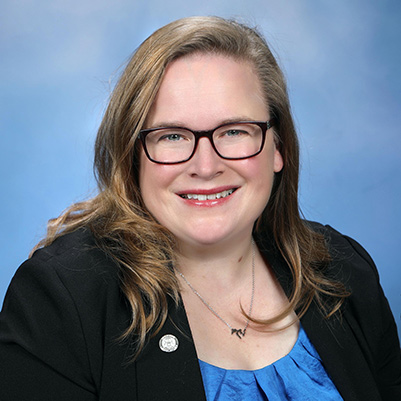
Rep. Kelly Breen
Sponsored bills
Maddy summaryThis resolution (HR 33) calls on the U.S. Congress to restore funding from the United States Agency for International Development (USAID) to research universities. It directly affects research institutions that rely on USAID for critical projects in agriculture, food security, public health, and global development. The resolution states that a recent funding freeze has disrupted programs like the Feed the Future Lab, threatening research progress and international partnerships. As a non-binding resolution, it urges Congress to act but does not change funding policies itself.
Maddy summaryThis House Resolution (HR 34) urges the federal government to consider the economic impacts of tariffs on trade with Canada and Mexico. It directly affects Michigan businesses, particularly in agriculture (where Canada is the top export market), manufacturing, and auto production, which rely on stable North American supply chains. The resolution reaffirms support for the U.S.-Mexico-Canada Agreement (USMCA) and highlights Michigan’s $3 billion annual agricultural exports and $55 billion in annual trade with Ontario. As a non-binding resolution, it does not create new laws but formally advocates for fair trade negotiations to protect Michigan’s economy.
Maddy summaryHB 4146 modifies Michigan's licensing rules for psychologists by adding a new requirement for newly licensed practitioners. The bill mandates that for the first 180 days after licensure (except for government or nonprofit employees), new psychologists must work under supervision by a fully licensed psychologist - not another limited licensee. Exceptions apply to those working in government or charitable roles who aren't diagnosing autism spectrum disorder, or those diagnosing autism who already hold a limited license for at least three years. This change directly affects new psychology licensees, altering their initial practice conditions while providing specific exemptions for certain work settings.
Maddy summaryHB 4123 amends Michigan's Reconnect Grant Act to expand support for adult learners pursuing industry-recognized credentials. It requires eligible community colleges and career-training programs to implement corequisite academic support (taking college-level courses while receiving targeted help) instead of traditional remedial classes, and to report on student success strategies like credit for prior learning. The bill directly affects adult students enrolled in these programs and institutions receiving Reconnect Grants, including career-tech centers and apprenticeships offering stackable credentials. Key changes include expanding grant funding eligibility to cover non-degree certificate programs and mandating institutions to provide free academic support for students needing remediation. If passed, these changes would reshape how Michigan's community colleges and career programs support adult learners seeking job-ready skills.
Maddy summaryHB 4109 clarifies that health club staff (including owners and employees) have no legal obligation to provide emergency medical assistance using on-site AEDs during health club incidents. It explicitly states this does not override Michigan's existing Good Samaritan law (1963 PA 17), which protects people who assist in emergencies. The bill requires companion bill HB 4108 to pass first before taking effect. This directly affects health club operations regarding medical emergency response protocols.
Maddy summaryHB 4096 expands worker's compensation protections for public safety workers by presuming that heart and respiratory diseases develop from job duties. It directly affects full-time, part-time, and paid-on-call members of fire, police, and public safety departments; county sheriffs and deputies; state police; conservation officers; and forest/motor carrier enforcement officers. The bill amends Section 405 to include these conditions as "personal injury" under the Worker's Disability Compensation Act, meaning they are presumed work-related unless proven otherwise. Before claiming benefits, applicants must first seek pension eligibility under Section 405(4), and benefits from the new presumption cannot overlap with employer-provided coverage.
Maddy summaryThis resolution declares February 2025 as Black History Month in Michigan, formally recognizing the month-long observance of African American contributions to history and culture. It does not create new laws or allocate state resources; instead, it serves as a symbolic declaration by the Michigan House of Representatives to honor Black achievements and reflect on racial justice. The resolution cites historical context, including Dr. Carter G. Woodson's origins of Black History Month and President Ford's 1976 recognition. It encourages statewide awareness of African American milestones and the ongoing pursuit of equality, aligning with longstanding national observances.
Maddy summaryThis is a ceremonial resolution, not a policy bill. It declares February 14, 2025, as "Frederick Douglass Day" in Michigan to honor the abolitionist's legacy. The resolution commemorates Douglass' life and contributions, including his birth date adoption and work for civil rights, but has no legal effect or impact on state laws or residents. It serves solely as a symbolic recognition.
Maddy summaryThis resolution symbolically declares February 2025 as "2-1-1 Month" in Michigan to raise public awareness of the 2-1-1 helpline. It recognizes the service as a free, 24/7 resource connecting residents to community support like housing, food, and disaster assistance - used over 406,000 times in FY2024. The resolution has no binding effect and solely aims to acknowledge the helpline’s role in supporting Michiganders.