

Maddy summaryHB 5143 would establish new fee requirements for interior design license applicants and holders in Michigan. It sets a $175 application processing fee and a $125 annual license fee under the State License Fee Act (MCL 338.2201-338.2277). The bill directly affects individuals seeking or maintaining an interior design license in the state, as defined under Michigan's occupational code. This amendment requires the fees to be paid to the licensing authority for each license cycle. The bill is currently pending in the Regulatory Reform Committee after its introduction on October 28, 2025.
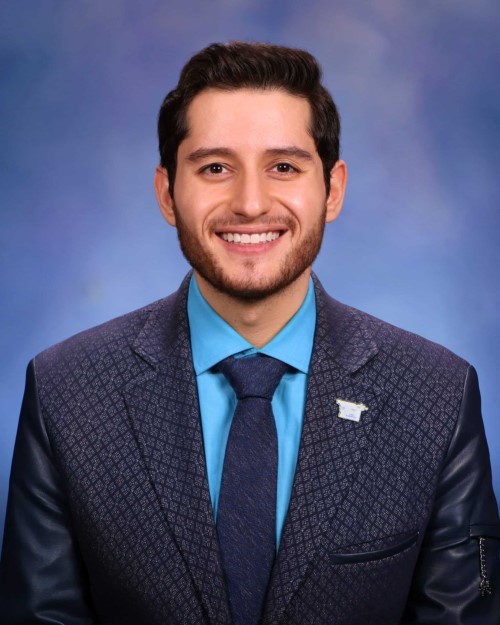
Rep. Noah Arbit
Sponsored bills
Maddy summaryHB 5071 provides supplemental state funding for programs addressing violence against women, specifically allocating money to support existing grant programs under Michigan's Violence Against Women Act (VAWA) initiatives. This bill directly affects state agencies and local organizations administering these grants, such as domestic violence shelters and legal aid services. The key mechanism is creating a new appropriation within the state budget for fiscal year 2026 to cover costs not previously funded. It does not change eligibility or program rules but ensures continued funding for these services through a dedicated budget line. The bill is currently under review by the Appropriations Committee after its introduction on September 26, 2025.
Maddy summaryHB 5058 expands Michigan's "Divestment from Terror Act" to require state fiduciaries (like retirement fund managers) to divest from companies with significant business ties to Russia, Iran, and North Korea, which are newly designated as "state sponsors of terror." The bill defines "scrutinized companies" as those earning over 10% of revenue from these nations or making large investments (≥$20 million) that support them, unless they take "substantial action" to cease such ties within a year. It exempts companies providing humanitarian aid (e.g., food, medicine) in these countries. This applies to state funds managing retirement systems, public school employees' pensions, and other state-managed accounts. The law takes effect immediately for Russia, Iran, and North Korea upon enactment.
Maddy summaryHB 5072 allocates supplemental state funds specifically for testing sexual assault kits in Michigan for the fiscal year ending September 30, 2026. It directly affects state law enforcement agencies and crime laboratories responsible for processing these kits by providing dedicated budget resources. The bill creates a new appropriation within the state budget to cover testing costs, ensuring these kits can be processed without relying on existing funding streams. This is a funding measure, not a policy change to how kits are collected or handled.
Maddy summaryHB 5070 is a supplemental appropriations bill that allocates additional state funds for Michigan's prenatal and infant support program. It directly affects the program by providing dedicated funding for services supporting pregnant individuals and infants. The bill creates a formal funding mechanism (an appropriation act) to ensure these funds are available for the 2026 fiscal year. As a procedural budget measure, it does not change program eligibility or service rules but secures financial resources for existing support services.
Maddy summaryHB 4874 requires the Michigan legislature to appropriate at least $12.3 million annually starting fiscal year 2026 for supplemental payments to rural school districts meeting specific criteria defined in existing law (MCL 388.1622d). This bill directly affects eligible rural and isolated school districts by guaranteeing additional state funding beyond their regular school aid. The key provision mandates a fixed annual appropriation for these districts, ensuring consistent supplemental support beginning in 2026. The bill does not change how districts operate or define "rural districts," but rather establishes a dedicated funding stream for them. It is currently in the introduction phase, referred to the Appropriations Committee.
Maddy summaryHB 4875 mandates annual state funding of at least $125 million starting in fiscal year 2026 to cover school transportation costs for students. It directly affects Michigan public school districts by requiring dedicated state appropriations for pupil transportation, as defined under existing state school aid law. The bill creates a permanent funding mechanism ensuring consistent support for school bus services and related operational costs. This provision applies specifically to transportation services for students, not general school funding. The bill is currently under review in the Appropriations Committee after its introduction on September 11, 2025.
Maddy summaryHB 4870 creates a state program to provide free breakfast and lunch to all public school students in grades pre-K through 12, as well as students up to age 26 in special education programs. Participating schools must already be in the federal National School Lunch Program and offer meals at no cost to every student, while maximizing federal funding through the Community Eligibility Provision (CEP). The bill requires schools to accommodate documented medical dietary needs on a case-by-case basis and encourages offering religiously appropriate meals that meet federal nutrition standards. It also mandates schools to simplify income forms for families to help determine eligibility for other federal benefits.
Maddy summaryHB 4872 requires Michigan public schools to receive at least $210 per student annually starting in fiscal year 2026 for mental health and safety programs. It directly affects all public schools in the state by mandating this minimum per-pupil funding level, defined using the standard "membership" calculation from Michigan's school aid law. The bill creates a new funding mechanism within the School Code to address school safety and student mental health needs. This is a concrete policy change that would allocate state funds specifically for these purposes, not a procedural or commemorative measure.
Maddy summaryHB 4876 requires Michigan's legislature to appropriate annual funding starting in fiscal year 2026 to support career and technical education (CTE) and vocational-technical programs in public schools. It mandates that this funding must equal or exceed the total amount allocated for these programs in fiscal year 2025 under existing law (sections 61a, 61b, 61d, and 62 of the State School Aid Act of 1979). The bill directly affects school districts offering CTE programs by guaranteeing stable, inflation-matched funding levels. This provision aims to maintain current program resources without specifying new educational requirements or eligibility changes.