

Passed Apr 16, 2026
1 co-sponsor
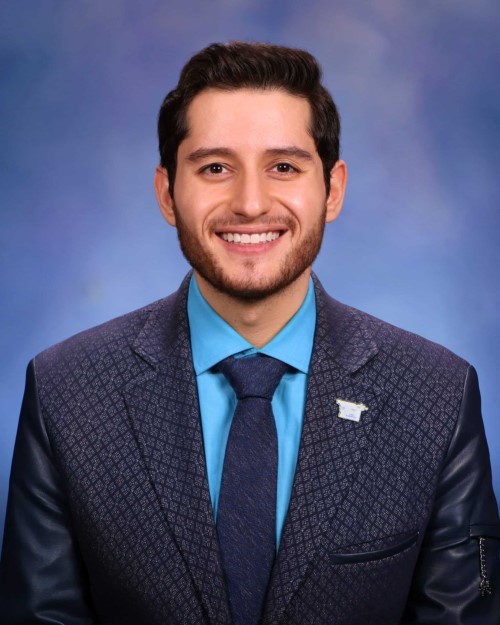
Rep. Noah Arbit
Total votes
1,747
all sessions
Attendance
95%
89 missed
Lower than 89% of chamber peers
With party
95%
of cast votes
Lower than 81% of chamber peers
Bipartisan score
2%
crosses aisle rarely
Higher than 77% of chamber peers
Sponsored
887
bills & resolutions
Near the chamber average
Committees
2
assignments
887 bills and resolutions
Sponsored bills
Total
887
Primary
55
Co-sponsor
832
This page
887
matching current filters
Human services: medical services; coverage for prescribed pediatric extended care; require. Amends 1939 PA 280 (MCL 400.1 - 400.119b) by adding sec. 109u. TIE BAR WITH: HB 5252'25
Maddy summaryHB 5251 requires Michigan's medical assistance program (Medicaid for low-income residents) to cover prescribed pediatric extended care for children. This specifically affects low-income children in Michigan who need specialized, long-term medical care beyond standard hospital stays. The bill amends state law to mandate this coverage under existing rules for pediatric extended care (Part 219A of the Public Health Code). The coverage would apply to children receiving medically necessary care as prescribed by a doctor. The bill is contingent on the passage of companion legislation (HB 5252).
In committee Apr 15, 2026
1 co-sponsor
Health facilities: licensing; licensing of prescribed pediatric extended care facilities; provide for. Amends secs. 20106, 20109, 20115 & 20161 of 1978 PA 368 (MCL 333.20106 et seq.) & adds pt. 219A.
Maddy summaryHB 5252 amends Michigan's Public Health Code to create a new licensing category for "prescribed pediatric extended care facilities," which provide specialized long-term medical care for children with complex health needs. The bill establishes specific licensing requirements for these facilities, including standards for staffing, medical oversight, and facility operations, directly affecting providers seeking to operate such services. Key provisions include adding Part 219A to the code and revising existing sections (20106, 20109, 20115, 20161) to incorporate these new requirements. This change aims to ensure consistent safety and quality standards for pediatric extended care facilities across the state. The bill is currently pending in the House Health Policy Committee.
Passed Apr 15, 2026
1 co-sponsor
A resolution to call on the United States House and Senate committees on Armed Services to investigate the February 28, 2026, strike on Shajareh Tayyebeh Primary School and call on United States Secretary of War Pete Hegseth to resign.
Maddy summaryThis House resolution calls for an investigation into a February 2026 missile strike on a primary school in Iran that reportedly killed over 100 children. It urges the House and Senate Armed Services committees to examine how the attack occurred, focusing on potential intelligence errors and decision-making processes that may have violated international laws of war. The bill also demands the resignation of Secretary of War Pete Hegseth, arguing that he bears responsibility for the actions of the Department of War. By requesting these specific actions, the resolution seeks to address alleged war crimes and prevent future incidents involving civilian casualties.
In committee Apr 14, 2026
1 co-sponsor
Consumer protection: other; surveillance pricing; prohibit. Amends secs. 3, 5 & 11 of 1976 PA 331 (MCL 445.903 et seq.) & adds sec. 3p.
Maddy summaryThis bill amends Michigan's Consumer Protection Act to prohibit merchants from charging consumers prices that are grossly in excess of what similar products or services cost elsewhere. It directly affects businesses and consumers by establishing clearer rules against predatory pricing practices. The key provision adds a new unfair practice definition that makes it unlawful to charge prices significantly higher than market rates for comparable goods or services. This change aims to protect consumers from price gouging while maintaining the existing framework of consumer protection laws.
In committee Apr 14, 2026
0 co-sponsors
Vehicles: registration; electric vehicle registration fee; provide for. Amends 1949 PA 300 (MCL 257.1 - 257.923) by adding sec. 801l. TIE BAR WITH: HB 5766'26
Maddy summaryThis bill establishes a new road usage charge for electric vehicles, self-charging hybrids, and plug-in hybrids in Michigan, starting on January 1, 2027. Vehicle owners can choose between paying a flat annual registration fee or a mileage-based tax that accounts for miles driven within the state. The mileage option requires owners to allow their vehicle's odometer data to be reported to the state, with penalties for tampering with odometers or misreporting mileage. Funds collected from these taxes will be used to administer the program or deposited into the state's transportation fund. The bill also sets rules for how the state will contract with a private company to manage the mileage tracking and billing system.
Budget & TaxesSupports Budget & TaxesBill creates new revenue source through road usage charge for EVs, increasing state budget funds while maintaining fiscal responsibility.
TransportationSupports TransportationBill establishes road usage charge for electric vehicles, promoting sustainable transportation and modernizing vehicle registration systems.
In committee Apr 14, 2026
1 co-sponsor
Vehicles: registration; electric vehicle registration fee; provide for. Amends secs. 227 & 801 of 1949 PA 300 (MCL 257.227 & 257.801). TIE BAR WITH: HB 5765'26
Maddy summaryThis bill proposes changes to Michigan's vehicle registration laws, specifically affecting how electric vehicles are registered and what fees they must pay. It amends existing sections of the Michigan Vehicle Code to update registration procedures and fee structures for electric vehicles. The legislation would directly impact vehicle owners, dealers, and the state Department of Motor Vehicles by modifying how electric vehicle registrations are processed and fees are calculated. As a companion bill tied with HB 5765, it works alongside related legislation to establish new registration requirements for electric vehicles in Michigan.
In committee Apr 14, 2026
1 co-sponsor
Energy: alternative sources; regulations regarding small portable solar generation devices; provide for. Amends 2008 PA 295 (MCL 460.1001 - 460.1232) by adding sec. 115.
Maddy summaryThis bill allows Michigan customers to install small, portable solar power systems on their property without needing approval from their electric provider or paying installation fees. It defines these systems as plug-in photovoltaic devices that produce up to 1,200 watts and connect through standard electrical outlets, while protecting providers from liability for any damage caused by customer installations. The law requires customers to notify their electric provider within 30 days of installation using a form developed by the state commission, which must include details like the system's capacity and address. Electric providers cannot require additional equipment or charge fees for these systems, and providers must not approve or reject their use. The bill amends Michigan's Clean and Renewable Energy Act to formalize these rules for small-scale solar generation.
In committee Apr 14, 2026
1 co-sponsor
Civil procedure: other; firearm industry responsibility act; provide for. Amends 1961 PA 236 (MCL 600.101 - 600.9947) by adding sec. 3845. TIE BAR WITH: HB 5760'26
Maddy summaryThis bill would add a new section to Michigan's civil procedure laws that allows the state attorney general and private individuals to sue firearm industry members for creating or maintaining a public nuisance through the sale, manufacture, or marketing of firearms and related products. The legislation requires these companies to establish reasonable controls over their products to prevent sales to prohibited persons, prevent theft, and stop the installation of devices like pistol converters, without needing to prove the company intended to cause harm. If a company violates these requirements, the attorney general can seek injunctions, damages, and other relief, while private victims of harm can also file lawsuits for compensatory and punitive damages. The bill defines firearm industry members broadly to include sellers, manufacturers, and distributors, and explicitly includes 3D printers and other manufacturing equipment in its scope.
In committee Mar 19, 2026
1 co-sponsor
Weapons: concealed; concealed pistols in certain state buildings; prohibit. Amends sec. 5o of 1927 PA 372 (MCL 28.425o).
Maddy summaryThis bill prohibits licensed concealed pistol carriers from bringing firearms into specific state buildings and certain public venues, including schools, hospitals, sports arenas, and places of worship. It also bans portable electro-muscular disruption devices in these same locations, with exceptions for parking areas and certain law enforcement personnel. The legislation applies to all licensed individuals except retired police officers, security contractors, private investigators, and other designated law enforcement roles who are permitted to carry weapons on these premises. Violations result in civil fines, license suspensions, or criminal penalties depending on whether it is a first, second, or subsequent offense.
In committee Mar 19, 2026
0 co-sponsors
Ask Maddy
·
AI policy assistant
Ask Maddy about Noah Arbit
Scope: michigan
Hi! I can help you understand Noah Arbit's legislative record. What would you like to know?
Try one of these
i
Maddy answers using official bill text and legislative records. Always verify before sharing.
Sources cited inline