

Maddy summaryHB 5513 requires Michigan's insurance department to create a standardized application process for health insurers to verify healthcare providers' qualifications (credentialing). This directly affects health insurers operating in Michigan and the healthcare providers seeking to be listed on insurance provider networks. The bill establishes a uniform application form under Section 3406uu of the Insurance Code and clarifies that insurers aren't required to violate nationally recognized credentialing standards. The bill is tied to the enactment of related legislation (HB 5512) to take effect.
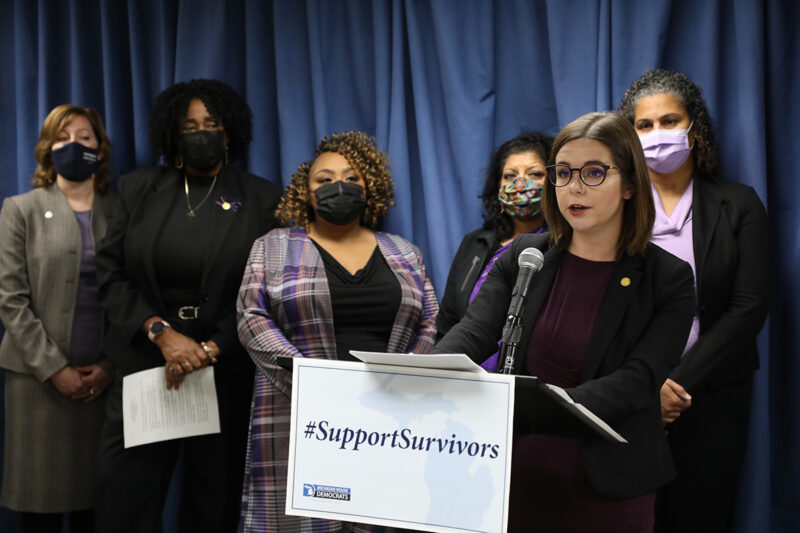
Rep. Laurie Pohutsky
Sponsored bills
Maddy summaryHB 5512 sets clear timelines for health insurers to process applications from healthcare providers seeking to join their provider networks. Insurers must acknowledge receipt within 7 days, notify providers of incomplete applications within 30 days (giving them 30 days to fix issues), and complete the credentialing process within 60 days total. If approved, insurers must reimburse providers for covered services starting from when the completed application was received. This directly affects doctors, clinics, and other healthcare providers applying to be in insurer networks, ensuring faster access to network participation.
Maddy summaryHB 5494 prohibits Michigan state agencies or anyone acting on behalf of the state from selling or transferring state-owned property to U.S. Immigration and Customs Enforcement (ICE) or its subsidiaries. It requires that any property transfer must include a restriction banning the property from being used as an immigration detention center by ICE, federal contractors, or private companies working with the federal government. The state can reclaim the property if this restriction is violated, and any transfer violating these rules is legally void. This directly affects state property transactions and limits federal immigration enforcement use of Michigan land.
Maddy summaryHB 5493 regulates how state and local law enforcement agencies use automatic license plate reader (ALPR) systems. It prohibits most ALPR use except for specific purposes like checking for stolen vehicles, outstanding warrants, uninsured vehicles, or active criminal investigations. The bill requires agencies to delete captured plate data within 14 days (unless used as evidence or for ongoing investigations), adopt public policies on ALPR use, and submit quarterly usage reports. It directly affects police departments and other government entities that operate ALPR systems, limiting their data collection and retention practices.
Maddy summaryHB 5492, the "regulating automatic license plate readers act," sets rules for private entities operating automatic license plate reader (ALPR) systems, requiring them to preserve captured license plate data for 14 days when law enforcement or a criminal defendant requests it with a specific written statement. The bill prohibits using the data as evidence in court if disclosure would violate the act, mandates data destruction after 14 days if not used, and allows individuals to sue for violations and recover at least $1,000 in damages or actual damages plus legal fees. Vehicle owners' data is protected from public disclosure without consent, except under a court order or warrant, and cannot be accessed by law enforcement without a warrant or specific preservation request.
Maddy summaryThis resolution (HR 234) urges the Trump-Vance Administration to stop making threats against Denmark regarding Greenland. It directly addresses U.S. officials, emphasizing that Greenland is an autonomous territory within Denmark (recognized under international law) and that any political change must come from Greenlanders freely, without coercion. The resolution calls for diplomacy based on respect for sovereignty and international law, rather than threats or military pressure, to protect NATO alliance unity. As a symbolic resolution, it has no legal effect but expresses congressional concern about actions undermining U.S. alliances and international norms.
Maddy summaryHB 5454 prohibits the use of perchloroethylene (PCE) in dry cleaning solvents in Michigan, directly affecting dry cleaning businesses, manufacturers, and sellers. The bill bans manufacturing PCE solvents after December 1, 2031; selling them after June 1, 2032; and using them after December 1, 2032. It creates a state fund to provide grants and resources for dry cleaners transitioning to safer alternatives, including cost-share programs and a buy-back program for existing PCE products. The Department of Environment, Great Lakes, and Energy will administer the fund and cost-share program. Violations could result in civil fines up to $10,000.
Maddy summaryHB 5432 is a supplemental appropriations bill that allocates additional state funding for multiple departments, agencies, and the legislative branch for the 2025-2026 fiscal year. It provides specific monetary amounts to cover budget gaps or new needs identified during the fiscal year, with conditions on how the funds may be spent. This bill directly affects state government operations by ensuring funding continuity for essential services and programs across various agencies. As a procedural funding measure, it does not change policy but adjusts financial resources for existing government functions.
Maddy summaryHB 5431 allocates supplemental funding for Michigan public schools, primarily targeting districts affected by drinking water emergencies. It provides $10 million from the state school aid fund and $4.8 million from the general fund (2025-2026) for districts with at least 4,500 students (or 2,600+ post-2016) in cities with declared water emergencies, to hire staff like nurses and mental health workers and provide related services. The bill also allocates $12.5 million for educator talent programs through intermediate districts. All funds require reporting on service usage and must be expended by 2030.