

Maddy summaryHB 5357, the "Age-Appropriate Design Code Act," requires businesses meeting specific thresholds (e.g., $25 million+ annual revenue or handling data of 50,000+ consumers) to design online services, products, or features accessed by known minors (under 18) with privacy and safety as defaults. It prohibits "dark patterns" that manipulate user choices, bans collecting precise geolocation data without consent, and mandates age-appropriate settings for minors. The law applies to businesses operating in Michigan that process personal information of minors, creating civil penalties for violations. It establishes a fund to support enforcement and defines key terms like "known minor" and "business" to clarify compliance requirements.
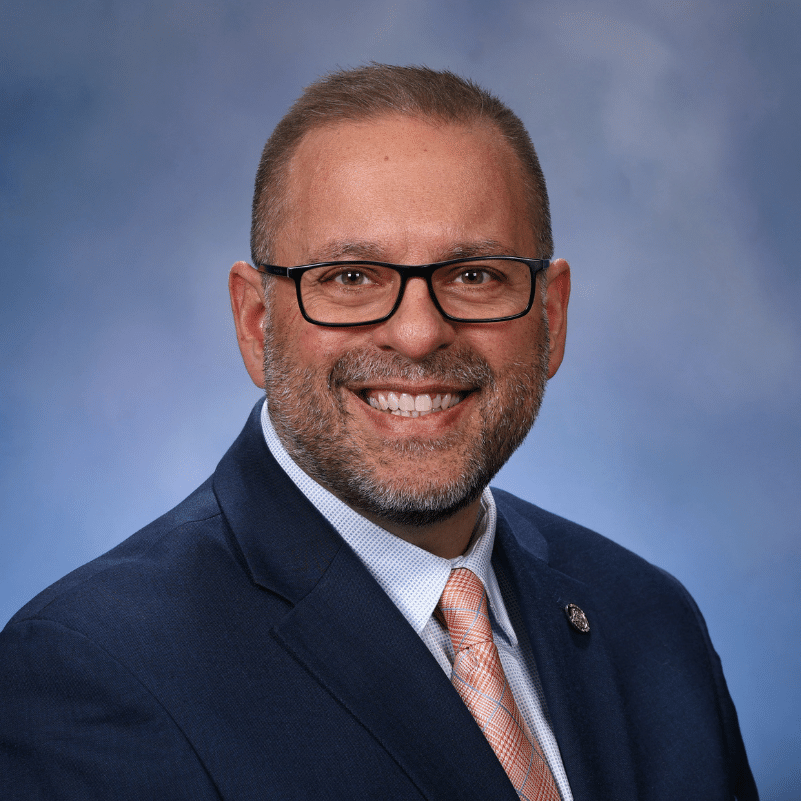
Rep. Mike McFall
Sponsored bills
Maddy summaryThis resolution (HR 227) urges the U.S. House of Representatives to investigate allegations that Secretary of Defense Pete Hegseth authorized military actions in the Caribbean Sea that killed at least one unarmed civilian fisherman, with no public evidence the individual was a combatant. If evidence supports these allegations, it calls for the House to introduce and adopt articles of impeachment against Hegseth for potential violations of federal law, international humanitarian law, and the Constitution. The resolution references the War Powers Resolution, the War Crimes Act, and the Geneva Conventions to frame the alleged misconduct. It does not create new law but formally requests the House take specific action. (Procedural resolution; summary limited to 2 sentences as instructed.)
Maddy summaryThis resolution symbolically recognizes December 13, 2025, as "National Wreaths Across America Day" in Michigan. It does not create new laws or policies but formally honors Michigan's participation in the non-profit Wreaths Across America's annual event, where volunteers place wreaths on veterans' graves. The resolution acknowledges that Michigan will host 96 locations across the state, with approximately 60,000 wreaths laid to honor fallen veterans, active-duty military, and their families. It serves as a ceremonial declaration of the state's support for this existing national observance.
Maddy summaryThis resolution urges the U.S. Department of Education to reject a proposed definition of "professional degree" that would exclude many health care education programs from federal student loan eligibility. It specifically targets programs like physical therapy, occupational therapy, nursing, social work, and physician assistant studies - classified under CIP Code 51 - which would lose access to loans under the current proposal. The bill requests the Department instead adopt a definition based on required practice credentials, not program length or historical classification, to maintain consistent eligibility. This change aims to prevent worsening health care workforce shortages, particularly in rural and underserved communities.
Maddy summaryHouse Bill 4013 modifies the Recreational Trespass Act, primarily by changing the requirements for posting "no trespassing" signs on private property. For non-farm property, the bill specifies that signs must be placed at intervals of not more than 250 feet along the boundary, replacing the previous standard of being observable at any point of entry. It also clarifies that consent from the owner is always required to enter farm property or connected wooded areas for recreational activities or trapping, regardless of whether the property is fenced or posted. These changes affect property owners and individuals engaging in recreational activities or trapping on private land.
Maddy summaryThis House Resolution (HR 224) urges the Trump-Vance administration to reverse its denial of federal disaster relief funding for northern Michigan residents affected by a March 2025 ice storm. It specifically requests the full amount of funding requested under the Stafford Act for individual assistance, public utilities, and hazard mitigation after the storm caused widespread infrastructure damage and hardship. The resolution is non-binding and serves only to formally express congressional support for affected communities, directing copies to the President, FEMA, and Michigan's congressional delegation. It does not alter funding decisions or create new legal obligations.
Maddy summaryHB 5336 establishes Michigan's Secure Retirement Savings Program, creating a state-administered retirement plan for private-sector employees whose employers don't currently offer retirement benefits. It requires qualifying employers (those without a 401(k) or similar plan for two years) to automatically enroll employees in payroll-deducted retirement savings accounts, with contributions deposited into a separate trust fund outside the state treasury. The program emphasizes portability, allowing employees to roll funds into other retirement accounts, and mandates low-cost investment options managed by a state board. It directly affects private-sector workers at small businesses or nonprofits without existing retirement plans, providing a new savings pathway without state financial risk.
Maddy summaryHB 5335 creates the Secure Retirement Savings Board within Michigan's Department of Treasury to administer the state's Secure Retirement Program. The board, consisting of 7 members including the state treasurer (as chair), two public retirement experts, an employer representative, and an enrollee representative appointed by the governor, will oversee program operations. It establishes membership terms, appointment procedures, and requires senate confirmation for governor's appointments. This bill directly affects Michigan residents participating in the state's retirement savings program by defining the governing body responsible for its management.
Maddy summaryHB 4301 expands Michigan's definition of "authorized emergency vehicle" in the Vehicle Code (MCL 257.2 and 257.698) to include specific new categories. It adds vehicles owned by the Michigan Mutual Aid Box Alarm System during emergencies, clarifies that road service vehicles (like tow trucks) may use flashing amber lights while assisting disabled vehicles, and allows federally recognized nonprofits to use emergency lights during disaster response. The bill also clarifies when certain colored lights (red, blue, amber, green) may be used on emergency vehicles, including for snow removal, spill response, and funeral processions. This directly affects emergency responders, road service providers, and nonprofit organizations during crisis operations.