

Maddy summaryHB 5475 requires Michigan's Secretary of State to issue official state identification cards to individuals who are about to be released on parole or discharged from prison. Beginning January 1, 2026, the Secretary must issue these cards to eligible parolees using information provided by the Department of Corrections about their release date. The bill mandates that cards be delivered to the correctional facility before the parolee's release date or mailed to the facility if the person is already released. This directly affects parolees in Michigan who need state ID cards for accessing services, housing, or employment upon reentry.
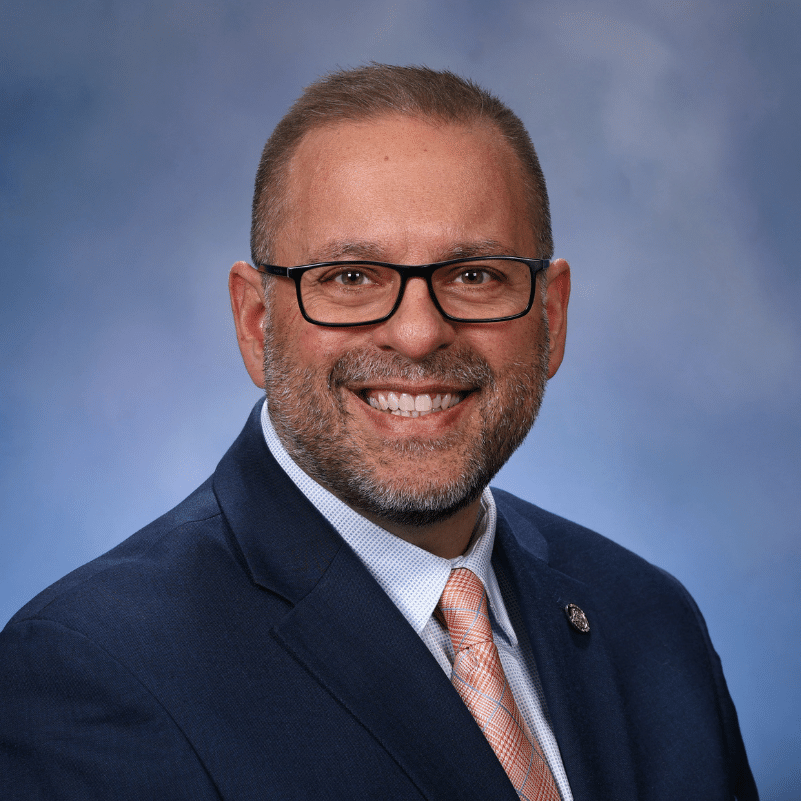
Rep. Mike McFall
Sponsored bills
Maddy summaryHB 5474 requires Michigan's Department of Corrections to proactively help prisoners obtain driver's licenses and state ID cards before release. Specifically, the department must collect required documents and photos 60 days prior to release, send them to the Secretary of State, and assist with social security verification. It creates a "reentry success fund" to cover these administrative costs, ensuring prisoners have essential identification for reintegration. This directly affects parolees and prisoners nearing release who need these IDs to access employment, housing, and other services.
Maddy summaryHB 5476 amends Michigan's Enhanced Driver License and ID Card Act to update applicant requirements and privacy protections. It requires applicants to provide updated documentation for name changes, citizenship, and Social Security numbers, while prohibiting enhanced IDs from displaying Social Security numbers. The bill clarifies that facial images and signatures may only be shared with law enforcement or federal agencies under specific legal authorities, not for general public access. It also maintains provisions allowing applicants to voluntarily add a communication access designation for law enforcement use, with strict privacy safeguards for retained documents.
Maddy summaryHB 5469, the "Virtual Currency Kiosk Consumer Protection Act," requires businesses operating physical digital currency exchange kiosks in Michigan to clearly disclose key risks to customers before any transaction. It mandates that operators explain that virtual currency is not legal tender, lacks government backing, is subject to regulatory changes, transactions are irreversible, and ledger recording times may differ from initiation. The bill directly affects kiosk operators and their customers, focusing on transparency about digital currency risks rather than regulating the currency itself. It does not cover gaming platform currencies or loyalty rewards programs.
Maddy summaryHB 5470 amends Michigan's Money Transmission Services Act to require virtual currency kiosks to obtain a money transmitter license. The bill explicitly defines "money transmission services" to include owning, operating, advertising, or facilitating virtual currency kiosks - devices that allow users to buy, sell, or exchange virtual currencies like Bitcoin. This change subjects these kiosks to the same licensing, reporting, and regulatory requirements as traditional money transmitters (e.g., check-cashing services). It directly affects businesses operating virtual currency kiosks in Michigan, bringing them under the state's existing financial services oversight framework.
Maddy summaryThis resolution (HR 234) urges the Trump-Vance Administration to stop making threats against Denmark regarding Greenland. It directly addresses U.S. officials, emphasizing that Greenland is an autonomous territory within Denmark (recognized under international law) and that any political change must come from Greenlanders freely, without coercion. The resolution calls for diplomacy based on respect for sovereignty and international law, rather than threats or military pressure, to protect NATO alliance unity. As a symbolic resolution, it has no legal effect but expresses congressional concern about actions undermining U.S. alliances and international norms.
Maddy summaryHB 4692 creates a new license for "secondary school facilities" that provide cosmetology training in separate classroom settings, directly affecting cosmetology schools and their associated training locations. These facilities must not offer public services or contain equipment like hair-drying chairs, must be staffed by licensed instructors with 3+ years' experience, and require detailed floor plans and department inspections. License holders must display their license and instructor credentials visibly, and the license becomes void if ownership changes or the location shifts, requiring a new application. The bill also mandates the department to create implementing rules within 18 months of enactment.
Maddy summaryHB 4947 requires pharmaceutical manufacturers selling products containing ephedrine or pseudoephedrine in Michigan to join a national real-time tracking system (NPLEx) starting June 1, 2026. This bill directly affects manufacturers of these products, mandating they participate in the system to log retail sales. The key mechanism is the NPLEx, which tracks purchases to prevent diversion into methamphetamine production, with retailers already required to use it for sales. The bill amends Michigan’s Public Health Code (sections 7340a(6)) to extend this tracking requirement to manufacturers, not just retailers.
Maddy summaryHB 4948 modifies sentencing guidelines for retail sales of products containing ephedrine or pseudoephedrine, which are ingredients commonly found in cold medicines but can be misused to make illegal drugs like methamphetamine. The bill specifically targets retailers who sell these products, altering the legal penalties for violations related to such sales. It amends Michigan's criminal procedure code (MCL 777.13m) to adjust how courts handle these offenses. The bill is currently under review in the Judiciary Committee after being referred for second reading.
Maddy summaryHB 5432 is a supplemental appropriations bill that allocates additional state funding for multiple departments, agencies, and the legislative branch for the 2025-2026 fiscal year. It provides specific monetary amounts to cover budget gaps or new needs identified during the fiscal year, with conditions on how the funds may be spent. This bill directly affects state government operations by ensuring funding continuity for essential services and programs across various agencies. As a procedural funding measure, it does not change policy but adjusts financial resources for existing government functions.