

Maddy summaryThis bill regulates private residence vertical lifts in Michigan by updating state elevator laws to include specific safety standards for these devices. It requires that any private residence vertical lift be certified as safe by a nationally recognized testing laboratory using specific American Society of Mechanical Engineers standards. The legislation also clarifies that these lifts do not need a traditional hoistway, pit, or machine room if they are installed according to manufacturer specifications and meet performance-based safety requirements. This change directly affects homeowners and contractors who install or maintain vertical lifts in private residences.
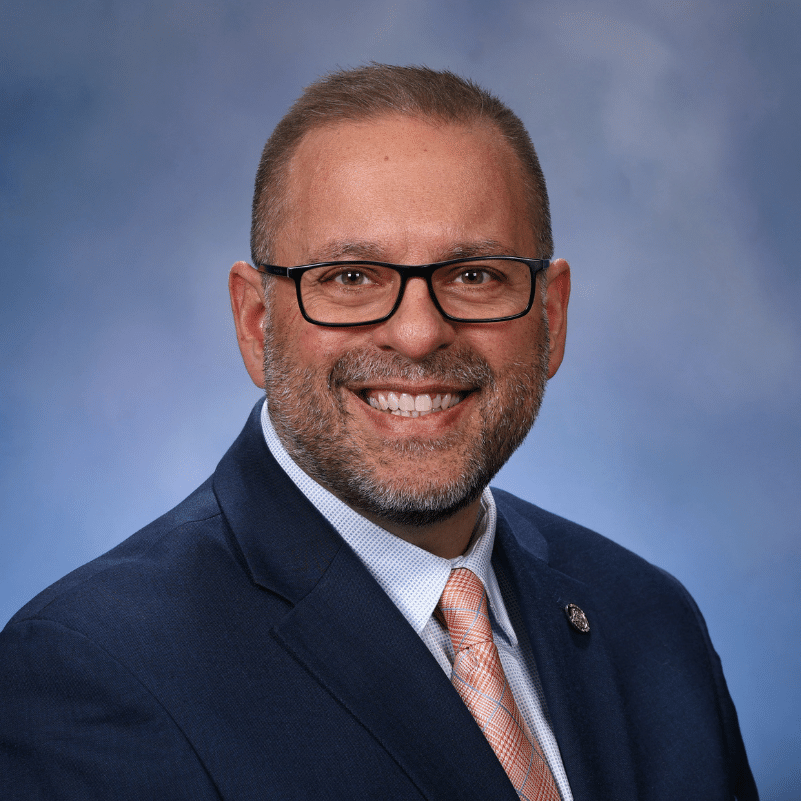
Rep. Mike McFall
Sponsored bills
Maddy summaryHB 4510 would allow Michigan's public employee retirement funds (managed by the state treasurer as investment fiduciary) to invest in cryptocurrency meeting strict criteria. The bill requires any cryptocurrency investment to have a minimum $250 billion average market capitalization over the previous year and must be held as exchange-traded products from registered investment companies. It applies only to retirement systems where the state treasurer acts as the investment fiduciary, not all funds. The bill adds this investment option without altering existing rules for other assets.
Maddy summaryHB 4511 prohibits Michigan state and local governments from banning digital asset holdings, requiring permits for them, imposing extra taxes based solely on digital asset use, or restricting blockchain-related activities like node operations, asset transfers, or staking. It also bans state agencies from advocating for U.S. central bank digital currency and shields individuals validating transactions or operating nodes from civil liability. The bill directly affects Michigan residents, businesses, and blockchain service providers using digital assets like cryptocurrency or stablecoins. Key provisions define "digital assets" broadly and require state actions to align with blockchain protocols without unnecessary restrictions.
Maddy summaryThis bill requires nursing homes in Michigan to ensure all unlicensed staff members complete a fall prevention training program. The Michigan Department of Health and Human Services will develop and manage this training program in consultation with relevant health agencies. The law applies specifically to unlicensed personnel working in nursing home facilities, mandating they finish the required training. This change aims to standardize fall prevention education for non-licensed staff across the state's nursing homes.
Maddy summaryThis bill requires employers in Michigan to pay employees their regular hourly wage for time spent participating in mandatory fall prevention training programs. The law applies to any employer who must ensure their staff complete the fall prevention training established under state public health regulations. By compensating workers for this required training time, the bill aims to remove financial barriers that might prevent employees from completing safety education. The legislation creates a new legal requirement for wage payment specifically tied to fall prevention training participation.
Maddy summaryHB 5450 amends Michigan's Food Law to prohibit local governments (counties, cities, villages, or townships) from charging fees, taxes, or assessments for the operation of mobile food establishments, such as food trucks. This directly affects food truck operators by eliminating an additional cost imposed by local jurisdictions. The bill achieves this by modifying Section 3113 of the Food Law to explicitly ban such fees, while still requiring compliance with state-mandated fire inspections and licensing under existing regulations.
Maddy summaryHB 5451 requires food trucks (mobile food establishments) to undergo annual fire inspections and additional inspections after significant modifications to fire safety systems, such as kitchen equipment or fuel piping. It creates a public database tracking these inspections and mandates that operators notify fire inspectors within 30 days of license applications or modifications. The bill specifies that inspections must comply with the International Fire Code, with results valid for one year (limiting inspections to once annually unless safety concerns arise). This directly affects food truck operators, who must pay a $200 maximum fee for annual inspections but receive no charge for additional safety-related checks.
Maddy summaryThis House resolution calls on Congress to investigate individuals linked to Jeffrey Epstein and require them to testify under oath. It directly affects high-profile figures across technology, finance, real estate, and government who have been implicated in Epstein's criminal network. The resolution asserts that current Department of Justice actions have failed to protect survivors or fully disclose information, citing concerns over redacted names and unredacted photos of victims. It seeks to use congressional authority to compel testimony from those who participated in or covered up Epstein's crimes. The measure was introduced in March 2026 and referred to the Committee on Government Operations.
Maddy summaryThis bill requires United States Immigration and Customs Enforcement agents working in Michigan to activate body-worn cameras when interacting with the public, except in private places where individuals expect privacy. The law mandates that these cameras record audio and video of the agents' activities during such interactions and establishes a civil infraction with a fine of up to $500 for non-compliance. Additionally, the bill specifies that agents who fail to pay the imposed fine would be deemed ineligible to work in the state until the debt is settled. The legislation applies specifically to federal ICE agents operating within Michigan's borders and creates a new regulatory framework for their use of recording technology.
Maddy summaryHB 5661 amends the Michigan State Housing Development Authority Act to clarify and expand the administrative powers of the Michigan State Housing Development Authority (MSHDA) in managing the state's home loan and housing assistance programs. The bill does not create new funding or change eligibility requirements for existing programs but instead updates the legal authority under which MSHDA operates. Key provisions allow the authority to conduct housing studies, collect fees for loans and publications, salvage usable housing from demolition projects, and manage mortgage loans and foreclosures with specific flexibility for property acquisition and resale. The legislation also authorizes MSHDA to accept gifts and grants from various levels of government and to invest reserve funds in state or federal obligations. This bill is tied to HB 5660 and was introduced in March 2026, with no changes to the specific programs themselves, only to the operational framework governing the authority.