

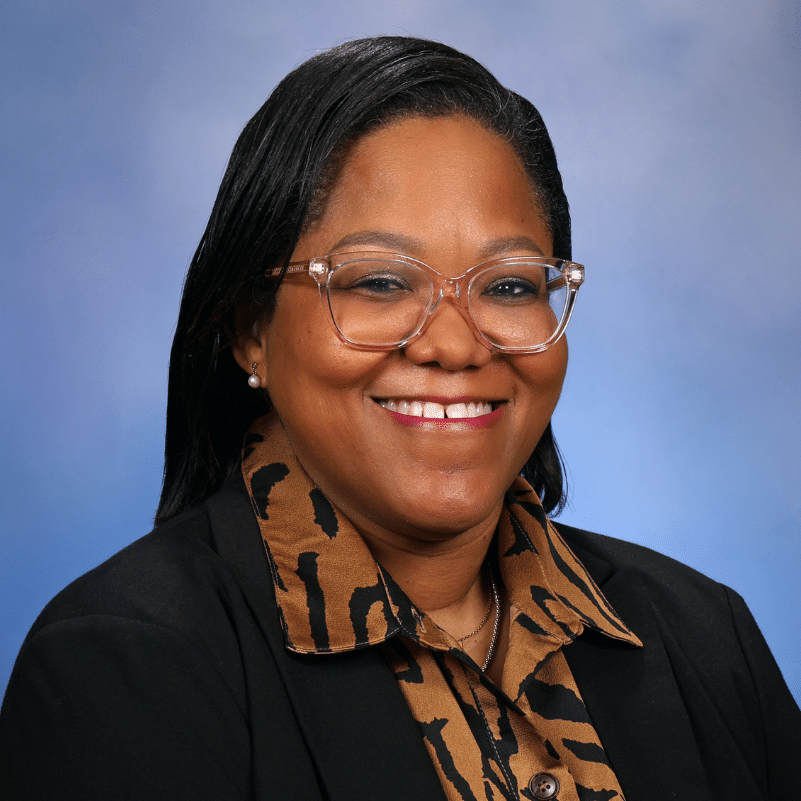
Photo of Kimberly Edwards
D Michigan House · District 12 On the 2026 ballot

Rep. Kimberly Edwards

Compare
Total votes
1,644
all sessions
Attendance
90%
180 missed
Lower than 99% of chamber peers
With party
95%
of cast votes
Lower than 85% of chamber peers
Bipartisan score
3%
crosses aisle rarely
Higher than 84% of chamber peers
Sponsored
597
bills & resolutions
Lower than 78% of chamber peers
Committees
1
assignment
597 bills and resolutions

Sponsored bills

Total
597
Primary
38
Co-sponsor
559
This page
597
matching current filters
Co-sponsor HR 48
In committee · Michigan House · Co-sponsor
A resolution to direct the Clerk of the House of Representatives to promptly present to the Governor nine bills that were passed by both houses of the Legislature and ordered enrolled in December 2024.

Maddy summaryThis resolution directs the Clerk of the House to present nine specific bills - passed by both legislative chambers in December 2024 and "enrolled" (formally prepared for the Governor) - to the Governor. It follows a court ruling (February 2025) that confirmed Michigan’s Constitution requires all passed bills to be presented to the Governor within 14 days, rejecting the House’s prior refusal to act. The resolution overrides a previous House attempt (Resolution 41) to delay this process and mandates immediate compliance with the court’s order. It affects the House Clerk, Governor, and the nine bills’ legislative timeline, ensuring they can proceed toward becoming law.

In committee Mar 19, 2025 1 co-sponsor
Co-sponsor HB 4194
In committee · Michigan House · Co-sponsor
State: identification cards; citizenship or legal presence requirement for obtaining a state identification card; remove. Amends secs. 1, 1a & 2 of 1972 PA 222 (MCL 28.291 et seq.).

Maddy summaryHB 4194 removes the requirement for non-U.S. citizens to prove legal presence in Michigan to obtain a state identification card. This change directly affects non-citizen residents who currently need to submit immigration documents to apply for a state ID. The bill amends Michigan law to eliminate this verification step, allowing eligible non-citizens to access state IDs without proving immigration status. The policy change applies only to state ID cards, not driver's licenses or other documents.

In committee Mar 12, 2025 1 co-sponsor
Co-sponsor HB 4196
In committee · Michigan House · Co-sponsor
State: identification cards; cross reference to 1972 PA 22; update. Amends sec. 5 of 2008 PA 23 (MCL 28.305). TIE BAR WITH: HB 4194'25

Maddy summaryHB 4196 amends Michigan's Enhanced Driver License and ID Card Act (MCL 28.305) to update how personal information is handled for applicants. It specifies that facial images and signatures collected for these IDs may only be shared with law enforcement agencies, other states (as required by federal law), or with an individual's written consent, while prohibiting disclosure of Social Security numbers on the card itself. The bill also clarifies retention rules for facial images (1 year unless fraud is suspected) and strengthens privacy protections by restricting disclosure of sensitive documents. This directly affects Michigan residents applying for enhanced driver licenses or official state ID cards, ensuring their biometric data and personal information are used only under defined, limited circumstances.

In committee Mar 12, 2025 1 co-sponsor
Co-sponsor HB 4174
In committee · Michigan House · Co-sponsor
Juveniles: other; presumption of admissibility for a juvenile's self-incriminating responses obtained through deceptive police practices; modify. Amends sec. 1, ch. XIIA of 1939 PA 288 (MCL 712A.1) & adds sec. 17e to ch. XIIA.

Maddy summaryHB 4174 modifies Michigan's juvenile justice code to establish a presumption that self-incriminating statements made by juveniles during police interrogations are admissible in court if obtained through deceptive practices (e.g., false promises of leniency or misleading statements about evidence). The bill directly affects juveniles under 18 facing delinquency proceedings and law enforcement officers who may use deceptive tactics during interrogations. Keyly, it amends the Probate Code to add Section 17e, shifting the standard so such statements are presumed admissible unless the court finds the deception was "unreasonably coercive." This changes current practice by making it harder to exclude statements obtained through deception, impacting how juvenile confessions are handled in court.

In committee Mar 11, 2025 1 co-sponsor
Co-sponsor HJR F
In committee · Michigan House · Co-sponsor
Civil rights: sexual orientation discrimination; certain references to marriage; make gender neutral. Amends sec. 1, art. X & repeals sec. 25, art. I of the state constitution.

Maddy summaryThis proposed constitutional amendment (HJR F) would remove gender-specific language from two Michigan constitutional provisions. It would repeal Article I, Section 25 - which defined marriage as "the union of one man and one woman" - and amend Article X, Section 1 to make property rights language gender-neutral. If approved, it would eliminate the constitutional ban on same-sex marriage and update outdated references to gender in property law. The amendment would require voter approval at the next general election. (Note: The bill is currently in committee referral, with no further action taken as of March 2025.)

In committee Mar 6, 2025 1 co-sponsor
Co-sponsor HB 4169
In committee · Michigan House · Co-sponsor
Health: diseases; rare disease advisory council; create. Amends 1978 PA 368 (MCL 333.1101 - 333.25211) by adding secs. 5135 & 5135a.

Maddy summaryHB 4169 creates a Rare Disease Advisory Council within Michigan's Department of Health to advise on research, diagnosis, and treatment of rare diseases. The council, composed of 12-18 members including physicians, patients, caregivers, insurers, researchers, and industry representatives, must identify policy priorities to improve access to care and reduce discrimination for individuals with rare diseases (defined as affecting fewer than 200,000 people in the U.S.). Key duties include researching cost-effective treatments, sharing best practices from other states, and developing a public webpage with rare disease resources by March 2026. The bill establishes a formal advisory body but does not change existing laws or funding.

In committee Mar 6, 2025 1 co-sponsor
Co-sponsor HB 4166
In committee · Michigan House · Co-sponsor
Crimes: drugs; illicit use of xylazine; prohibit, and provide penalties. Amends secs. 7103, 7105, 7106, 7401, 7403, 7403a, 7451, 7453 & 7455 of 1978 PA 368 (MCL 333.7103 et seq.).

Maddy summaryHB 4166 prohibits the non-medical use of xylazine (a sedative sometimes mixed with drugs like fentanyl) in Michigan. It defines "illicit use" as any xylazine use not covered under "licit use," which includes legal veterinary applications, pharmaceutical manufacturing, or approved medical treatments. The bill amends Michigan's Public Health Code to make possessing or using xylazine for non-licensed purposes a felony, with penalties ranging from up to 20 years in prison or fines up to $1 million depending on the amount. This directly affects individuals using xylazine outside approved medical or veterinary contexts, aligning penalties with those for other controlled substances like opioids.

In committee Mar 6, 2025 1 co-sponsor
Co-sponsor HR 34
In committee · Michigan House · Co-sponsor
A resolution to reaffirm our commitment to supporting Michigan’s economy by advocating for strong, fair, negotiated commercial relationships with North American trading partners.

Maddy summaryThis House Resolution (HR 34) urges the federal government to consider the economic impacts of tariffs on trade with Canada and Mexico. It directly affects Michigan businesses, particularly in agriculture (where Canada is the top export market), manufacturing, and auto production, which rely on stable North American supply chains. The resolution reaffirms support for the U.S.-Mexico-Canada Agreement (USMCA) and highlights Michigan’s $3 billion annual agricultural exports and $55 billion in annual trade with Ontario. As a non-binding resolution, it does not create new laws but formally advocates for fair trade negotiations to protect Michigan’s economy.

In committee Mar 5, 2025 1 co-sponsor
Co-sponsor HB 4123
In committee · Michigan House · Co-sponsor
Higher education: financial aid; Michigan reconnect program; modify. Amends secs. 3 & 7 of 2020 PA 84 (MCL 390.1703 & 390.1707).

Maddy summaryHB 4123 amends Michigan's Reconnect Grant Act to expand support for adult learners pursuing industry-recognized credentials. It requires eligible community colleges and career-training programs to implement corequisite academic support (taking college-level courses while receiving targeted help) instead of traditional remedial classes, and to report on student success strategies like credit for prior learning. The bill directly affects adult students enrolled in these programs and institutions receiving Reconnect Grants, including career-tech centers and apprenticeships offering stackable credentials. Key changes include expanding grant funding eligibility to cover non-degree certificate programs and mandating institutions to provide free academic support for students needing remediation. If passed, these changes would reshape how Michigan's community colleges and career programs support adult learners seeking job-ready skills.

In committee Feb 26, 2025 1 co-sponsor
Co-sponsor HB 4121
In committee · Michigan House · Co-sponsor
Property tax: other; locally adopted cap on a local unit's own authority to levy a property tax millage; prohibit. Amends 1893 PA 206 (MCL 211.1 - 211.155) by adding sec. 34f.

Maddy summaryHB 4121 prohibits local governments (counties, cities, townships, villages) from adopting property tax caps that automatically reduce tax rates when revenue hits a fixed dollar limit. It voids any existing local tax cap with this automatic reduction feature and requires local units to disregard such caps. The bill specifically targets caps imposed by local charter, ordinance, or policy - not state-mandated limits - making them unenforceable. This change ensures local tax revenue limits cannot trigger automatic rate cuts based solely on annual dollar amounts.

In committee Feb 26, 2025 1 co-sponsor
Showing 191 to 200 of 597 bills
Previous 1 … 19 20 21 … 60 Next