

Maddy summaryHB 4139 removes references to "extreme risk protection orders" from Michigan's firearm licensing requirements. Specifically, it amends sections of the state's firearms law (MCL 28.422, 28.422b, 28.425b, and 28.428) by deleting the provision that previously required applicants to disclose if they were subject to such orders. This change directly affects individuals applying for firearm licenses, as they will no longer need to certify whether they are under an extreme risk protection order. The bill does not repeal extreme risk protection orders themselves but modifies the licensing process to exclude this specific requirement. The change reflects the repeal of the Extreme Risk Protection Order Act as noted in the bill's title.
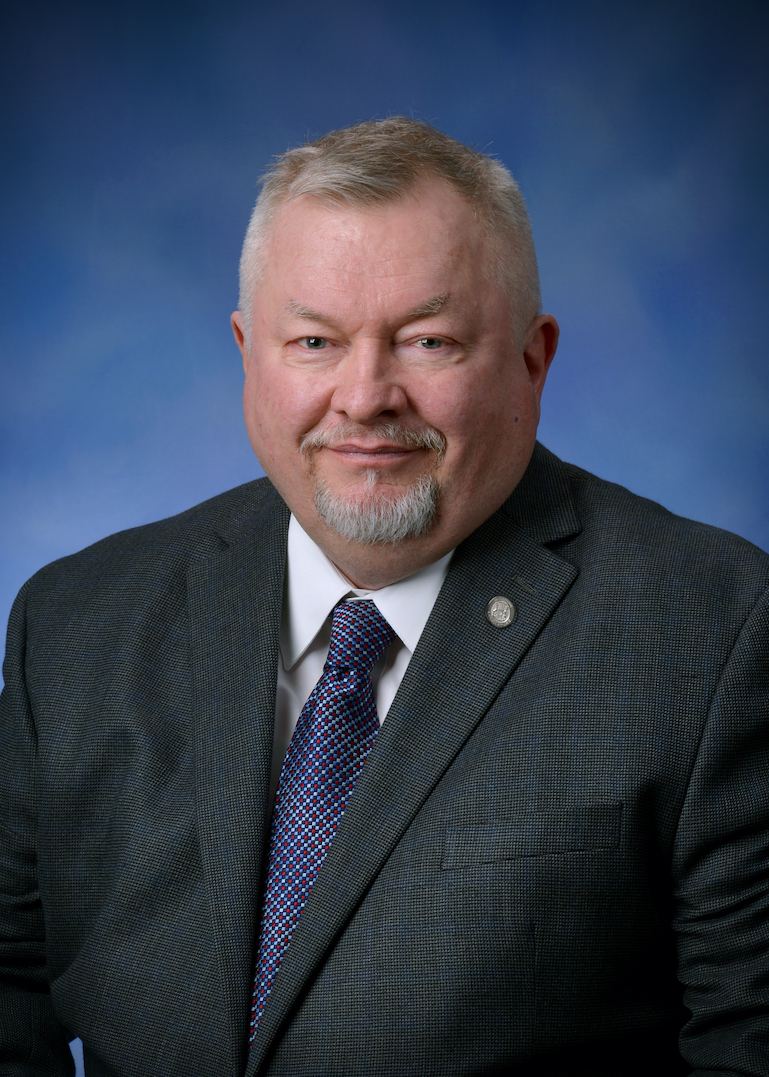
Rep. Greg Markkanen
Sponsored bills
Maddy summaryHB 4146 modifies Michigan's licensing rules for psychologists by adding a new requirement for newly licensed practitioners. The bill mandates that for the first 180 days after licensure (except for government or nonprofit employees), new psychologists must work under supervision by a fully licensed psychologist - not another limited licensee. Exceptions apply to those working in government or charitable roles who aren't diagnosing autism spectrum disorder, or those diagnosing autism who already hold a limited license for at least three years. This change directly affects new psychology licensees, altering their initial practice conditions while providing specific exemptions for certain work settings.
Maddy summaryHB 4140 repeals the 2023 "Extreme risk protection order act" (2023 PA 38, MCL 691.1801-691.1821), which established a legal process for temporarily removing firearms from individuals deemed a risk to themselves or others. The bill does not create new provisions or directly affect any individuals or groups, as it solely removes an existing law. This repeal is contingent on two other bills (HB 4138 and HB 4139) also being enacted into law. The bill was introduced on February 26, 2025, and referred to the Judiciary Committee.
Maddy summaryHB 4123 amends Michigan's Reconnect Grant Act to expand support for adult learners pursuing industry-recognized credentials. It requires eligible community colleges and career-training programs to implement corequisite academic support (taking college-level courses while receiving targeted help) instead of traditional remedial classes, and to report on student success strategies like credit for prior learning. The bill directly affects adult students enrolled in these programs and institutions receiving Reconnect Grants, including career-tech centers and apprenticeships offering stackable credentials. Key changes include expanding grant funding eligibility to cover non-degree certificate programs and mandating institutions to provide free academic support for students needing remediation. If passed, these changes would reshape how Michigan's community colleges and career programs support adult learners seeking job-ready skills.
Maddy summaryHB 4117 amends Michigan's Animal Industry Act to require cage-free housing for egg-laying hens and restrict confinement for gestating sows and calves raised for veal. It prohibits keeping hens in cages or confining them in ways that prevent turning around freely or fully extending limbs, mandating cage-free systems with enrichments like perches and nest boxes, and setting minimum floor space based on industry guidelines. The law affects egg producers (especially those with 3,000+ hens) and businesses selling shell eggs in Michigan, with small farms (<3,000 hens) exempt from the egg sales ban. It takes effect for egg-laying hens on January 1, 2029, and for gestating sows on April 1, 2020 (already implemented).
Maddy summaryHB 4109 clarifies that health club staff (including owners and employees) have no legal obligation to provide emergency medical assistance using on-site AEDs during health club incidents. It explicitly states this does not override Michigan's existing Good Samaritan law (1963 PA 17), which protects people who assist in emergencies. The bill requires companion bill HB 4108 to pass first before taking effect. This directly affects health club operations regarding medical emergency response protocols.
Maddy summaryHB 4002 amends Michigan's Earned Sick Time Act to clarify eligibility and usage rules for workers. It expands the definition of "family member" to include domestic partners and specifies that employees must work at least 25 hours weekly (averaged over a benefit year) to qualify for sick time. The bill also defines key terms like "benefit year" (a 12-month period for calculating leave) and clarifies that employers with 50+ employees must provide sick time for health, family, or safety needs. These changes aim to make the law's implementation more consistent while maintaining existing requirements for covered workers.
Maddy summaryThis resolution declares February 15-22, 2025, as National FFA Week in Michigan. It encourages Michigan citizens to recognize the National FFA Organization's role in supporting agricultural education, youth leadership development, and career preparation for students in grades 7-12. As a symbolic resolution, it does not create new laws or allocate funds but formally acknowledges FFA's contributions to agricultural education programs across the state.
Maddy summaryHB 4074 requires Michigan conservation officers to wear body-worn cameras during official duties. This applies specifically to conservation officers (not all law enforcement) while performing their conservation-related responsibilities. The bill mandates compliance with Michigan’s existing Law Enforcement Body-Worn Camera Privacy Act (2017 PA 85) for recording and disclosure of footage. The bill was introduced on February 12, 2025, and referred to the Natural Resources and Tourism Committee for further review.
Maddy summaryHB 4082 modifies how Michigan school districts count students enrolled in work-based learning programs (like internships or apprenticeships) for state funding purposes. It adjusts the "membership" calculation - used to determine school aid - so these students are properly counted in the district where they receive their primary education, rather than being excluded due to their off-site learning. This change directly affects school districts, public school academies, and students participating in approved work-based learning experiences. The bill amends existing school aid law to ensure these students contribute to membership counts for funding, aligning with the state's goal of fair resource allocation.