

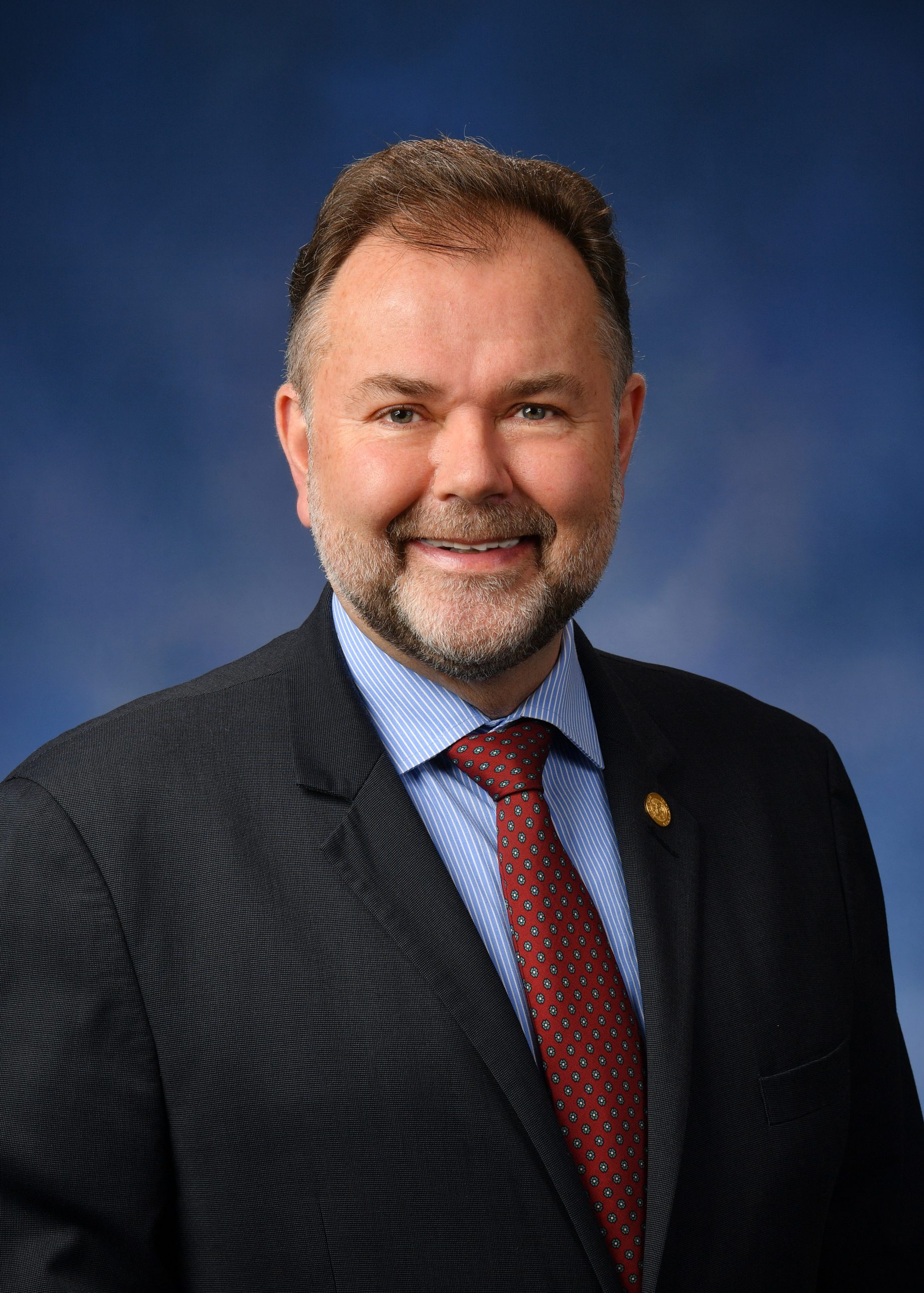
Maddy summaryHouse Bill 4256 proposes to amend Michigan's criminal procedure code by revising sentencing guidelines for specific drug offenses. Specifically, it targets individuals convicted of delivering, manufacturing, or possessing with intent to deliver certain controlled substances. The bill modifies section 13m of Chapter XVII of the Code of Criminal Procedure (MCL 777.13m), which dictates these sentencing guidelines. This change would directly affect how courts sentence individuals for these particular drug-related crimes. This bill is tied to HB 4255.
Rep. Ken Borton
Sponsored bills
Maddy summaryHouse Resolution 30 is a resolution urging the United States Congress to enact legislation that would remove the gray wolf from the endangered species list. This action would transfer the authority for managing gray wolf populations from the federal government back to individual states.
Maddy summaryHB 4336 amends Michigan's penal code to create new state crimes related to individuals who are not authorized to be in the United States. The bill establishes felony and misdemeanor offenses for knowingly bringing, transporting, harboring, or encouraging such persons to enter or remain in the U.S. It also creates a felony offense for knowingly hiring ten or more undocumented individuals for employment within a 12-month period. Penalties include fines and imprisonment, with higher penalties for offenses involving commercial gain, serious injury, or death. An exception is provided for religious organizations bringing in volunteer ministers or missionaries.
Maddy summaryHouse Bill 4337 proposes to amend Michigan's code of criminal procedure. It specifically modifies section 16t of chapter XVII (MCL 777.16t), which pertains to sentencing guidelines. The bill aims to establish new sentencing guidelines for individuals convicted of bringing in and harboring certain undocumented persons. This change would directly affect those charged with this specific crime and the courts responsible for their sentencing.
Maddy summaryHouse Resolution No. 62 declares April 2025 as County Government Month in the state of Michigan. This resolution recognizes the vital role of county governments in delivering public services and urges citizens to observe the month with appropriate programs and activities.
Maddy summaryHR 61 is a resolution that declares April 13-20, 2025, as Holy Week in the state of Michigan. It also extends best wishes to Christians in Michigan, the United States, and worldwide for a meaningful observance of Holy Week.
Maddy summaryHB 4312 amends Michigan's sales tax distribution by directing 8.62% of the 4% general sales tax revenue to the Revenue Sharing Trust Fund starting October 1, 2025, with funds distributed to cities, villages, townships, and counties. It maintains existing allocations for aviation fuel tax (35% to the state aeronautics fund, 65% to qualified airport funds) and sets a minimum $9 million annual deposit from computer software sales tax into the Michigan Health Initiative Fund. The bill also clarifies adjustments for school aid fund revenue losses due to specific tax exemptions. These changes directly affect local governments, airports, and health programs through revised tax revenue streams.
Maddy summaryHB 4311 creates a new Revenue Sharing Trust Fund to distribute state funds to local governments starting October 1, 2025. The fund will receive general sales tax deposits, donations, and investment earnings, with money remaining in the fund annually instead of lapsing to the general budget. It allocates $299 million to cities, villages, and townships, and $261 million to counties, using formulas based on property values and population to determine each community's share. This replaces previous eligibility requirements for these payments under 2023 PA 119.
Maddy summaryHB 4185 changes how Michigan's general sales tax revenue is distributed. It directs 15% of the 4% sales tax to cities, villages, and townships through the Glenn Steil Revenue Sharing Act. Sixty percent goes to the state school aid fund (including all 2% tax from aviation fuel sales), while 27.9% of 25% from vehicle/fuel sales funds the transportation system. Additionally, it requires $9-12 million annually from computer software sales to the Michigan health initiative fund.
Maddy summaryHB 4184 increases Michigan's excise tax on aviation fuel from 3.10 cents to 4.00 cents per gallon. It directly affects fuel sellers, airlines, and airport operators by changing how this tax revenue is distributed. The bill modifies Section 203 of the Aeronautics Code to require 35% of the tax revenue to fund the state aeronautics fund and 65% to fund qualified airports. It also retains the 1.5-cent refund for airlines operating interstate flights and the exemption for fuel used in leaded racing fuel production.