

Maddy summaryHB 4254 prohibits public bodies (like state agencies, universities, or local governments) from using dogs in research or training activities that cause pain or distress. It specifically bans methods that would cause death, injury, fear, trauma, or invasive procedures (such as surgery), with exceptions for veterinary training with owner consent and routine procedures like spaying/neutering. The bill establishes civil fines of $1,000-$5,000 per dog per violation for noncompliance, enforced by county prosecutors or the attorney general. Named "Queenie's Law," it amends Michigan's Public Health Code to add these protections for dogs used in experimental purposes.
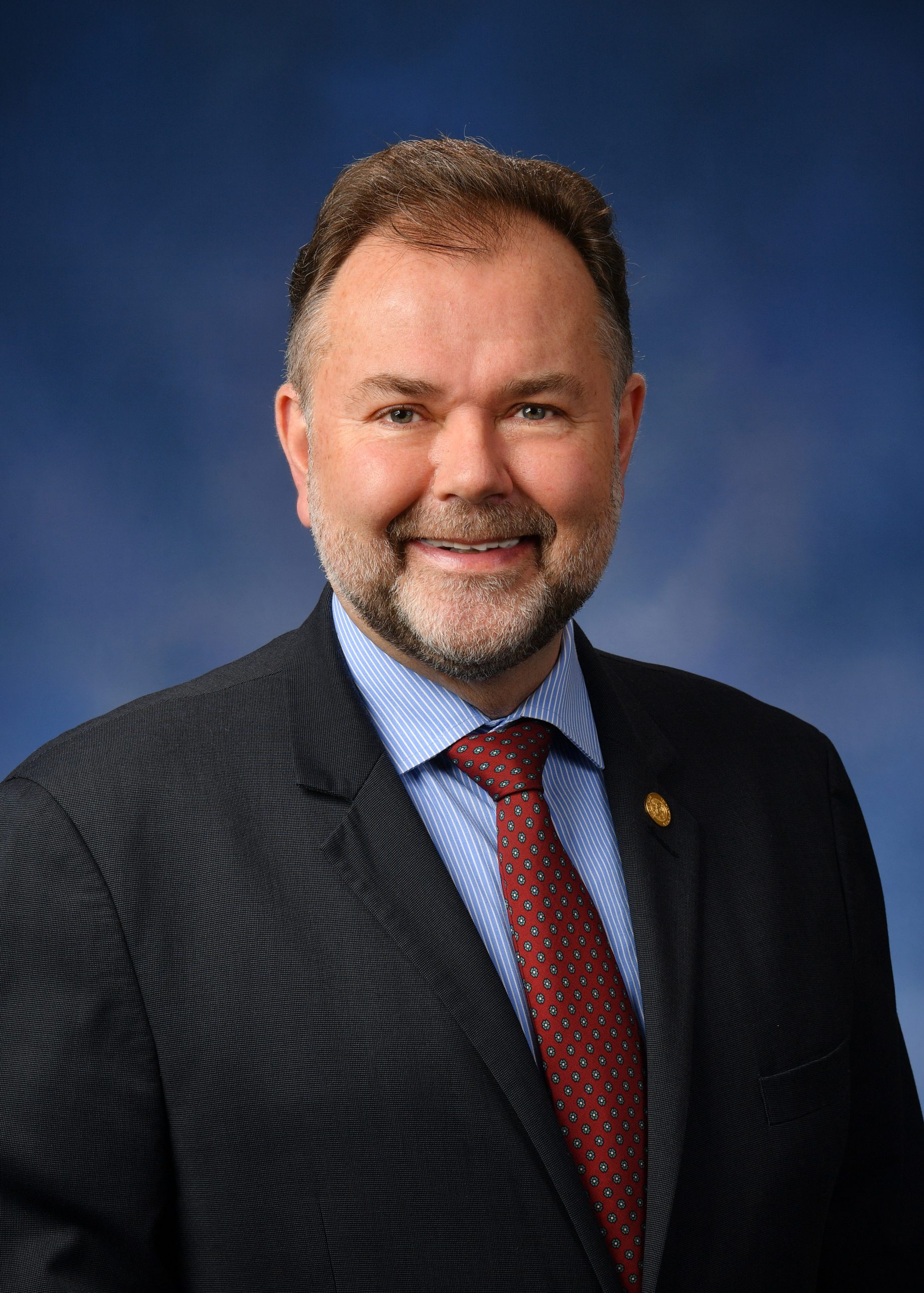
Rep. Ken Borton
Sponsored bills
Maddy summaryHB 4642 amends Michigan's campaign finance law to require the secretary of state to refer violations involving themselves, their immediate family, or a connected campaign to the attorney general for resolution. This change ensures that cases where the secretary of state is a party are handled by an independent office, avoiding potential conflicts of interest. The bill does not alter the secretary of state's authority over other campaign finance matters. It specifically clarifies the process for referring such cases to the attorney general under the existing law.
Maddy summaryHB 4913 modifies Michigan's licensing requirements for architects by allowing apprenticeships to count toward the required professional experience. Currently, applicants must document "professional experience in architectural work" to become licensed; this bill would update that requirement to explicitly permit apprenticeship programs as acceptable documentation. The change directly affects aspiring architects seeking licensure in Michigan, particularly those in training programs. It does not alter existing requirements for professional engineers or surveyors, which remain unchanged in the bill text. This is a concrete policy adjustment to streamline entry into the architectural profession.
Maddy summaryHB 4663 allows liquor license holders in Michigan to donate a portion of their profits to tax-exempt nonprofits (501(c)(3) organizations) after recording those profits on their financial records. Licensees must report these profits to the Liquor Control Commission upon request. The bill specifically prohibits nonprofits that receive a special license for an event from using donated funds to cover costs for that same event. This change directly affects licensed liquor businesses and qualifying nonprofits by creating a new, regulated pathway for charitable giving.
Maddy summaryHB 4509 creates a licensure compact for audiologists and speech-language pathologists in Michigan, allowing professionals licensed in participating states to practice across state lines without obtaining separate Michigan licenses. This directly affects audiologists and speech-language pathologists seeking to work in multiple states, particularly those in states that have joined the compact. The bill amends Michigan law to establish reciprocal licensing agreements, adding new provisions (sections 16187, 16804, and 17603a) to facilitate this process. It does not change patient care standards but streamlines professional mobility for these healthcare providers. The bill passed unanimously in the Michigan House with immediate effect on October 30, 2025.
Maddy summaryHB 4039 requires Michigan state agencies to eliminate at least two existing regulations for every new rule they propose. This directly affects all state agencies that create or change regulations, mandating they submit a list of rescinded rules alongside new rule requests. The bill establishes a process where the Michigan Office of Regulatory Reinvention must approve these requests before agencies can proceed, ensuring new rules don’t expand regulation without removing older ones. It aims to reduce regulatory burden by making rulemaking more streamlined and transparent.
Maddy summaryThis resolution declares October 2025 as Italian-American Appreciation Month in Michigan. It directly recognizes the cultural contributions, historical impact, and community involvement of Italian-Americans in Michigan's development. The resolution does not create new laws or policies but formally designates a month for celebrating Italian-American heritage, including their roles in Michigan's neighborhoods, economy, and civic life. The declaration is symbolic and applies statewide.
Maddy summaryHB 4709 prohibits the construction of commercial wind turbines for electricity production in the Great Lakes or their connecting waters, and bans operating any such turbines built in violation of this rule. It directly affects commercial wind energy developers planning projects in these waters, preventing new installations. The bill also states that renewable energy credits cannot be issued for electricity generated by prohibited turbines, and allows the attorney general to seek court injunctions to stop violations. This amendment adds a specific environmental protection measure to Michigan's Clean Energy Act.
Maddy summaryHB 4590 adds Part 9 to Michigan's Clean and Renewable Energy Act, requiring the Michigan Public Service Commission (MPSC) to create rules for "Locally Distributed Shared Solar Facilities" (LDSS). This bill directly affects community solar projects and subscribers, mandating that LDSS facilities must use solar panels not made in China, North Korea, or Iran, have at least three subscribers, limit any single subscriber to 40% of output, and meet specific size caps (5 MW or 20 MW). Key provisions include requiring facilities to provide bill credits proportional to each subscriber's contribution and ensuring 60% of capacity is subscribed by small users (40 kW or less). The MPSC must establish these rules to govern community solar programs under this new framework.
Maddy summaryHB 4392 creates a funding mechanism to allocate money from the Natural Resources Trust Fund to the Department of Natural Resources (DNR). It specifies how these trust fund resources will be used for DNR operations, directly affecting the department's budget management. This procedural bill does not establish new programs but formalizes existing funding transfers. The bill was enacted as PA 21'25 with immediate effect after approval by the Governor.