Issue · Healthcare

Healthcare

Every healthcare bill, vote, and legislator stance in Michigan, automatically classified by Maddy, our AI policy reader.

Total bills
530
2025-2026 Regular Session
Top supporter
Veronica Klinefelt
96% support rate
Top opponent
Jim Runestad
8% support rate
Ranked legislators
10
5 support · 5 oppose
Key legislators

Who's moving healthcare in Michigan

Legislators moving healthcare in Michigan
Legislator Party Stance Support rate Votes
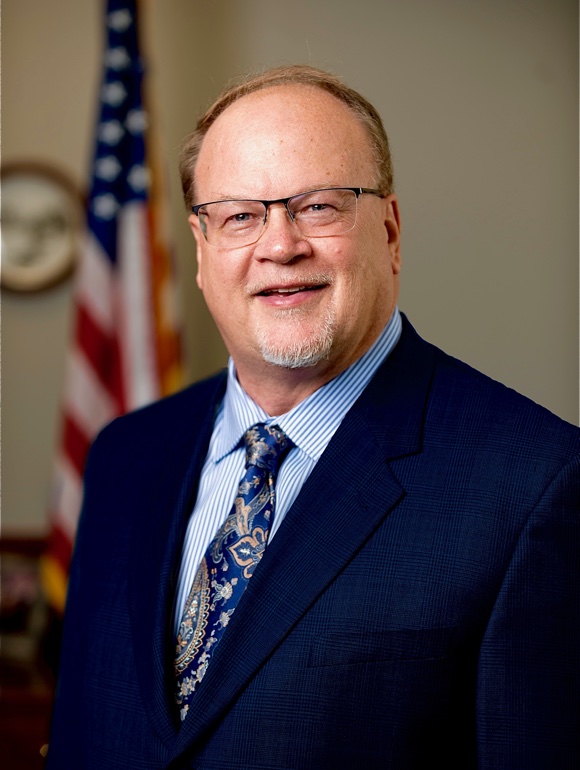
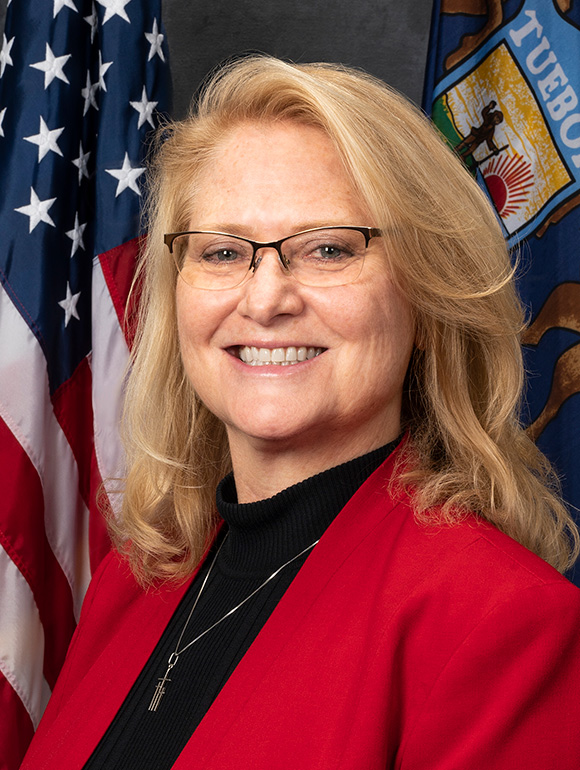
Veronica Klinefelt
Veronica Klinefelt Senate · District 11
D
Strong +
96% 60
Winnie Brinks
Winnie Brinks Senate · District 29
D
Strong +
93% 64
Mallory McMorrow
Mallory McMorrow Senate · District 8
D
Strong +
93% 60
Kevin Hertel
Kevin Hertel Senate · District 12
D
Strong +
93% 63
Jeremy Moss
Jeremy Moss Senate · District 7
D
Strong +
93% 62
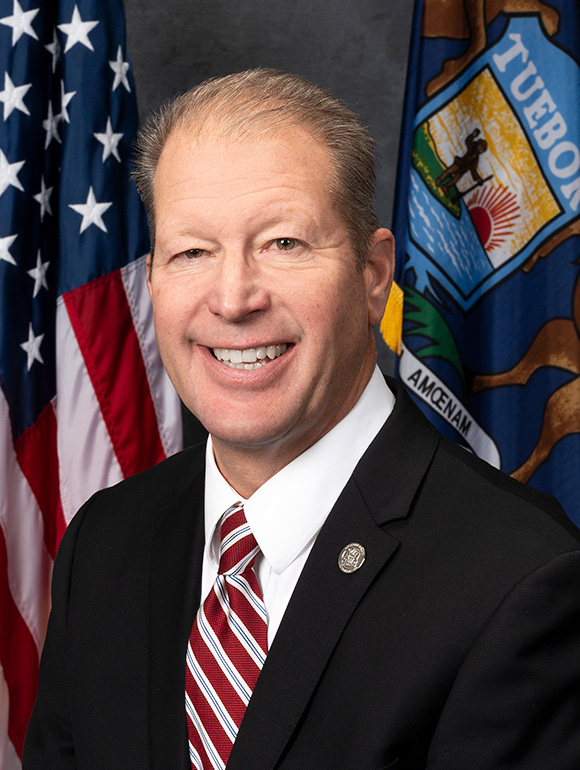
Jim Runestad
Jim Runestad Senate · District 23
R
Strong −
8% 49
Michele Hoitenga
Michele Hoitenga Senate · District 36
R
Strong −
17% 62
Dan Lauwers
Dan Lauwers Senate · District 25
R
Strong −
17% 63
Thomas Albert
Thomas Albert Senate · District 18
R
Strong −
17% 61
Lana Theis
Lana Theis Senate · District 22
R
Strong −
19% 59
Showing 41–50 of 530 bills

All healthcare bills

in committee · Michigan · Senate Jul 15, 2026

SB 1121: Mental health: recipient rights; members employed by licensed hospital; prohibit from serving on the recipient rights advisory committee. Amends sec. 758 of 1974 PA 258 (MCL 330.1758).

This bill prohibits individuals who are current or former board members of a licensed hospital, as well as their family members, from serving on the hospital's recipient rights advisory committee. The legislation aims to ensure that these committees, which are made up largely of patients and their families, remain independent and free from conflicts of interest. It requires hospitals to maintain these committees, which must meet regularly, review hospital reports, and provide advice to hospital leadership. Additionally, all committee members must complete annual training provided by the state office of recipient rights.
in committee · Michigan · Senate Jul 15, 2026

SB 1106: Health occupations: mental health care professionals; limited license option for mental health counselors; eliminate. Repeals sec. 18109 of 1978 PA 368 (MCL 333.18109).

This bill removes a specific legal provision that previously allowed mental health counselors to obtain a limited license to practice in Michigan. By repealing Section 18109 of the Public Health Code, the legislation eliminates the existing framework for this particular licensing option. The change directly affects the regulatory environment for mental health counselors and the state's licensing board, which will no longer be able to issue these limited licenses under the old rules.
Sub-Topics Medical Licensing Mental Health Public Health Tags Licensing
in committee · Michigan · House Jun 30, 2026

HB 6133: Human services: medical services; regulations regarding managed care plans; provide for. Amends secs. 105d, 109, 111i & 111j of 1939 PA 280 (MCL 400.105d et seq.) & adds secs. 111o, 111p & 111q.

This bill directs the Michigan Department of Health and Human Services to expand managed care options for Medicaid recipients, giving them a choice among contracted health plans while ensuring access to primary care and preventive services. It requires new enrollees to schedule an initial appointment with a primary care provider within 60 days and mandates that the department track plan compliance with this requirement. The legislation also establishes financial incentives for providers and enrollees to encourage the use of high-value services, promote generic prescriptions, and detect fraud, while allowing telemedicine from out-of-state providers. Additionally, the bill outlines a performance bonus system for health plans based on specific health equity and outcome targets, and sets rules for automatically moving individuals out of skilled nursing facilities after 45 days of care.
passed · Michigan · House Jun 25, 2026

HB 6071: Health facilities: hospitals; hospital financial assistance act; enact. Creates new act.

This bill establishes the Hospital Financial Assistance Act, which requires hospitals in Michigan to create and enforce financial aid programs for patients by January 1, 2027. The law mandates that these programs use federal poverty guidelines to determine eligibility, offering up to a full discount on medical bills for uninsured individuals earning at or below 350% of the poverty line. Hospitals must also publish clear information about these programs on their websites and in billing statements, and they are required to submit annual reports detailing the number of applications and the amount of debt forgiven or collected. To ensure compliance, the state Department of Health and Human Services will oversee the process, investigate complaints, and impose civil fines of up to $10,000 on hospitals that fail to follow the new rules.
Sub-Topics Hospitals
in committee · Michigan · Senate Jun 11, 2026

SB 1032: Insurance: health insurers; coverage for epinephrine; require. Amends 1956 PA 218 (MCL 500.100 - 500.8302) by adding sec. 3406ww.

This bill requires health insurance companies in Michigan that cover prescription drugs to also provide epinephrine at no cost to the insured. The law applies to insurers delivering, issuing, or renewing health policies within the state and mandates that they include this specific medication without charging the patient. By adding a new section to the state's insurance code, the measure ensures immediate coverage for emergency allergy medication as part of existing drug benefits.
Sub-Topics Insurance
passed · Michigan · Senate Jun 25, 2026

SB 1042: Trade: business practices; excessively increased pricing for certain goods and services during a declared state of emergency; prohibit. Creates new act. TIE BAR WITH: SB 1041'26, SB 1043'26

This bill establishes the Commodities and Emergency Services and Supplies Pricing Protection Act to stop businesses from raising prices unfairly during a declared state of emergency. It specifically targets sales of building materials, food, emergency supplies, medical items, and general goods, defining an illegal price hike as an increase of more than 20% compared to pre-emergency rates unless the seller can prove higher costs. The law prohibits charging or offering these items at excessively high prices and grants prosecutors the power to investigate violations by demanding documents and testimony from suspected violators.
in committee · Michigan · House Jun 3, 2026

HB 6031: Human services: medical services; certified community behavioral health clinics; provide certification and funding for. Amends 1939 PA 280 (MCL 400.1 - 400.119b) by adding secs. 109w & 109x. TIE BAR WITH: HB 6032'26

This bill directs the Michigan Department of Health and Human Services to create a new payment system that funds certified community behavioral health clinics based on anticipated costs rather than individual service bills. The legislation requires the department to set fair payment rates, establish rules to prevent conflicts of interest, and create a process for resolving disputes between clinics and managed care organizations. Starting in 2028, the bill also mandates that any new clinic sites receive state approval to ensure services are distributed evenly and to avoid oversaturation in specific areas. Additionally, the law prioritizes applications from existing community mental health programs and requires that new sites be operated directly by or under the governance of these programs. The bill includes provisions for penalties against clinics that violate rules and notes that implementation depends on the legislature appropriating sufficient funds.
in committee · Michigan · House Jun 3, 2026

HB 6030: Insurance: health insurers; closure or removal of health system from an insurer's network; establish procedures. Amends 1956 PA 218 (MCL 500.100 - 500.8302) by adding sec. 3406uu.

This bill requires health insurers in Michigan to treat the closure or removal of a health system from their network as a significant event affecting coverage. It allows individuals with group disability insurance to cancel their policies without penalty if a network health system is shut down or dropped, and it mandates that insurers offer replacement coverage to those displaced by such changes. Additionally, the law ensures that any deductibles or out-of-pocket maximums paid under the original policy are credited toward the new policy. A "health system" is defined broadly to include hospitals, physician practices, and other related healthcare facilities under common ownership or control.
Sub-Topics Insurance
in committee · Michigan · House Jun 18, 2026

HB 6101: Insurance: health insurers; limit amount on co-pay for prescription insulin; provide for. Amends 1956 PA 218 (MCL 500.100 - 500.8302) by adding sec. 3406qq.

This bill requires health insurance companies in Michigan to limit the co-pay or coinsurance for insulin to no more than $35 per 30-day supply. The rule applies to at least one product within each major type of insulin, including rapid-acting, long-acting, and premixed varieties, and prevents insurers from bypassing this limit by raising costs elsewhere or changing benefit categories. While the $35 cap is set as a maximum, insurers are allowed to charge less, and the limit only applies to insulin products; other medical costs can remain higher. The amount will be automatically adjusted each July starting in 2027 based on changes in the local Consumer Price Index.
in committee · Michigan · House Jun 23, 2026

HB 6106: Education: school districts; student mental health apprenticeship retention and training (SMART) internship grant program; modify. Amends sec. 3 of 2022 PA 180 (MCL 388.1953).

This bill modifies the Student Mental Health Apprenticeship Retention and Training (SMART) grant program to provide financial support for graduate students completing mental health internships in Michigan public schools. It allows eligible graduate students to receive up to $15,000 for a 30-week internship, with payments structured as either an hourly rate or a lump sum, provided they work in schools designated as critical shortage areas or those with high populations of economically disadvantaged students. In exchange for this funding, recipients must agree to work at a public school for at least three years after completing their internship. The program also includes provisions for funding field supervisors and instructors who oversee the interns.
Showing 41 to 50 of 530 bills
Previous 1 4 5 6 53 Next