Issue · Healthcare

Healthcare

Every healthcare bill, vote, and legislator stance in Michigan, automatically classified by Maddy, our AI policy reader.

Total bills
493
2025-2026 Regular Session
Top supporter
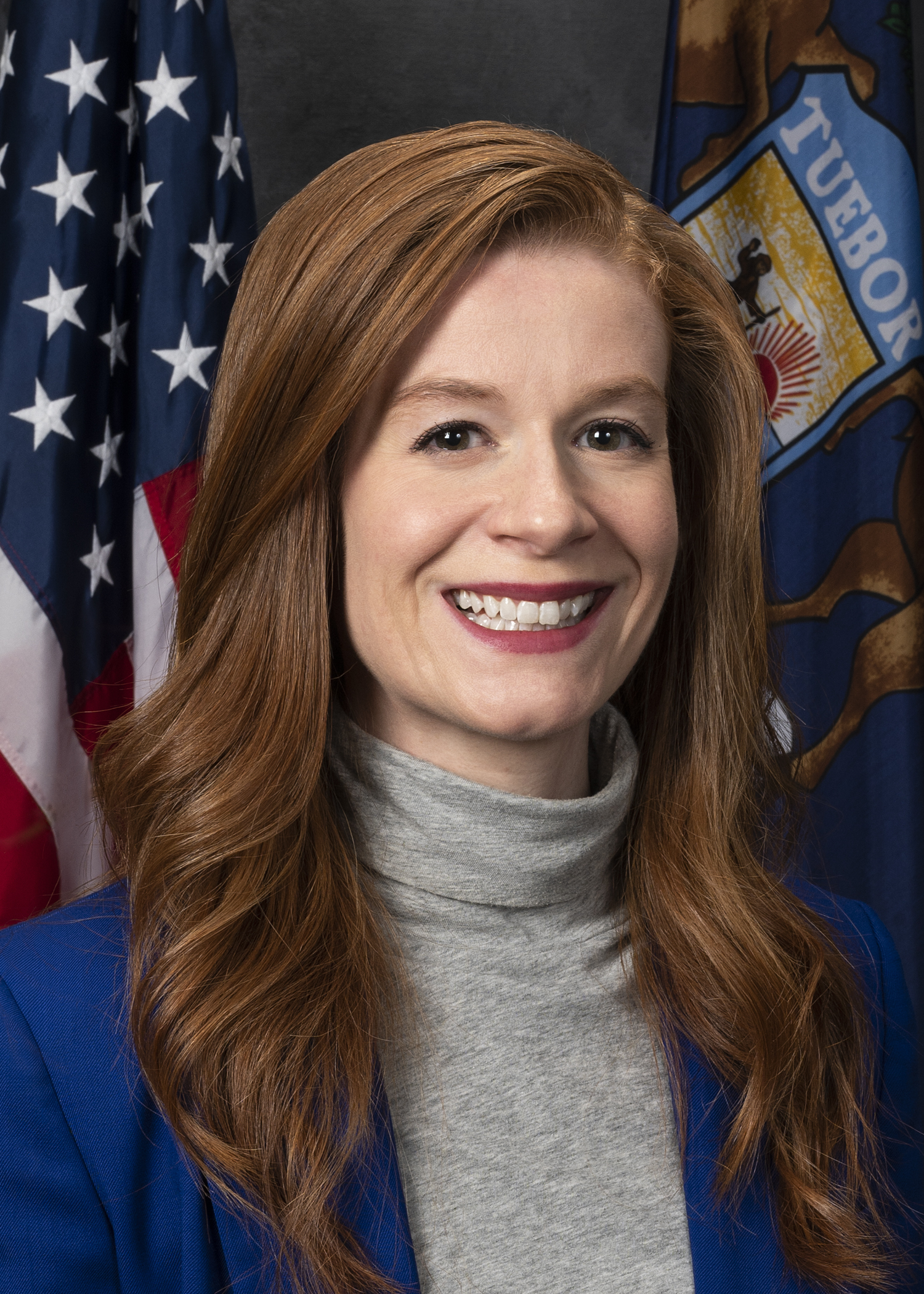
Veronica Klinefelt
96% support rate
Top opponent
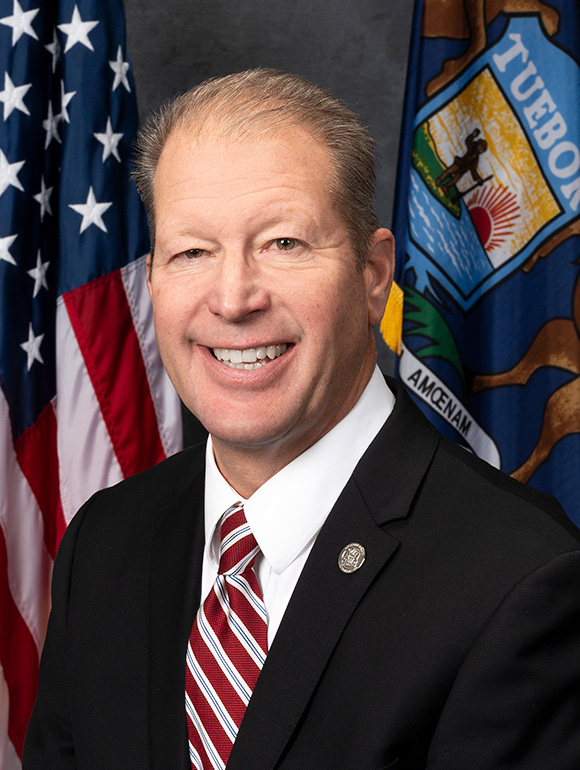
Jim Runestad
8% support rate
Ranked legislators
10
5 support · 5 oppose
Key legislators

Who's moving healthcare in Michigan

Legislators moving healthcare in Michigan
Legislator Party Stance Support rate Decisive votes
Veronica Klinefelt
Veronica Klinefelt Senate · District 11
D
Strong +
96% 27
Darrin Camilleri
Darrin Camilleri Senate · District 4
D
Strong +
93% 30
Jeremy Moss
Jeremy Moss Senate · District 7
D
Strong +
93% 30
Kevin Hertel
Kevin Hertel Senate · District 12
D
Strong +
93% 30
Mallory McMorrow
Mallory McMorrow Senate · District 8
D
Strong +
93% 30
Jim Runestad
Jim Runestad Senate · District 23
R
Strong −
8% 24
Michele Hoitenga
Michele Hoitenga Senate · District 36
R
Strong −
17% 30
Dan Lauwers
Dan Lauwers Senate · District 25
R
Strong −
17% 29
Thomas Albert
Thomas Albert Senate · District 18
R
Strong −
17% 29
Lana Theis
Lana Theis Senate · District 22
R
Strong −
19% 27
Showing 361–370 of 493 bills

All healthcare bills

passed · Michigan · Senate Jun 17, 2026

SB 451: Consumer credit: credit reports and reporting agencies; collection and reporting of medical debt information; regulate. Creates new act.

SB 451 prohibits consumer reporting agencies in Michigan from including medical debt in credit reports, protecting residents from negative credit impacts due to unpaid medical bills. The law requires collection agencies to disclose this restriction in writing to consumers and forbids them from claiming medical debt will appear on credit reports unless the debt relates to a mortgage exceeding the federal conforming loan limit ($766,550 for 2024). It directly affects consumers who receive medical care but have unpaid bills, as their credit scores will no longer be harmed by such debt. The law also provides legal remedies, including damages and attorney fees, for violations.
in committee · Michigan · Senate Nov 12, 2025

SR 85: A resolution to urge Michigan’s United States Senators Elissa Slotkin and Gary Peters to vote in support of H.R. 5371 to reopen the federal government and resume funding for critical government programs, such as the Supplemental Nutrition Assistance Program, that are essential for many Michigan families.

This resolution urges Michigan Senators Elissa Slotkin and Gary Peters to support H.R. 5371, a bill to reopen the federal government and restore funding for critical programs. It specifically highlights the risk of SNAP benefits (serving nearly 1.5 million Michiganders) being frozen starting November 1, 2025, which would disrupt food assistance for families and programs like Double Up Food Bucks. The resolution emphasizes that continuing the shutdown would worsen impacts on federal workers missing paychecks and Michigan residents relying on these services. It does not create new law but formally requests the senators’ support for H.R. 5371.
in committee · Michigan · House Dec 2, 2025

HB 5291: Health occupations: health professionals; limited license for certain individuals engaging in the practice of applied behavior analysis; provide for. Amends secs. 16343a, 18253 & 18257 of 1978 PA 368 (MCL 333.16343a et seq.).

HB 5291 creates a new limited license for certain individuals practicing applied behavior analysis (ABA) in Michigan. It amends specific sections of the Public Health Code (MCL 333.16343a, 333.18253, and 333.18257) to establish this licensing pathway. The bill directly affects ABA practitioners who qualify for this limited scope but do not meet full licensure requirements. Key provisions add this new license category to the existing regulatory framework, allowing qualified individuals to practice under defined conditions.
passed · Michigan · Senate Feb 18, 2025

SB 60: Health occupations: physicians; interstate medical licensure compact; remove sunset. Amends sec. 16189 of 1978 PA 368 (MCL 333.16189).

SB 60 removes the expiration date (sunset) from Michigan's participation in the Interstate Medical Licensure Compact. This compact allows physicians licensed in one participating state to more easily practice in other participating states without obtaining separate licenses in each. The bill directly affects physicians seeking to practice across state lines, particularly in neighboring states that are part of the compact. It does not change Michigan's physician licensing requirements within the state but extends the existing agreement to continue enabling interstate medical practice.
Sub-Topics Medical Licensing
in committee · Michigan · House Feb 25, 2025

HB 4095: Insurance: insurers; insurance providers to panel a mental health provider within a certain time period of application process; require. Amends 1956 PA 218 (MCL 500.100 - 500.8302) by adding sec. 3406ss.

HB 4095 requires Michigan health insurers to process mental health and substance use disorder provider credentialing applications within 60 calendar days (or up to 75 days with justification). Insurers must send written requests for missing information within 10 business days and reimburse providers for covered services if they miss deadlines, using standard in-network rates. This directly affects mental health professionals (like psychologists, licensed social workers, and counselors) seeking to join insurer networks and the insurers themselves. The bill applies to both initial applications and recredentialing, aiming to reduce delays in provider network access.
in committee · Michigan · House Mar 5, 2025

HR 33: A resolution calling on the United States Congress to reinstate United States Agency for International Development funding to research universities.

This resolution (HR 33) calls on the U.S. Congress to restore funding from the United States Agency for International Development (USAID) to research universities. It directly affects research institutions that rely on USAID for critical projects in agriculture, food security, public health, and global development. The resolution states that a recent funding freeze has disrupted programs like the Feed the Future Lab, threatening research progress and international partnerships. As a non-binding resolution, it urges Congress to act but does not change funding policies itself.
Sub-Topics Public Health
in committee · Michigan · House Mar 4, 2025

HB 4134: Criminal procedure: sentencing guidelines; sentencing guidelines for certain crimes related to preventing access to a health care facility; enact. Amends sec. 13n, ch. XVII of 1927 PA 175 (MCL 777.13n). TIE BAR WITH: HB 4133'25

HB 4134 amends Michigan's sentencing guidelines to establish specific penalties for crimes that prevent access to healthcare facilities, such as blocking entrances to clinics. It directly affects individuals convicted of obstructing access to medical care, including abortion providers or other healthcare services. The bill modifies existing sentencing guidelines (MCL 777.13n) to create new, higher sentencing ranges for these offenses. This change would apply to cases where someone intentionally interferes with lawful access to a healthcare facility. The bill is currently in committee review after its February 2025 introduction.
in committee · Michigan · House Mar 4, 2025

HB 4133: Crimes: other; preventing access to a health care facility; prohibit. Creates new act.

HB 4133, the "Access to Health Facilities Act," prohibits physical obstruction, intimidation, or violence targeting individuals accessing or providing reproductive health services at licensed health facilities, including abortion care. It criminalizes actions like blocking entrances, threatening patients, or damaging property at these facilities, with penalties ranging from misdemeanors (up to 1 year jail, $10,000 fine) to felonies (up to life in prison for causing death). The law also allows civil lawsuits for $5,000 per violation and civil fines up to $25,000 for violators. It explicitly protects First Amendment-protected protests but does not affect local abortion regulations or existing protest laws.
Sub-Topics Women's Health
in committee · Michigan · Senate Mar 12, 2025

SB 143: Mental health: recipient rights; informed consent requirements for mental health treatment; provide for. Amends sec. 416 of 1974 PA 258 (MCL 330.1416).

SB 143 requires mental health providers in Michigan to clearly explain a patient's rights - including the right to end voluntary treatment - in both oral and written form when treatment begins. It also mandates that providers give patients and the person who signed the consent form copies of the written consent agreement and a standard form for ending treatment, regardless of whether the patient has requested to stop care. This applies to all mental health treatment in Michigan, directly affecting patients, their designated representatives (like family members), and providers by ensuring informed consent and transparency from the start of care.
Sub-Topics Mental Health
in committee · Michigan · Senate Mar 13, 2025

SB 149: Public employees and officers: compensation and benefits; regional airport authorities; include in the publicly funded health insurance contribution act. Amends sec. 2 of 2011 PA 152 (MCL 15.562).

SB 149 amends Michigan's Publicly Funded Health Insurance Contribution Act to update the definition of "public employer" to explicitly include regional airport authorities (as defined in the aeronautics code) and community colleges. This change requires these entities to contribute to the state's health insurance fund for their employees, as previously required of other public employers like school districts. The bill does not alter health benefits or costs but clarifies which organizations must comply with the act's contribution rules. It directly affects public employers such as community colleges, regional airport authorities, and other newly included entities.
Sub-Topics Insurance
Showing 361 to 370 of 493 bills
Previous 1 … 36 37 38 … 50 Next