Issue · Criminal Justice

Criminal Justice (Policing)

Every criminal justice bill, vote, and legislator stance in Michigan, automatically classified by Maddy, our AI policy reader.

Total bills
32
2025-2026 Regular Session
Top supporter
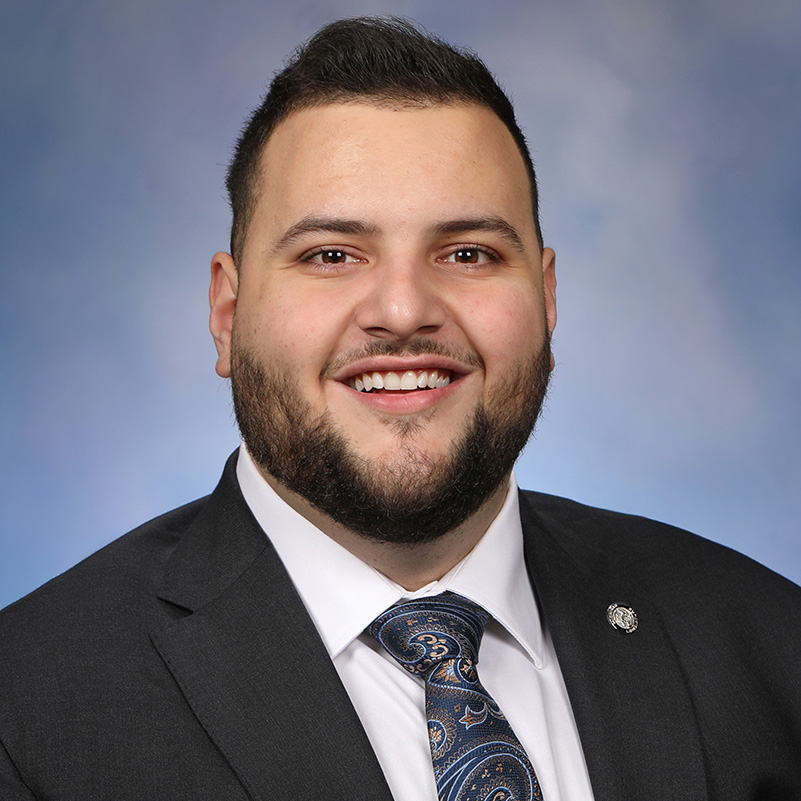
Alabas Farhat
100% support rate
Top opponent
Jaz Martus
17% support rate
Ranked legislators
10
5 support · 5 oppose
Key legislators

Who's moving policing in Michigan

Legislators moving policing in Michigan
Legislator Party Stance Support rate Votes
Alabas Farhat
Alabas Farhat House · District 3
D
Strong +
100% 5
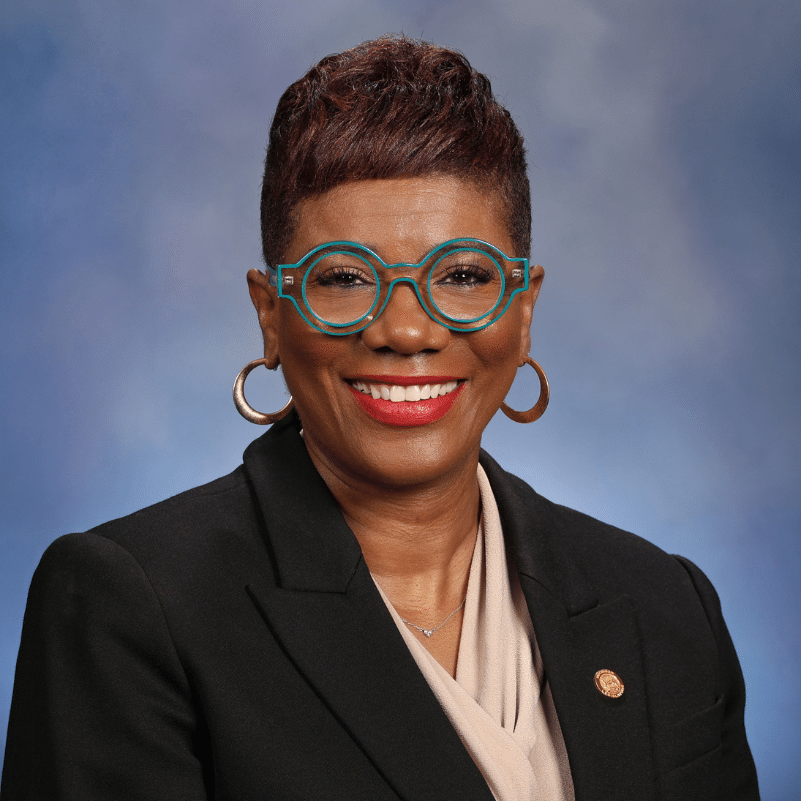
Cynthia Neeley
Cynthia Neeley House · District 70
D
Strong +
100% 5
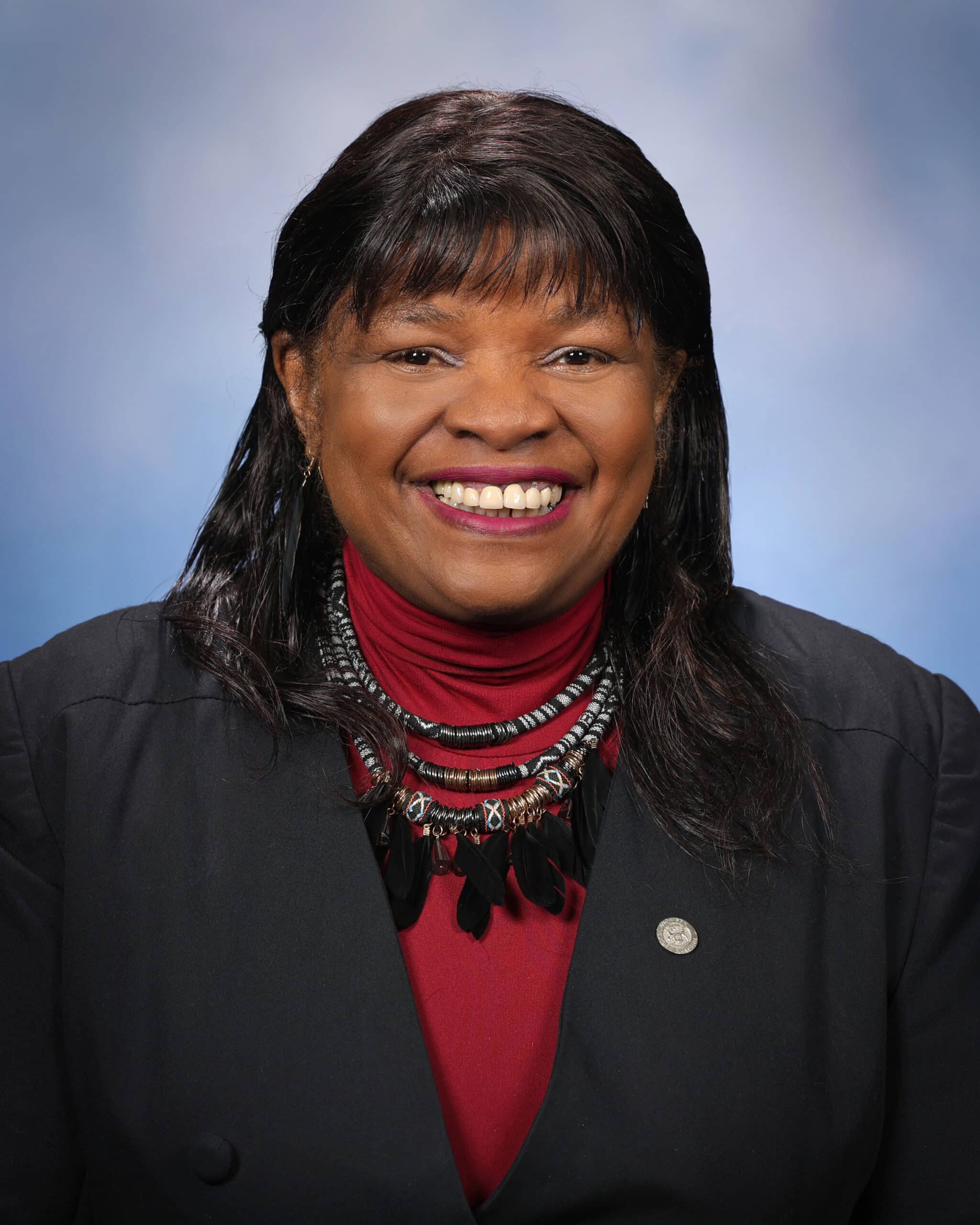
Helena Scott
Helena Scott House · District 8
D
Strong +
83% 6
Brenda Carter
Brenda Carter House · District 53
D
Strong +
80% 5
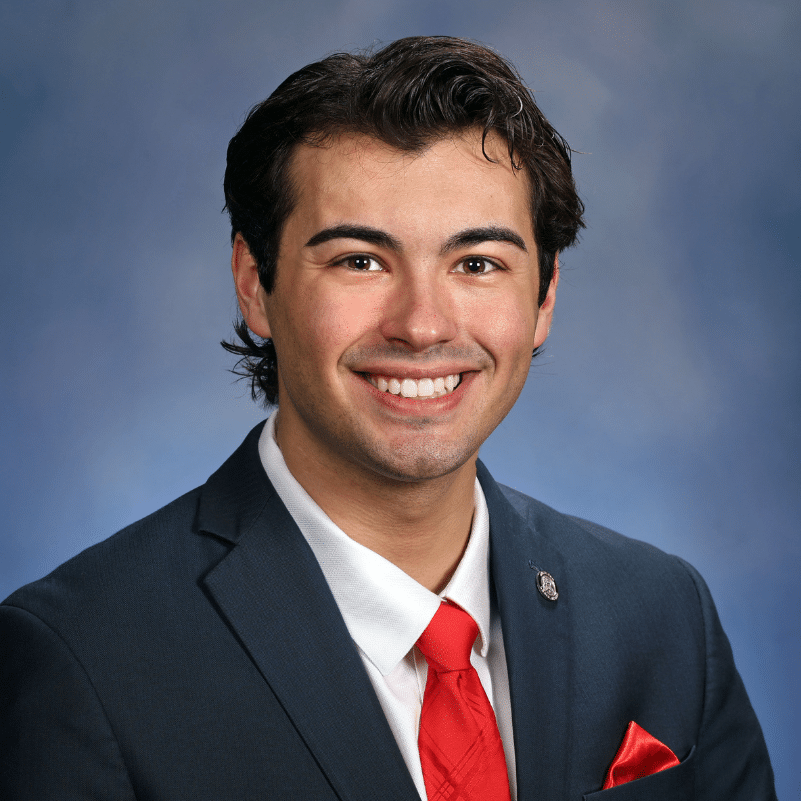
Joey Andrews
Joey Andrews House · District 38
D
Strong +
80% 5
Jaz Martus
Jaz Martus House · District 69
D
Strong −
17% 6
John Fitzgerald
John Fitzgerald House · District 83
D
Strong −
17% 6
Kara Hope
Kara Hope House · District 74
D
Strong −
17% 6
Kelly Breen
Kelly Breen House · District 21
D
Strong −
17% 6
Matt Koleszar
Matt Koleszar House · District 22
D
Strong −
17% 6
Showing 11–20 of 32 bills

All criminal justice bills

passed both · Michigan · House Jun 11, 2026

HB 5576: Criminal procedure: sentencing guidelines; sentencing guidelines for intimidating or harassing an individual based on actual or perceived employment as a first responder; provide for. Amends sec. 16t, ch. XVII of 1927 PA 175 (MCL 777.16t). TIE BAR WITH: HB 5574'26

HB 5576 amends Michigan's sentencing guidelines to specifically address crimes targeting first responders. It adds intimidation or harassment of individuals based on their actual or perceived employment as a first responder (like police, firefighters, or EMTs) to the list of offenses that warrant enhanced sentencing. The bill changes Section 16t of the Michigan Code of Criminal Procedure (MCL 777.16t) to require courts to consider this factor when determining sentences for such crimes. This directly affects individuals convicted of threatening or harassing first responders, ensuring their actions are treated with greater severity under sentencing rules.
Sub-Topics Policing Sentencing
in committee · Michigan · House Feb 3, 2026

HB 5493: Law enforcement: other; guidelines for use of registration plate reader systems; provide for. Creates new act. TIE BAR WITH: HB 5492'26

HB 5493 regulates how state and local law enforcement agencies use automatic license plate reader (ALPR) systems. It prohibits most ALPR use except for specific purposes like checking for stolen vehicles, outstanding warrants, uninsured vehicles, or active criminal investigations. The bill requires agencies to delete captured plate data within 14 days (unless used as evidence or for ongoing investigations), adopt public policies on ALPR use, and submit quarterly usage reports. It directly affects police departments and other government entities that operate ALPR systems, limiting their data collection and retention practices.
in committee · Michigan · House Dec 31, 2025

HB 5424: Law enforcement: funds; allowable uses for fee revenue related to salvage vehicle inspection; modify. Amends sec. 217c of 1949 PA 300 (MCL 257.217c).

HB 5424 amends Michigan's vehicle code (MCL 257.217c) to change how law enforcement agencies can use revenue collected from fees for salvage vehicle inspections. Currently, these fees must be spent on specific purposes like vehicle inspections or law enforcement operations, but the bill modifies the allowable uses. This directly affects local police departments and sheriff's offices that collect these fees. The change would allow them to allocate the revenue toward additional law enforcement needs beyond the current restrictions.
in committee · Michigan · House Jun 11, 2025

HB 4587: Weapons: licensing; application for relief from federal firearms disability program; provide for. Amends 1961 PA 236 (MCL 600.101 - 600.9947) by adding sec. 2908.

HB 4587 creates a court process for Michiganders with certain court-ordered mental health commitments or adjudications (triggering federal firearm restrictions under 18 U.S.C. 922(d)(4)/(g)(4)) to seek relief from firearm disabilities. It requires courts to forward only necessary identifying information to state police for background checks and allows affected individuals to petition courts for relief after meeting specific criteria, including demonstrating they no longer pose a public safety risk. Courts must review petitions confidentially using evidence on the petitioner's mental health, criminal history, reputation, and changed circumstances. If approved, the state police must remove the disability from background check systems within 10 business days. This bill directly affects people barred from firearm purchases due to Michigan court decisions.
Sub-Topics Firearms Policing
signed · Michigan · House Jul 29, 2026

HB 4517: Law enforcement: reports; communications under the Amber alert act; modify. Amends title & secs. 1, 2 & 5 of 2002 PA 713 (MCL 28.761 et seq.). TIE BAR WITH: HB 4518'25

HB 4517 amends Michigan's Child Abduction Broadcast Act to update its title and expand how radio and TV stations can share missing child information. It specifically allows stations to broadcast alerts via social media (beyond traditional radio/TV) when sharing details from the Michigan Department of State Police under the Amber Alert system. The bill also maintains legal immunity for stations that accurately broadcast this information. This directly affects broadcasters, law enforcement, and the public by broadening the channels for urgent child safety alerts.
Sub-Topics Policing Social Media
in committee · Michigan · House Feb 13, 2025

HB 4069: Children: protection; reference in Michigan penal code to surrender of a newborn under the newborn safe delivery law; revise. Amends sec. 135 of 1931 PA 328 (MCL 750.135). TIE BAR WITH: HB 4067'25

HB 4069 amends Michigan's penal code to clarify that surrendering a newborn under 72 hours old to a hospital, fire department, or police station (as defined by the "safe delivery of newborns law") serves as a legal defense against abandonment charges. It directly affects parents or caregivers who choose this option for newborns, ensuring they cannot face criminal prosecution solely for this action. The bill explicitly states that criminal investigations must not be initiated based only on a newborn being surrendered through these designated channels. It updates Section 135 of the penal code to align with existing protections under Michigan's newborn safety law, without changing the underlying policy.
Sub-Topics Policing
passed · Michigan · House Mar 17, 2026

HB 4954: Higher education: financial aid; eligible recipients of the police officer's and fire fighter's survivor tuition grant; expand to include medical examiners and medical examiner investigators. Amends title & secs. 1, 2, 3 & 4 of 1996 PA 195 (MCL 390.1241 et seq.).

HB 4954 expands Michigan's survivor tuition grant program to include children and surviving spouses of medical examiners and medical examiner investigators who die in the line of duty. Currently, the program covers families of police officers and firefighters killed on duty; this bill adds medical examiners and their investigators to the eligible categories. The grant would cover tuition costs at Michigan's public colleges and universities for qualifying students meeting residency and academic requirements. The bill amends the existing "Police Officer's, Fire Fighter's, and Medical Examiner's Survivor Tuition Grant Act" to include these new recipients.
in committee · Michigan · House Mar 18, 2025

HB 4232: State management: funds; public safety and violence prevention fund; create. Amends title & sec. 2 of 2000 PA 489 (MCL 12.252) & adds secs. 11a & 11b. TIE BAR WITH: HB 4231'25

HB 4232 creates the Public Safety and Violence Prevention Fund within Michigan’s trust fund system, directly affecting cities, villages, and townships that receive funding. The fund is financed by general sales tax deposits, donations, and investment earnings, with money remaining in the fund year-to-year instead of lapsing. Key provisions require 6.5% of fund revenues to be distributed to cities/towns for community violence prevention grants (administered by DHHS), while 2% goes to the Crime Victim’s Rights Fund; remaining funds are distributed proportionally but reduced if jurisdictions fail to meet violent crime rate reduction targets (1% by 2028-2030, 2% after). The bill strictly prohibits using funds for tactical police vehicles (>15,000 lbs), facial recognition technology, or replacing existing public safety resources.
in committee · Michigan · House Apr 22, 2025

HB 4331: Law enforcement: reports; ebony alert system; provide for. Creates new act.

House Bill 4331 establishes an "Ebony alert" system in Michigan to aid in locating missing women between the ages of 18 and 65, referred to as "qualifying individuals." This system is activated when a qualifying individual is reported missing under suspicious circumstances and is believed to be at risk, developmentally disabled, cognitively impaired, or abducted. The Department of State Police will create and maintain a plan to rapidly disseminate information to radio and television stations statewide. The bill also creates an Ebony Alert Fund to support the system's operation and prohibits intentionally making false reports, imposing penalties for violations.
Sub-Topics Policing
in committee · Michigan · House May 8, 2025

HB 4465: Criminal procedure: arrests; required removal of religious head coverings for police photographs; prohibit. Amends 1927 PA 175 (MCL 760.1 - 777.69) by adding sec. 25c to ch. IV.

House Bill 4465 amends Michigan's criminal procedure to establish guidelines for taking booking photographs of individuals wearing religious garb during an arrest. It requires law enforcement to make reasonable efforts to provide a same-sex officer or staff member and a private setting for the removal of religious head coverings for photographs, if requested due to sincerely held religious beliefs. The bill outlines specific photo procedures, including taking pictures with and without certain coverings, primarily for identification. Photos taken without religious garb are generally confidential but may be used for specific law enforcement, investigative, or legal purposes. Additionally, it ensures replacement religious garb is provided for individuals not immediately released.
Sub-Topics Policing
Showing 11 to 20 of 32 bills
Previous 1 2 3 4 Next