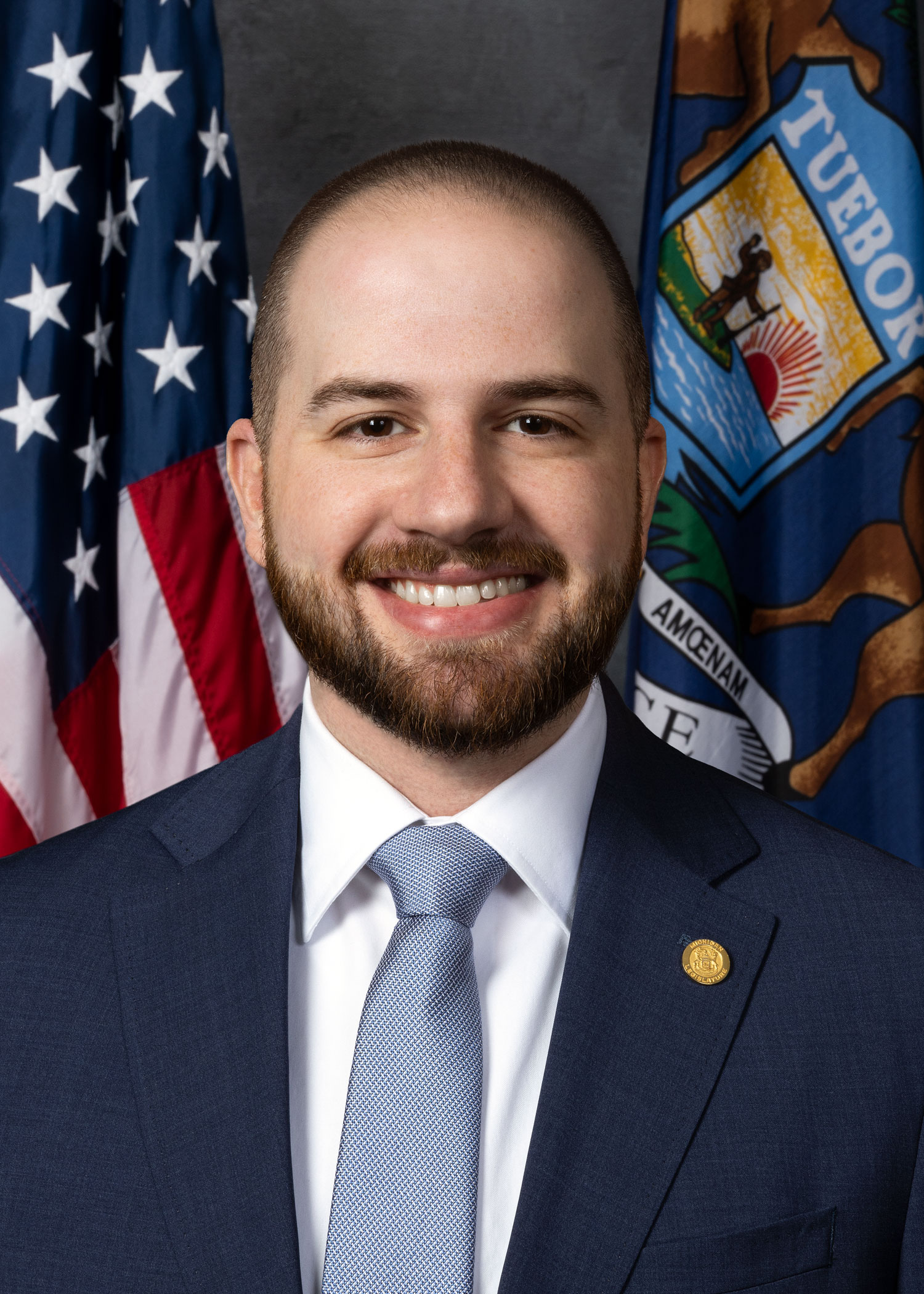
HB 4397 creates new legal protections for judges, their families, and household members by requiring courts to shield personal information (like home addresses) and enhance physical safety measures. Key provisions mandate that courts restrict public access to sensitive contact details and implement security protocols for judges' residences. The law directly affects judicial staff and their households, aiming to reduce threats and harassment. It passed the House with 84 votes in favor and is now under review by the Civil Rights, Judiciary, and Public Safety Committee.
HB 5079 increases penalties for individuals who disarm a law enforcement officer using force or cause injury to the officer during such an incident. It amends existing law (MCL 750.479b) to raise criminal penalties for these specific acts against police. The bill directly affects people who physically interfere with officers' weapons, making the offense a more serious crime. This change applies to any situation where an officer is disarmed through force or injured while resisting disarming.
This bill amends Michigan's sentencing guidelines to specifically increase penalties for individuals who take a police officer's firearm by force or cause injury to the officer during such an incident. It directly affects people convicted of assaulting officers to seize their weapons, making this a more severe offense under state law. The key change adds these circumstances as a factor for judges to consider when determining sentences, requiring harsher penalties for disarming officers through violence or causing harm. The amendment modifies Section 16x of the Code of Criminal Procedure (MCL 777.16x) to reflect these updated sentencing standards.
HB 4691 amends Michigan's Vehicle Code to increase penalties for drivers who flee or elude police officers. It creates four tiers of felony sentencing based on the severity of the violation: fourth-degree (up to 2 years for basic evasion), third-degree (1-5 years if collision occurs or in low-speed zones), second-degree (2-10 years for serious injury or prior convictions), and first-degree (5-15 years if death results). The bill specifically defines "serious injury" to include loss of limbs, brain damage, or coma. This directly affects drivers who fail to stop for police in uniform with marked vehicles, with penalties escalating based on outcomes like collisions, injuries, or prior offenses.
HB 4690 mandates fixed prison sentences for certain violent or gun-related crimes by amending Michigan's sentencing law (MCL 750.479a). It directly affects defendants convicted of these specific offenses, as judges must now impose predetermined terms instead of exercising discretion. The key provision requires minimum sentence lengths for these cases, removing judicial flexibility in sentencing. This policy change applies to new convictions under the amended law.
HB 4596 clarifies the timeline for dismissing criminal charges against defendants deemed incompetent to stand trial in Michigan. It requires charges to be dismissed 15 months after the defendant was initially found incompetent or after they began treatment to become competent - whichever comes first. Prosecutors may refile charges for life felony offenses if the defendant later becomes competent, but only after a court hearing confirming competency. The bill also adds requirements for courts to notify attorneys and medical supervisors when dismissal orders expire or are voided.
HB 4664 prohibits blocking state highways during assemblies of individuals, amending Michigan's existing traffic law (MCL 257.676b). It directly affects protesters or assembly participants who obstruct highway traffic, making such obstruction a misdemeanor offense. The key provision adds a specific penalty for blocking highways while engaging in group assemblies, moving beyond general traffic violations. This law clarifies that highway obstruction during protests is a criminal act, not merely a traffic infraction.
HB 4716 increases criminal penalties for insurance fraud in Michigan based on the amount of fraudulent claims or number of claims involved. It raises maximum prison terms from 4 years to 20 years and fines up to $50,000, with higher penalties for larger frauds (e.g., $100,000+ claims or 100+ claims) or repeat offenses. The law requires courts to order restitution to victims and allows aggregating claims made within any 12-month period to determine penalty levels. This directly affects individuals committing fraud, as well as insurers or practitioners found responsible for fraudulent acts under Michigan law.
HB 4714 updates Michigan's sentencing guidelines specifically for fraudulent insurance acts by amending Section 15a of the Code of Criminal Procedure (MCL 777.15a). The bill directly affects individuals convicted of insurance fraud by establishing clearer sentencing standards for these offenses. It modifies existing sentencing structures to provide more defined parameters for judges when determining penalties in fraud cases involving insurance. The changes aim to standardize penalties for this specific crime category within Michigan's criminal justice system. The bill passed the Michigan House on September 16, 2025, with strong support.
HB 4717 amends Michigan's criminal code by adding insurance fraud to the legal definition of racketeering under MCL 750.159g. This change directly affects cases involving insurance fraud, making it a specific type of racketeering offense rather than a separate crime. The key provision updates the statute to explicitly include insurance fraud within the broader racketeering definition used for prosecution. As a substantive policy change, this alters how such fraud cases are categorized and prosecuted under state law.