

Maddy summaryThe DETERRENT Act requires higher education institutions receiving federal funding to disclose foreign gifts and contracts meeting certain value thresholds ($50,000 or more for regular foreign sources, all for "foreign countries of concern" or "foreign entities of concern"). Institutions must report details including the foreign source's identity, purpose, and financial value, with all disclosures made public through a searchable database. The bill prohibits contracts with designated "foreign countries of concern" or "foreign entities of concern" without a specific waiver, and includes enforcement mechanisms with fines for non-compliance. Institutions must also maintain policies requiring faculty and staff to disclose foreign connections that meet certain criteria.
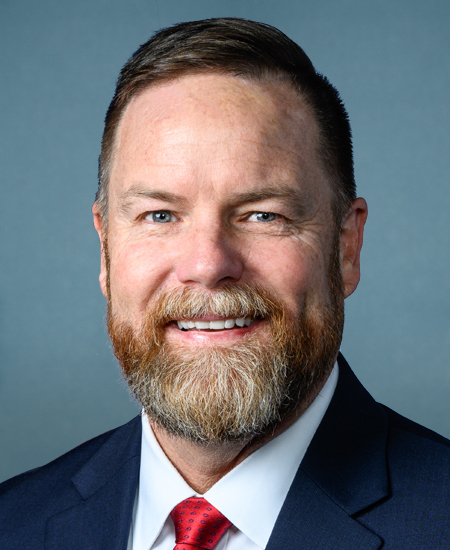
Rep. Aaron Bean
Sponsored bills
Maddy summaryThe SPARE Act (HR 1802) prohibits federal agencies, contractors, and grantees from using animals in federally funded research, testing, or experimentation, with exceptions for clinical veterinary research, military/service animals, and research on infectious diseases or national security (requiring congressional approval). It establishes a Federal Research Modernization Fund to support transitioning to non-animal methods (like cell-based models) and mandates that facilities release animals used in prohibited research to rescue organizations, sanctuaries, or shelters after veterinary certification. The bill phases in the prohibition over 18 months (for cosmetic testing) or three years (for biomedical research), imposes civil penalties up to $250,000 for violations, and requires annual audits and public reporting on compliance and animal releases. It directly affects federal research entities and aims to reduce animal use while promoting ethical alternatives.
Maddy summaryThe CAPE Canaveral Act (HR 2422) would require the National Aeronautics and Space Administration (NASA) to relocate its headquarters to Brevard County, Florida, within one year of the bill becoming law. This bill directly affects NASA by mandating a physical move of its central administrative operations from its current location. The key provision sets a strict one-year deadline for the transfer, without altering NASA's missions or programs. The bill focuses solely on changing the headquarters location, not on policy or funding changes.
Maddy summaryThe Freedom from Unfair Gun Taxes Act of 2025 would prohibit states and local governments from imposing taxes on the sale of firearms, ammunition, or firearm parts during interstate or foreign commerce. This bill directly affects state tax policies and manufacturers or dealers selling these items across state lines. It explicitly states that the bill does not change the existing federal tax on firearms and ammunition that funds wildlife conservation programs. The key provision bans state-level taxes for these sales in interstate transactions while preserving current federal funding mechanisms.
Maddy summaryHR 2423, the Unfair Tax Prevention Act, amends the U.S. tax code to modify how the base erosion tax applies to certain foreign-owned businesses. It directly affects foreign-controlled entities operating under specific foreign tax systems that impose taxes based on ownership chains, such as those linked to foreign corporations. Key provisions include treating these entities as "applicable taxpayers" for tax purposes, changing a deadline from December 31, 2025, to the bill's enactment date, and counting 50% of their cost of goods sold as a tax benefit while excluding certain other tax rules. The changes apply to taxable years beginning after the bill becomes law.
Maddy summaryHR 2314, the FAIR Act, requires hospitals participating in Medicare-funded residency programs to annually report data on applicants and acceptances from both osteopathic (DO) and allopathic (MD) medical schools. Hospitals must publicly affirm they consider applicants from both pathways equally and accept scores from either the COMLEX (for DOs) or USMLE (for MDs) exams. Non-compliant hospitals face a 2% reduction in Medicare payments starting in 2026 for each prior year of non-reporting. The bill directly affects hospitals receiving Medicare residency funding, aiming to increase transparency in admissions without mandating specific acceptance rates or federal oversight of medical education.
Maddy summaryThis bill (HR 2199) prevents private health insurance plans from discriminating against patients with end-stage kidney disease (ESRD) who require dialysis. It amends the Social Security Act to prohibit plans from treating dialysis coverage differently than other medical services or applying network restrictions that disproportionately harm ESRD patients. The law clarifies that plans cannot deny or limit benefits for dialysis based on a patient’s diagnosis, while preserving a plan’s right to choose which dialysis providers are in their network. It directly affects ESRD patients and their private health insurance coverage, ensuring dialysis is treated equally with other covered medical services. The bill does not require plans to include specific dialysis providers but stops them from unfairly restricting access to necessary care.
Maddy summaryThis bill amends the tax code to permanently establish a 7-year depreciation period for motorsports entertainment complexes, replacing a temporary provision. It directly affects businesses operating these facilities by allowing them to deduct the cost of qualifying assets over seven years instead of a shorter period. The key change is removing a temporary rule (subparagraph D) from the tax code, making the longer recovery period permanent for these specific properties. The bill focuses solely on clarifying and extending this tax treatment without additional policy changes.
Maddy summaryThe FOCA Act of 2025 prohibits federal agencies from requiring or banning contractors from using union agreements in construction project bids or contracts. It directly affects federal agencies, contractors, and subcontractors working on federally funded or assisted construction projects (like buildings or infrastructure). The law requires bid documents to not favor or penalize contractors based on whether they have union agreements, aiming to promote open competition and prevent discrimination. This changes how agencies structure bids but does not affect union agreements themselves. The bill applies to all new contracts and subcontracts after enactment, with limited exemptions only for public health/safety emergencies or national security.
Maddy summaryHR 1198, the Let’s Get to Work Act of 2025, amends work requirements for the Supplemental Nutrition Assistance Program (SNAP) and extends them to public housing and tenant-based rental assistance programs. It increases the work requirement period from 3 to 6 months for non-exempt SNAP participants (ages 18-50 without children), while adding exemptions for parents with young children, individuals over 60, and married couples where one spouse complies with work rules. These changes apply directly to SNAP recipients and public housing tenants meeting the specified criteria, aligning housing program eligibility with SNAP’s updated work rules. The bill modifies existing provisions without creating new programs or altering benefit levels.