

In committee Mar 6, 2024
1 co-sponsor
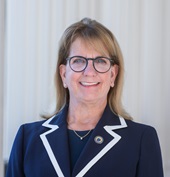
Sen. Joan Lovely
Total votes
1,652
all sessions
Attendance
100%
3 missed
Near the chamber average
With party
98%
of cast votes
Near the chamber average
Bipartisan score
1%
crosses aisle rarely
Near the chamber average
Sponsored
1,753
bills & resolutions
Near the chamber average
Committees
7
assignments
1,753 bills and resolutions
Sponsored bills
Total
1,753
Primary
336
Co-sponsor
1,417
This page
1,753
matching current filters
An Act amending the Massachusetts paid family medical leave law definitions of a covered business entity and a covered contract worker
Maddy summaryThis bill amends the Massachusetts Paid Family Medical Leave law to update the definitions of "covered business entity" and "covered contract worker." It specifically changes the criteria for a covered business entity to include any business where at least 50% of its workforce consists of independent contractors or service providers rather than traditional employees. Additionally, it clarifies that a covered contract worker is an independent contractor for whom an employer must pay contributions to the state's Family and Employment Security Trust Fund. These changes directly affect businesses and workers by expanding or refining who qualifies for benefits under the state's paid leave program.
Passed Mar 4, 2024
1 co-sponsor
An Act improving the Massachusetts paid family medical leave law
Maddy summaryThis bill aims to improve Massachusetts' paid family and medical leave program by updating how employers handle leave requests and enhancing data tracking. It requires employers to inform employees of their eligibility for paid leave within five business days and to provide necessary forms in the employee's primary language. The legislation also expands the types of employer policies that count toward meeting leave requirements and mandates more detailed reporting on claim demographics and processing times.
Passed Mar 4, 2024
1 co-sponsor
An Act relative to firefighter training
Maddy summaryThis bill allows retired firefighters to work more than 960 hours per year for the Massachusetts Department of Fire Services. Currently, state law limits retired firefighters to a maximum of 960 hours of employment annually, but this change would remove that cap. The legislation directly affects retired firefighters who wish to continue working in various capacities within the department. By amending Section 91 of Chapter 32 in the General Laws, the bill provides greater flexibility for these individuals to take on additional work without violating existing hour restrictions.
Passed Mar 4, 2024
1 co-sponsor
An Act clarifying call firefighter rights
Maddy summaryThis bill amends Massachusetts law to clarify the rights of call firefighters, who volunteer to respond to emergencies without a guaranteed salary. Specifically, it changes a legal provision to ensure that these volunteers are eligible for certain benefits regardless of their specific employment status. The change is a minor textual edit that broadens the scope of protections available to this group of emergency responders.
Passed Mar 4, 2024
1 co-sponsor
An Act improving the Massachusetts paid family medical leave law
Senate, March 4, 2024 --The committee on Labor and Workforce Development, to whom was referred the petitions (accompanied by bill, Senate, No. 1197) of Jason M. Lewis, Rebecca L. Rausch, Jack Patrick Lewis, Michael D. Brady and other members of the General Court for legislation to improve the Massachusetts paid family medical leave law; (accompanied by bill, Senate, No. 1198) of Jason M. Lewis, Lydia Edwards, James B. Eldridge and Paul R. Feeney for legislation to amend the Massachusetts Paid Family Medical Leave law definitions of a covered business entity and a covered contract worker; (accompanied by bill, House, No. 1858) of Josh S. Cutler and others relative to the publication of hearing decisions by the Department of Family and Medical Leave; (accompanied by bill, House, No. 1859) of Josh S. Cutler and others relative to data reporting by the Department of Family and Medical Leave; (accompanied by bill, House, No. 1860) of Josh S. Cutler and others for legislation to include bone marrow and organ donation in the paid family and medical leave program; (accompanied by bill, House, No. 1888) of Kenneth I. Gordon and others relative to the Massachusetts Paid Family Medical Leave Law; (accompanied by bill, House, No. 1889) of Kenneth I. Gordon and others relative to the definitions of covered business entity and covered contract worker under the Massachusetts Paid Family Medical Leave Law; and (accompanied by bill, House, No. 1942) of Jeffrey N. Roy relative to unemployment benefits for replacement workers, report the accompanying bill (Senate, No. 2605).
In committee Mar 4, 2024
1 co-sponsor
An Act committing to higher education the resources to insure a strong and healthy public higher education system
Maddy summaryThis bill proposes to dedicate state resources to maintain a robust and healthy public higher education system in Massachusetts. It directly affects the state's public colleges and universities by seeking to ensure they have the necessary funding to operate effectively. The legislation aims to commit financial support to these institutions to prevent cuts that could impact educational quality and access. By focusing on resource allocation, the bill intends to provide a stable foundation for public higher education without specifying exact dollar amounts or spending limits.
Passed Mar 4, 2024
1 co-sponsor
An Act relative to early-onset Alzheimer's disease
Maddy summaryThis bill directs the Department of Elder Affairs to develop a plan for providing specialized services to individuals with early-onset Alzheimer's disease who are enrolled in MassHealth's frail elder home and community-based services waiver. The legislation requires the department to identify specific needs and barriers faced by this population and propose strategies to improve care and support. Additionally, the bill mandates that the department report its findings and proposed plan to the Joint Committee on Elder Affairs by a specified deadline.
Passed Feb 29, 2024
1 co-sponsor
An Act to improve Alzheimer's and dementia care in Senior Care Options programs
Maddy summaryThis bill requires MassHealth-funded Senior Care Options plans in Massachusetts to provide specialized dementia care coordination for members diagnosed with Alzheimer's disease and related dementias. The program mandates that trained clinicians make outgoing calls to patients and their families upon a referral to create individualized care plans. These plans offer guidance on symptom management, communication techniques, legal and financial matters, and safety recommendations while connecting families with community support services. Providers can fulfill this requirement by either delivering the services directly or contracting with community partners to offer the care coordination.
Passed Feb 29, 2024
1 co-sponsor
An Act relative to the employment of persons with disabilities
By Mr. Collins, a petition (accompanied by bill, Senate, No. 2456) (subject to Joint Rule 12) of Nick Collins, Joan B. Lovely, James B. Eldridge, Patrick M. O'Connor and others for legislation relative to the employment of persons with disabilities. State Administration and Regulatory Oversight.
Passed Feb 29, 2024
1 co-sponsor
Ask Maddy
·
AI policy assistant
Ask Maddy about Joan Lovely
Scope: MA
Hi! I can help you understand Joan Lovely's legislative record. What would you like to know?
Try one of these
i
Maddy answers using official bill text and legislative records. Always verify before sharing.
Sources cited inline