By Representative Parisella of Beverly, a petition (accompanied by bill, House, No. 3400) of Jerald A. Parisella relative to the Hall-Whitaker Bridge in the city of Beverly. Transportation.
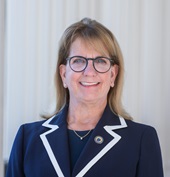
Sen. Joan Lovely
Sponsored bills
Maddy summaryThis bill updates Massachusetts disability pension rules to specifically cover public safety employees who suffer serious, permanent injuries from violent attacks while on the job. It defines a "violent act injury" as harm caused by dangerous weapons like firearms, knives, or vehicles and allows these employees to retire for accidental disability if the injury prevents them from performing their essential duties. To qualify, the injury must occur within two years of the retirement application, and the employee must file a written request unless they were already injured earlier but did not report it within ninety days. The legislation requires a formal review by the retirement board and a medical panel to confirm that the injury is permanent and directly linked to the violent incident before granting pension benefits.
Maddy summaryThis bill amends Massachusetts law to increase the maximum speed limit for vehicles traveling on sidewalks from 200 feet per hour to 1,000 feet per hour. The change directly affects drivers and pedestrians by altering the legal speed restrictions applicable to sidewalk travel. By updating the specific numerical limit in the state's general laws, the legislation modifies existing traffic regulations regarding pedestrian pathways.
Maddy summaryThis bill amends Massachusetts vehicle laws to allow farmers to transport agricultural goods on trailers that weigh up to 99,000 pounds when combined with the towing vehicle. The provision applies specifically to trailers with at least two axles used exclusively for moving farm products to processing facilities within the state. To qualify for this exemption, the farmer must hold a general registration and a special permit that allows exceeding standard weight limits. The change aims to accommodate larger agricultural equipment without requiring the full commercial licensing typically needed for heavy loads.
Maddy summaryThis bill requires state agencies to decide on construction or replacement projects for the Hall-Whitaker Bridge in Beverly within sixty days of receiving an application from the Department of Transportation. It applies to any state agency involved in reviewing such transportation projects and mandates a specific timeline to ensure timely decisions. The law does not alter the bridge's design or funding but focuses solely on accelerating the administrative review process for these infrastructure updates.
By Ms. Lovely, a petition (accompanied by bill, Senate, No. 2507) (subject to Joint Rule 12) of Joan B. Lovely for legislation relative to commuter rail pedestrian safety. Transportation.
Maddy summaryThis bill establishes a legal framework for the MBTA to fully electrify its commuter rail system by December 31, 2035. It mandates that lines serving environmental justice communities be prioritized for early conversion, with specific interim deadlines set for the Fairmount, Newburyport/Rockport, Framingham/Worcester, and Middleborough/Lakeville lines. The legislation also requires the MBTA to maintain service frequency standards and outlines a phased approach for expanding electric operations to all remaining routes by the final deadline.
Maddy summaryThis bill creates a new grant program called the Hunger Free Campus Initiative to help public colleges and universities in Massachusetts address student food insecurity. The program would provide funding to institutions, including municipally administered and minority-serving colleges, to support students in completing their career and technical education programs. To manage the initiative, the state would hire a program director responsible for developing guidelines and conducting surveys to guide how grants are distributed based on available data on student hunger.
Maddy summaryThis bill creates the Massachusetts Hunger-Free Campus Initiative, a grant program designed to help public colleges and universities address student food insecurity. Managed by the state department of higher education, the program will provide funding to eligible institutions, including municipal colleges and minority-serving schools, to support students in completing their post-secondary education. The department will hire a director to set guidelines for the grants, which may require schools to have specific staff, awareness programs, and meal options that accept federal nutrition benefits. Additionally, the bill mandates that the department provide technical assistance to schools and submit an annual report to state officials on the program's progress.

Senate, February 29, 2024 -- Text of the Senate Bill relative to healthy youth (Senate, No. 2692) (being the text of Senate, No. 2686, printed as amended)