

By Mr. Lewis, a petition (accompanied by bill, Senate, No. 64) of Jason M. Lewis, James K. Hawkins, Sal N. DiDomenico, James B. Eldridge and others for legislation to improve pesticide protections for Massachusetts schoolchildren. Agriculture.
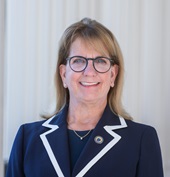
Sen. Joan Lovely
Sponsored bills
The committee on Environment and Natural Resources to whom was referred the petition (accompanied by bill, Senate, No. 587) of James B. Eldridge for legislation to protect pollinators and public health by prohibiting the use of neonicotinoid pesticides, report the accompanying bill (Senate, No. 2746).
Maddy summaryThis bill (S 1878) updates Massachusetts' deferred compensation program rules for state and local government employees. It redefines "contracted employees" to include those working on the program, making them eligible for the state retirement system. The key provision creates an automatic enrollment feature for new state employees hired after June 1, 2022 (with agency discretion for some), requiring no prior employee authorization for payroll deductions. Employees can opt out within 90 days and receive refunds if they discontinue participation early. The bill also extends similar automatic enrollment options to local government bodies for employees hired after June 1, 2024.
By Ms. Lovely, a petition (accompanied by bill, Senate, No. 1879) of Joan B. Lovely for legislation to expand access to retirement savings. Public Service.
By Ms. Lovely, a petition (accompanied by bill, Senate, No. 1877) of Joan B. Lovely relative to cancer presumption for police officers. Public Service.
Maddy summarySD 1493 reforms the governance of Massachusetts Municipal Wholesale Electric Company (MMWEC) by restructuring its 13-member board. The governor appoints four directors (including two with environmental justice/energy expertise and one from the Energy Office), while member cities and towns elect seven directors: three with equal votes and four whose votes are weighted by their electricity sales volume. The bill also requires MMWEC to consider equity, greenhouse gas reductions, and compliance with state emissions limits when making decisions. These changes directly affect MMWEC's operations and the cities/towns that own it, aiming to enhance environmental accountability and local representation on the board.
Maddy summaryThis bill creates the Junior Operator’s License Fund, managed by the Massachusetts Registry of Motor Vehicles, to provide financial assistance for driver education courses. It directly helps individuals from disadvantaged backgrounds - defined as those qualifying for programs like free school lunches, MassHealth, or food assistance - who need a junior operator’s license. Key provisions include reducing the required course completion time from 6 months to 90 days, requiring course providers to give written notices about timelines, and mandating refunds if permits expire due to provider delays. The fund will also track enrollment data and permit expirations to improve program oversight.
Maddy summaryThis bill requires Massachusetts to redesign all vehicle license plates within five years, reducing standard characters to a maximum of four and adding simple, recognizable symbols with location codes to improve nighttime and weather visibility. It mandates that new plates accommodate existing specialty plates (like veterans' or charitable plates) and creates a board of safety officials to approve designs and train officers. The bill establishes a fund collecting fees for special symbols (e.g., charity-themed plates), using these funds first to implement the new system and second to support designated charitable programs. All vehicle owners in Massachusetts are directly affected, as the redesign applies to every registered vehicle. The changes aim to simplify plate recognition for public safety without altering standard registration costs.
Maddy summaryThis bill establishes a $300 million Zero Carbon Renovation Fund administered by multiple state agencies to support energy-efficient building upgrades. It directly affects affordable housing, low/moderate income homes, public schools, municipal buildings, and certified small businesses across Massachusetts. The fund covers renovations that make buildings highly energy efficient, use all-electric systems, include on-site renewable energy, and use low-carbon materials, while also funding necessary remediation like lead paint removal or electrical upgrades. Priority is given to environmental justice communities and "gateway cities," with funds carried forward annually instead of reverting to the general budget.
Maddy summaryThis bill requires state agencies and local municipalities to provide reasonable motorcycle parking spaces in all transportation and parking facilities built with public funds (federal, state, or local). It mandates that these spaces be allocated in areas not meeting standard car parking requirements, and prohibits rules or policies that specifically restrict motorcycle access to highways, bridges, or transportation facilities. The bill also bans discriminatory practices in transportation planning, funding, or facility design that target motorcycles, motorcycle operators, or passengers. It directly affects motorcycle riders by ensuring equal access and parking accommodations in publicly funded infrastructure.