

Maddy summaryThis bill expands anti-discrimination and anti-harassment protections under state law to include unpaid interns, volunteers, and independent contractors. It defines "employer" and "employee" to cover unpaid work, prohibiting discrimination or harassment based on protected characteristics (like race, sex, or gender identity) in unpaid programs, volunteer roles, or independent contracting relationships. Employers must prevent harassment and take corrective action if they knew or should have known about it, but the protections do not create employment relationships for wage, workers' compensation, or unemployment purposes. Non-employees like vendors or contractors in the workplace also gain similar protections against harassment.
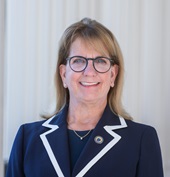
Sen. Joan Lovely
Sponsored bills
Maddy summaryThis bill (SD 1434) prohibits research institutions and product testing facilities in Massachusetts from separating infant nonhuman primates (NHPs) from their biological mothers for research, experimentation, or product testing. The rule applies to all infant NHPs (e.g., monkeys) during their first 12 months of life, with exceptions only for immediate medical necessity to protect the health of either the infant or mother. Facilities must minimize distress during any temporary separation and reunite mothers and infants as quickly as possible unless medical care requires delay. The law requires the Massachusetts Department of Public Health to create implementing regulations within 90 days of the bill’s passage.
Maddy summaryThis bill expands Massachusetts' prevailing wage laws to cover offsite fabrication work for public construction projects. It directly affects contractors, subcontractors, and workers involved in custom plumbing, electrical, mechanical, and sheet metal systems (like piping or ductwork) made offsite for public projects. Key provisions require contractors to report detailed payroll information weekly, including the fabrication location, worker names, occupations, hours, and wages paid. The law ensures these offsite workers receive the same wage rates and reporting standards as on-site construction labor under existing public works rules.
By Ms. Lovely, a petition (accompanied by bill, Senate, No. 404) of Joan B. Lovely and John F. Keenan for legislation relative to supporting survivors of child sexual abuse. Education.
Maddy summaryThis bill prohibits new gas facilities or expansions within 5 miles of environmental justice neighborhoods, except when required for public safety. It mandates that Massachusetts gas companies submit detailed "just transition plans" by 2026, covering workforce training, retention, and pipeline retirement timelines through 2050 to align with net-zero emissions goals. These plans must address maintaining safe service while shifting to renewable energy alternatives and include measures for employee support during the transition. The requirements apply to all gas distribution companies operating in Massachusetts under Chapter 164.
Senate, December 11, 2025 -- The committee on Housing to whom was referred the petition (accompanied by bill, Senate, No. 1008) of Joan B. Lovely, James K. Hawkins, James B. Eldridge, Jason M. Lewis and other members of the General Court for legislation relative to the Massachusetts rental voucher program, report the accompanying bill (Senate, No. 2826).
Maddy summaryMassachusetts Bill SD 1573 establishes the Massachusetts Rental Voucher Program (MRVP), providing rental assistance to low-income households (with 75% of vouchers targeted to households earning 30% or less of area median income) to help them afford decent, stable housing. The program sets payment standards at 100-110% of local market rent rates, limits tenant rent payments to 30% of income (with a temporary 40% exception), and requires unit inspections for safety compliance. It mandates annual data collection on voucher usage, including household demographics and location, to be reported to state legislators. The bill also sets a minimum $80 monthly administrative fee per voucher and ensures unspent funds carry over to the next fiscal year.
By Mr. Cronin, a petition (accompanied by bill, Senate, No. 205) of John J. Cronin for legislation relative to price-fixing prohibition and consumer transparency. Consumer Protection and Professional Licensure.
Maddy summarySD 114 requires the Executive Office of Housing and Livable Communities to create a mandatory training program for elected or appointed municipal board members who handle land-use decisions. The training covers fair housing law, zoning authority, and municipal land-use laws, developed with input from planning and housing organizations. Members must complete the training within six months of starting their term or every four years thereafter, with membership terminating if they fail to comply. Municipalities may hold annual or biannual trainings to meet this requirement. This bill directly affects local planning boards, zoning commissions, and similar bodies across Massachusetts.
Maddy summaryThis bill creates the Home Works Program to provide funding for out-of-school time and summer programs for children aged 5-14 living in households receiving Emergency Assistance (a state aid program for low-income families). The program allocates "slots" covering program costs (at least 75% of local market value) and transportation, distributed based on areas with the highest number of Emergency Assistance children and program capacity. Eligible programs must meet transportation requirements or partner with Emergency Assistance residences for on-site services, and all staff must pass background checks including National Sexual Offender Registry checks. Funding is new and separate from existing Emergency Assistance resources.