

Maddy summarySD 1932 requires the MBTA to develop a new commuter rail fare structure aimed at increasing ridership, primarily affecting residents in transit-oriented areas. Key provisions include establishing a $10 weekday fare (currently only for weekends), capping one-way fares at three times the subway fare, creating discounted monthly passes for hybrid workers (e.g., commuting 3 days/week), offering multi-ride discounts, and simplifying fare zones. The bill mandates that the MBTA submit recommendations within 12 months and implement pilot programs testing these changes within 24 months. It also requires offsetting fare reductions through increased parking rates to maintain revenue. This bill focuses on concrete fare adjustments to make commuter rail more accessible and affordable.
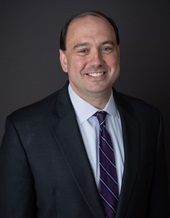
Sen. Jamie Eldridge
Sponsored bills
Maddy summarySD 1109 establishes a pilot program making MBTA bus service free for all riders on designated routes, starting no later than December 31, 2026. The MBTA pilot must include at least 10 priority routes (with specific requirements for routes ending at commuter rail/subway stations or depots) and 10 high-ridership routes from 2020, while Regional Transit Authorities (RTAs) must implement a similar free bus pilot on at least one high-ridership route. An advisory group for each pilot will monitor impacts on ridership, equity, system efficiency, and costs, holding quarterly public meetings and reporting findings every six months. The program is structured as a one-year test to evaluate the feasibility and effects of fare-free bus service before potential broader implementation.
By Mr. Fattman, a petition (accompanied by bill, Senate, No. 1531) of Ryan C. Fattman for legislation to prohibit the use of harmful food dyes in competitive school foods. Public Health.
By Mr. Kennedy, a petition (accompanied by bill, Senate, No. 1555) of Edward J. Kennedy, Michael J. Barrett and Michael O. Moore for legislation to decrease food waste by standardizing the date labeling of food. Public Health.
Maddy summaryThis bill (S 310) proposes requiring public schools to incorporate mental health education into their curricula. It directly affects school systems and students by mandating the inclusion of age-appropriate mental health topics. The key provision is a requirement for schools to develop and implement mental health education programs, though specific content details are not outlined in the abstract. The bill aims to address mental health awareness and education at the foundational level in schools.
Maddy summaryHD 2762 updates definitions and procedures for protecting people with disabilities in Massachusetts. It clarifies "abuse" to include specific acts like withholding adaptive aids or certain physical force (defined as "abuse per se"), and redefines key terms like "disabled person" (ages 18-59 with intellectual, developmental, or other disabling conditions requiring daily assistance). The bill also revises the Disabled Persons Protection Commission to have 3 appointed members (instead of more) and requires it to create a special investigative unit for abuse reports involving criminal conduct. Additionally, it strengthens privacy protections by limiting disclosure of personally identifiable information in investigations.
Maddy summaryThis bill establishes a $300 million Zero Carbon Renovation Fund administered by multiple state agencies to support energy-efficient building upgrades. It directly affects affordable housing, low/moderate income homes, public schools, municipal buildings, and certified small businesses across Massachusetts. The fund covers renovations that make buildings highly energy efficient, use all-electric systems, include on-site renewable energy, and use low-carbon materials, while also funding necessary remediation like lead paint removal or electrical upgrades. Priority is given to environmental justice communities and "gateway cities," with funds carried forward annually instead of reverting to the general budget.
Maddy summaryH 4550 requires health insurance plans in Massachusetts to cover fertility diagnostic care and treatments for individuals diagnosed with infertility, without restrictions based on age, sexual orientation, gender identity, or family status. The bill mandates coverage for up to four oocyte retrievals, unlimited embryo transfers, and unlimited intrauterine insemination cycles, while explicitly excluding non-medical costs like donor gametes or surrogacy. It also requires healthcare providers to complete training on LGBTQ+ family-building resources and eliminates discriminatory coverage limitations for infertility services. This applies to both group insurance plans (including for state employees) and medical assistance programs, as detailed in Sections 2 and 4 of the bill.
Maddy summarySD 1671 establishes a 12-member legislative commission to study solar energy requirements for new buildings. The commission, including representatives from real estate, solar industry, labor, environmental groups, and local government, will review current building codes and policies to assess the feasibility of requiring rooftop solar systems and battery storage on new construction. Its report, due by January 1, 2026, will evaluate how such requirements could support Massachusetts' greenhouse gas goals and include specific policy recommendations. This bill creates a study process, not a direct policy change.
By Mr. Rush, a petition (accompanied by bill, Senate, No. 1900) of Michael F. Rush and John J. Cronin for legislation relative to creditable service for retirement purposes for non-public school service. Public Service.