

Maddy summaryHD 2606 allows cities, towns, water districts, and similar entities operating water or wastewater systems to collect fees based on increased water or sewer demand. These fees, calculated at 1-10 gallons per gallon of new demand, must fund specific environmental measures like stormwater treatment, water conservation, habitat restoration, and infrastructure improvements to offset water use impacts. Funds are held in separate accounts for drinking water, wastewater, or stormwater and can only be used for approved environmental projects or water conservation efforts. The bill requires fair fee structures (e.g., different rates for residential vs. commercial use) and permits entities to later revoke participation while directing remaining funds per the same rules.
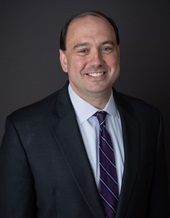
Sen. Jamie Eldridge
Sponsored bills
Maddy summarySD 957 requires Massachusetts employers with 50 or more employees to offer pre-tax commuter benefits (like transit passes or parking) to non-union staff, directly affecting these employers and their employees. Employers failing to comply face fines starting at $100 for the first violation, increasing to $250 per subsequent month. The law mandates a multilingual public awareness campaign by the Department of Revenue, in partnership with transit authorities, to inform employees about these benefits. It also establishes a confidential reporting process for non-compliance and takes effect one year after enactment.
Maddy summaryMassachusetts bill SD 2280 (An Act protecting labor and abolishing barriers to organizing rights) expands labor protections for workers not covered by federal law. It redefines "employee" to include workers for nonprofits, healthcare facilities, and vendors serving the state, while explicitly excluding agricultural workers and domestic workers. The bill creates new rules for union authorization (requiring written majority support) and defines "joint employer" to hold multiple entities accountable for workplace terms. These changes aim to strengthen organizing rights and collective bargaining for private-sector workers across the Commonwealth.
Maddy summaryThis bill requires authorized wheelchair dealers to provide timely repairs for wheelchairs, including complex rehabilitation technology wheelchairs, within 10 business days of a request (excluding time spent waiting for insurance authorization). It mandates dealers to maintain accessible contact methods for repair requests and respond within one business day. The bill also prohibits insurers from requiring preauthorization for repairs unless the original wheelchair prescription is over five years old, directly affecting consumers, dealers, and health insurers. Violations could result in double damages plus legal fees for affected consumers.
By Representative O'Day of West Boylston, a petition (accompanied by bill, House, No. 1278) of James J. O'Day and others relative to wheelchair warranty protections. Financial Services.
Maddy summaryThis bill (HD 2144) requires Massachusetts public schools to better support English learner students and those with disabilities. It mandates that assessments for English learners be administered in their primary language, and that Individualized Education Program (IEP) teams include specialists in second language acquisition to distinguish between language barriers and learning disabilities. The bill also prohibits schools from pressuring parents to decline English learner services for scheduling reasons and requires schools to provide qualified interpreters for parent communication. These changes directly affect English learner students, their families, and school staff responsible for evaluations and IEP planning.
By Representative Hawkins of Attleboro, a petition (accompanied by bill, House, No. 384) of James K. Hawkins and others for legislation to direct the Department of Environmental Protection to publish a toxic chemicals of concern consumer products list. Consumer Protection and Professional Licensure.
Maddy summaryH 4357 prohibits manufacturers, wholesalers, and retailers from knowingly selling children's products containing intentionally added PFAS chemicals. It directly affects companies producing or selling items for children 12 and under, including toys, clothing, school supplies, and car seats (excluding specific items like food, medical devices, and certain electronics). The bill requires PFAS levels to be measured using total organic fluorine at thresholds set by the Department of Environmental Protection, with no de minimis level allowed for engineered nanoobjects. This creates a concrete ban on PFAS in children's products, focusing on measurable chemical limits rather than speculative outcomes.
Maddy summaryThis bill authorizes the town of Acton to require retail businesses to charge customers for checkout bags. It mandates a minimum fee of $0.15 per bag (with fees appearing separately on receipts as "checkout bag charge"), applies to all retail establishments (including stores, restaurants, and pharmacies), and excludes specific bags like those for prescriptions, produce, or frozen food. Retailers keep all collected fees, and the Acton Board of Health oversees implementation. The bill takes effect three months after passage.
By Mr. Eldridge, a petition (accompanied by bill, Senate, No. 1444) of James B. Eldridge for legislation to provide state grants for municipal sustainability directors. Municipalities and Regional Government.