

Maddy summaryThis bill creates a new technical advisory committee to identify communities with high exposure to traffic-related air pollution and establish specific definitions for pollutants like black carbon and ultrafine particles. The Department of Environmental Protection is required to install at least eight new air monitors in these identified hotspots by June 2026 and make the data publicly available. Additionally, the law mandates that the department establish baseline air quality measurements for these areas by June 2027 to better track pollution levels. These changes directly affect residents living near major highways and aim to improve air quality monitoring in areas burdened by pollution.
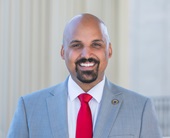
Sen. Pavel Payano
Sponsored bills
March 11, 2024 -- The committee on Public Health, to whom was referred the petitions (accompanied by bill, Senate, No. 1382) of Patricia D. Jehlen, Vanna Howard, Sal N. DiDomenico, Rebecca L. Rausch and other members of the General Court for legislation to improve outdoor and indoor air quality for communities burdened by transportation pollution; and (accompanied by bill, House, No. 2131) of Christine P. Barber, Mike Connolly and others for legislation to improve outdoor and indoor air quality for communities burdened by pollution, report the accompanying bill (Senate, No. 2682).
Maddy summaryThis bill establishes specific deadlines for Massachusetts to transition its public school bus and fleet vehicles to electric power. It requires that 50% of public fleets be electric by 2025, 75% by 2030, and 100% by 2035, while prioritizing vehicles serving environmental justice communities. The legislation also creates programs to encourage private fleet owners to adopt electric vehicles through goals and incentives set by state agencies. Emergency vehicles are explicitly excluded from these electrification requirements.
Maddy summaryThis bill establishes a legal framework for the MBTA to fully electrify its commuter rail system by December 31, 2035. It mandates that lines serving environmental justice communities be prioritized for early conversion, with specific interim deadlines set for the Fairmount, Newburyport/Rockport, Framingham/Worcester, and Middleborough/Lakeville lines. The legislation also requires the MBTA to maintain service frequency standards and outlines a phased approach for expanding electric operations to all remaining routes by the final deadline.
Senate, February 29, 2024 -- Text of the Senate Bill relative to healthy youth (Senate, No. 2692) (being the text of Senate, No. 2686, printed as amended)
Maddy summaryThis bill proposes to dedicate state resources to maintain a robust and healthy public higher education system in Massachusetts. It directly affects the state's public colleges and universities by seeking to ensure they have the necessary funding to operate effectively. The legislation aims to commit financial support to these institutions to prevent cuts that could impact educational quality and access. By focusing on resource allocation, the bill intends to provide a stable foundation for public higher education without specifying exact dollar amounts or spending limits.
Maddy summaryThis bill requires schools in Massachusetts to submit biennial reports detailing their sexual health education curricula, including the number of hours taught and student enrollment figures. It also mandates that schools notify parents and guardians annually about these programs, providing them with the right to withdraw their children from the instruction and the opportunity to review course materials beforehand. The legislation further requires that these notifications be distributed in English and other commonly spoken languages to ensure accessibility for diverse families. By updating existing state laws, the bill aims to increase transparency and parental involvement in how sexual health education is delivered in public and private schools.
Maddy summaryThis bill directs the state education board to update science, technology, and engineering curriculum standards to include interdisciplinary climate justice education for elementary and secondary students. The legislation requires these updated standards to cover topics such as the carbon and water cycles, the health impacts of various energy sources, and how climate change disproportionately affects communities based on race, class, and geography. Additionally, the bill mandates new history, social studies, and civics standards that explain climate policy and define environmental justice communities using specific legal and historical criteria. By integrating these concepts into core subjects, the law aims to provide students with a deeper understanding of equitable climate solutions and the role of different societal entities in addressing climate challenges.