By Representative Madaro of Boston, a petition (accompanied by bill, House, No. 132) of Adrian C. Madaro for legislation to create local and community garden agriculture programs within the Department of Agricultural Resources. Agriculture.
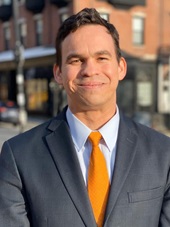
Rep. Dan Sena
Sponsored bills
Maddy summaryThis bill establishes the "food justice frontline" program to fund nonprofit organizations that create food security jobs for low-income residents in overburdened communities. It directs the Department of Transitional Assistance to award grants (up to $500,000) to nonprofits providing food production, distribution, or delivery jobs, requiring all grant funds be used for these jobs with wages calculated as 1/2,400 of the statewide per capita income. Overburdened communities are defined as census areas meeting specific environmental health thresholds and having median household incomes at or below 80% of the state average. The program also requires nonprofits to demonstrate plans for quickly creating jobs and prioritizes applications from groups serving these communities.
Maddy summaryHD 4025 amends a state law to extend disability benefits for POST-certified police officers disabled by cardiac disease to additional police forces. The bill adds the University of Massachusetts police, Massachusetts Port Authority police, state university and community college police, environmental law enforcement, and Department of Mental Health campus police to the list of covered entities. Previously, officers in these forces were excluded from the same benefit provision that applied to entities like the Massachusetts Bay Transportation Authority. This change directly affects POST-certified officers in these newly included forces by making them eligible for the same cardiac disability benefits.
Maddy summaryMassachusetts' HD 337 establishes the Food Justice Frontline Program to create jobs addressing food insecurity. It provides nonprofits with grants up to $500,000 to fund "Food Security Jobs" (like food production or delivery) for residents in designated "Overburdened Communities" - areas with high pollution exposure and household incomes below 80% of the state median. Grants require nonprofits to pay at least the calculated minimum wage (based on state per capita income) and prioritize rapid job creation in these communities. The bill also mandates new outreach programs to promote SNAP and similar food assistance programs, with stipends for youth in targeted areas.
Maddy summaryThis bill establishes a presumption that post-traumatic stress disorder (PTSD) in certain public safety employees was caused by their job duties, if diagnosed within five years of leaving service and not present at the time of hiring. It directly affects police officers, firefighters, correctional staff, airport crash crews, and military fire department members. Under the bill, these employees can receive benefits as if the PTSD occurred "in the line of duty" unless their employer proves it resulted from non-work factors like disciplinary actions. Benefits would be paid retroactively from the date the employee last received regular compensation.
Maddy summaryThis bill creates a presumption that Parkinson's disease causing disability or death in certain firefighters was incurred "in the line of duty," simplifying eligibility for retirement benefits. It directly affects uniformed firefighters in paid departments, state police in fire investigation/K9 units, and airport crash crew personnel (e.g., at Logan Airport, 104th Fighter Wing, or Joint Base Cape Cod) who served at least five years and regularly responded to fire calls. The presumption applies unless non-service factors (like personal health risks) are proven to have caused the condition. The bill amends retirement laws to include this provision, ensuring affected personnel can access benefits under existing systems without needing to prove service connection.
Maddy summaryHD 4039 amends Chapter 32 Section 94B(2) of Massachusetts General Laws to change the minimum service requirement for firefighter retirement benefits from five to ten years. It also adds that firefighters retiring under these terms will have secondary cancer covered under Section 9 of the same chapter. This bill directly affects firefighters meeting the revised service requirement, modifying their eligibility for retirement benefits and expanding cancer coverage. The changes apply to current and future firefighters under the specified retirement provisions.
Maddy summaryThis bill changes the rules for public employees seeking disability benefits related to PTSD or psychological injuries. It removes the time limit for filing claims if the injury is emotional or psychological, allowing employees to use employer records showing they directly responded to a work incident. The employer records must confirm the employee's involvement in the incident, without requiring it to have occurred within two years of the claim. This specifically affects state workers and their beneficiaries filing for benefits under disability programs.
Maddy summaryThis bill creates a legal presumption that certain contagious diseases contracted by full-time police, fire, or emergency medical service workers were incurred during their duties, if they passed required physical exams upon entry and had no pre-existing condition. It applies to diseases like COVID-19, hepatitis, tuberculosis, and HIV - those linked to exposure to blood or bodily fluids - excluding the common cold. Workers must apply within five years of leaving active service and demonstrate they regularly responded to emergency calls during their tenure. Benefits, if approved, would cover disability or death claims under existing workers' compensation laws (Chapters 32, 41, 152).

Maddy summaryH 4418 amends Massachusetts law to strengthen the Massachusetts Food Policy Council. It increases the council's membership from 18 to 20 members, adds specific positions (like the marine fisheries director and UMass food policy director), and creates a new full-time Food System Coordinator role. The coordinator will inventory state food programs, facilitate interagency collaboration, track progress on food system goals, and report to legislative committees and agencies. The bill also establishes rules for compensating council members while requiring compliance with ethics laws. This directly affects the council, state agencies involved in food policy, and the coordination of food system programs across Massachusetts.