

Maddy summaryHD 471 clarifies which county correctional nursing positions qualify for retirement benefits under existing law. It adds specific titles - such as registered nurse, psychiatric nurse, nurse practitioner, and paramedic - to the list of eligible roles within correctional facilities. The bill ensures these nursing positions are explicitly included in retirement coverage, preventing them from being excluded under other classification groups. This change directly affects county correctional nurses holding these specific titles by confirming their eligibility for retirement benefits. The bill amends existing retirement law to provide clear eligibility for these roles.
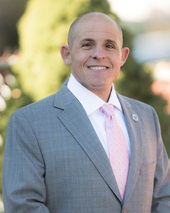
Rep. Steve Ultrino
Sponsored bills
Maddy summaryThis bill creates a Healthy and Sustainable Schools Office within Massachusetts' Department of Energy Resources. It mandates regular energy audits for all public schools and colleges, prioritizing those in environmental justice communities (defined as areas with low income or high minority populations). The audits must include ventilation verification assessments by certified technicians and cover energy efficiency improvements like HVAC upgrades and building envelope repairs. Schools must conduct these audits at least every five years, with results used to identify cost-saving and emissions-reducing upgrades. The bill directly affects all public elementary, secondary, and higher education institutions in Massachusetts.
Maddy summaryHD 1549 allows former parochial school teachers in Massachusetts to purchase retirement service credit for up to 10 years of prior teaching. To qualify, teachers must have taught in an approved school with a valid teaching certificate, pay contributions based on the average teacher salary for those years (plus capped interest), and have their last 10 years of service as a state employee. The bill requires a single payment or annual payments to the retirement system to receive credit for the purchased service time. This directly affects teachers who worked in parochial schools before joining the state teaching system.
Maddy summaryMassachusetts bill HD 2460 establishes a social work licensure compact, allowing licensed social workers in Massachusetts to practice across participating states without obtaining separate licenses in each state. The bill directly affects licensed social workers (clinical, master’s, or bachelor’s level) who seek to provide services in multiple states, particularly addressing workforce shortages and supporting military families. Key mechanisms include creating a "multistate license" recognized by all participating states, enabling mutual recognition of licenses, and establishing a Compact Commission to manage disciplinary information sharing and enforce standards. This eliminates duplicate licensing requirements while preserving each state’s authority to regulate practice and protect public safety in the state where care is delivered.
Maddy summaryThis bill (HD 4212) creates legal protections for harm reduction programs aimed at reducing overdose deaths and improving access to treatment. It defines "harm reduction programs" to include services like needle exchanges, overdose reversal, and referrals to treatment, and grants immunity from arrest, lawsuits, and property seizures for program operators, participants, and property owners when operating under department approval. The law also prohibits searches based on program use, requires annual department reports on program effectiveness, and exempts approved programs from certain registration requirements under Chapter 94C. It directly affects program operators, people accessing services, property owners, and government employees involved in approvals.
Maddy summaryThis bill expands access to family, friend, and neighbor-provided childcare by establishing a payment structure for caregivers who provide care in a child's home or are relatives, ensuring voucher funds cover the full daily value at an hourly rate. It sets a minimum hourly wage for these caregivers equal to the state's minimum wage and requires their care to be licensed unless reimbursement reverts to original payment levels. The legislation also creates a state advisory committee to gather input on improving support, resources, and oversight for these caregivers over a one-year period.
By Representatives Vargas of Haverhill and Garcia of Chelsea, a petition (subject to Joint Rule 12) of Andres X. Vargas, Judith A. Garcia and others for legislation to further regulate state and local participation in federal civil immigration enforcement. Public Safety and Homeland Security.
Maddy summaryHD 1243 requires private gas and distribution companies to increase transparency when awarding construction contracts over $100,000 for work on public ways. Companies must notify all qualified bidders within two business days of their decision, including the award criteria, bidder score, and winning amount. They must also post the contractor name, project location, and work duration on their website. This applies to all such contracts except single-bid situations or when disclosure would harm law enforcement, public interest, or commercial interests. The state department enforces these requirements.
Maddy summaryThis bill establishes a payment structure for family, friend, and neighbor (FFN) childcare providers - those offering unlicensed care in homes or caring for relatives - to ensure families using childcare vouchers or other funding can fully access their voucher value. It mandates a minimum hourly rate equal to the state’s minimum wage and requires the childcare department to create this structure through public hearings. The bill also creates a 60-day advisory committee with diverse representation (including caregivers, advocates, and community groups) to hold public hearings and address FFN care challenges like application processes, resource access, and quality standards. The committee must report findings to state legislators within a year, focusing on improving support for FFN caregivers and families.
Maddy summaryHD 405 establishes a 11-member special commission to study the organizational structure and effectiveness of Massachusetts' Executive Office of Health and Human Services (EOHHS). The commission will evaluate current staffing, administrative processes, and whether dividing EOHHS into smaller agencies would improve service delivery. Members include the health and human services secretary, legislative appointees, and experts in public health, private healthcare, and social services administration. The commission must submit findings and recommendations to legislative committees by October 1, 2026. This bill does not make policy changes but directs a review of EOHHS' operational structure.