

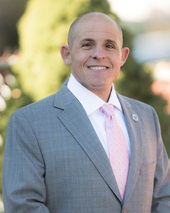
Photo of Steve Ultrino
D Massachusetts House · District 33rd Middlesex On the 2026 ballot

Rep. Steve Ultrino

Compare
Total votes
1,241
all sessions
Attendance
99%
10 missed
Lower than 83% of chamber peers
With party
98%
of cast votes
Near the chamber average
Bipartisan score
1%
crosses aisle rarely
Near the chamber average
Sponsored
1,748
bills & resolutions
Near the chamber average
Committees
1
assignment
1,748 bills and resolutions

Sponsored bills

Total
1,748
Primary
75
Co-sponsor
1,673
This page
1,748
matching current filters
Co-sponsor H 4061
Passed · Massachusetts House · Co-sponsor
An Act relative to protecting against workers compensation premium fraud

Maddy summaryHD 2419 requires Massachusetts insurers to submit certificates of insurance to a publicly accessible database maintained by the commissioner of insurance. The database will display the insured person's name, insurer, policy expiration date, QR codes for access, employee counts, and payroll classifications. This directly affects insurers (who must submit data), employers (whose insurance details become public), and the commissioner (who manages the database). The bill aims to combat workers' compensation fraud by increasing transparency and enabling public verification of insurance coverage.

Passed Jan 15, 2026 1 co-sponsor
Primary H 4233
Signed into law · Massachusetts House · Lead sponsor
An Act amending the charter of the city of Malden

Maddy summaryHD 4831 repeals specific sections (16, 20, 21, 23A, 23C, 23D, 23F, 23G, and 32) of Malden's 1881 city charter. This bill removes these provisions from the city's governing document without adding new requirements. The repeal takes effect immediately upon the bill's passage. The change directly affects Malden's local governance structure by eliminating outdated sections of its foundational charter.

Signed into law Jan 15, 2026 0 co-sponsors
Co-sponsor H 4910
In committee · Massachusetts House · Co-sponsor
An Act to bring child support home

Maddy summaryThis bill (H 4910) affects families receiving public assistance (like TANF) who have child support obligations. It requires recipients to cooperate with child support agencies to establish or enforce support orders, with sanctions for non-cooperation unless exemptions apply (e.g., abuse, safety risks, or child's best interest). Key provisions include: (1) creating an income disregard for the first $100/month (one child) or $200/month (two+ children) in child support collected, preventing these amounts from reducing their public assistance benefits; and (2) extending this disregard to former recipients and payments on past-due support, starting July 2027. The changes aim to ensure child support payments directly benefit the family receiving assistance.

In committee Jan 12, 2026 1 co-sponsor
Co-sponsor H 222
Passed · Massachusetts House · Co-sponsor
An Act relative to an agricultural healthy incentives program

Maddy summaryThis bill creates a year-round healthy incentives program in Massachusetts for SNAP (food assistance) recipients. It provides matching benefits on EBT cards when recipients buy fresh, canned, dried, or frozen fruits and vegetables at participating vendors. The program prioritizes expanding access in underserved areas with limited produce availability and requires collaboration with local food coalitions for outreach. A dedicated "Massachusetts Healthy Incentives Fund" will manage program funding from state and federal sources, and the department must submit annual reports tracking participant demographics, vendor locations, and efforts to improve access in underserved communities.

Passed Jan 12, 2026 1 co-sponsor
Co-sponsor H 201
Passed · Massachusetts House · Co-sponsor
An Act to bring child support home

Maddy summaryThis Massachusetts bill (HD 617) changes how child support payments are handled for families receiving public assistance. It requires child support collected on behalf of these families to be paid directly to them (not the state), and excludes payments below the federal poverty level from counting as income for assistance eligibility. The bill also clarifies when public assistance recipients cannot be penalized for not cooperating with child support enforcement (e.g., if cooperation risks safety or stems from abuse). These changes ensure families retain more support while simplifying eligibility rules for those receiving aid.

Passed Jan 12, 2026 1 co-sponsor
Co-sponsor H 565
Passed · Massachusetts House · Co-sponsor
An Act establishing the Massachusetts farm to school program

Maddy summaryHD 1043 establishes Massachusetts' Farm to School Program to connect schools with local food producers. It directly affects K-12 schools and licensed childcare programs participating in federal meal programs (National School Lunch Program or Child and Adult Care Feeding Program) across Massachusetts. The bill creates two key mechanisms: (1) a grant program funding kitchen equipment, staff training, and food literacy curriculum, and (2) a reimbursement incentive that pays schools $1 for every $2 spent on Massachusetts-grown food or $1 for every $3 on New England/New York regional food. The program also sets up an advisory committee and a dedicated fund to manage grants and ensure equitable access for schools and socially disadvantaged producers.

Passed Jan 12, 2026 1 co-sponsor
Co-sponsor H 214
Passed · Massachusetts House · Co-sponsor
An Act to lift kids out of deep poverty

Maddy summaryHD 1353 increases monthly benefits for low-income households receiving state assistance programs. It mandates a 20% annual benefit increase starting July 1, 2025, until payments reach 50% of the federal poverty level for each household size. Once this target is met, benefits will automatically adjust each July to maintain at least 50% of the federal poverty level. The bill also includes adjustments for clothing allowances and rental costs for eligible households. This directly affects low-income families relying on these state assistance programs.

Passed Jan 12, 2026 1 co-sponsor
Co-sponsor H 3795
Passed · Massachusetts House · Co-sponsor
An Act to establish a monthly payment plan and protect motorists from excessive EZ-Pass fees and fines

Maddy summaryThis bill creates a monthly payment plan for drivers with $250 or more in unpaid tolls, fines, or fees through Massachusetts' EZ-Pass or Pay By Plate systems. It requires the Department of Transportation to contact account holders owing over $100 monthly and establishes a minimum $25 monthly payment option. Crucially, drivers on this plan cannot face additional fees for late payments, and the Registry of Motor Vehicles must not suspend licenses or registrations for unpaid tolls while payments are current. The plan applies only to debts exceeding $250, with conditional license reinstatement allowed after the first payment.

Passed Jan 7, 2026 1 co-sponsor
Co-sponsor H 2450
Passed · Massachusetts House · Co-sponsor
An Act to protect Massachusetts public health from PFAS

Maddy summaryHD 4087 creates a PFAS Remediation Trust Fund to address contamination from harmful chemicals (PFAS) in Massachusetts drinking water and environmental media. The fund, financed by settlements with PFAS manufacturers and other sources like grants and donations, will cover costs for public water systems, private well owners, municipalities, and regional water systems to test, treat, and remediate PFAS in water, soil, and groundwater. The Department of Environmental Protection will administer the fund, prioritizing vulnerable communities and requiring applicants to disclose any third-party payments to avoid duplicate funding. The fund operates without annual appropriation, with leftover balances carrying over to future years to ensure sustained support for PFAS cleanup efforts.

Passed Jan 5, 2026 1 co-sponsor
Co-sponsor H 4854
In committee · Massachusetts House · Co-sponsor
An Act fostering agricultural resilience in Massachusetts

Maddy summaryThis bill requires Massachusetts to develop an emergency plan supporting agricultural, seafood, and processed food production during crises, coordinated across state agencies. It mandates an annual report tracking local food distribution through state-funded food assistance programs (like school meals and Meals on Wheels), including quantities, types, sourcing farms, and program-specific data. The report must include recommendations for increasing local food use while maintaining affordability and will be published online and submitted to legislative committees. This directly affects state agencies, food assistance programs, and farms supplying locally grown or produced food. The plan must be reviewed every five years and updated as needed.

In committee Dec 31, 2025 1 co-sponsor
Showing 111 to 120 of 1,748 bills
Previous 1 … 11 12 13 … 175 Next