

Maddy summaryThis bill allows Massachusetts towns and cities to create their own rules for pesticides that are stricter than state standards. To pass such local rules, a city or town must get approval from its legislative body and its board of health. The law clarifies that these local regulations cover how pesticides are used and disposed of but do not apply to their transportation. By giving municipalities this authority, the bill aims to let communities tailor protections for their residents and environment to their specific needs.
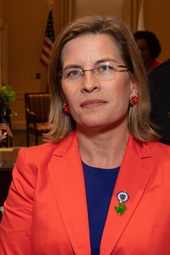
Rep. Marjorie Decker
Sponsored bills
Maddy summaryThis bill creates a new state fund called the Maternal Health Justice Fund to support and expand the doula workforce in Massachusetts. The fund, managed by the Department of Public Health, will provide scholarships to individuals pursuing doula certification and offer financial assistance to community programs and agencies focused on maternal health. To ensure quality care, the bill establishes specific training requirements for doulas, including education on health equity, implicit bias, and trauma-informed care. Additionally, the legislation defines a doula as a trained professional who offers non-medical physical, emotional, and informational support to pregnant individuals and families.
Maddy summaryThis bill updates Massachusetts law regarding the costs and terminology for obtaining transcripts of court proceedings. It changes the term "stenographer" to "transcriber" and allows parties to request either written notes or audio recordings instead of just handwritten notes. The legislation also adjusts specific fees, such as increasing the cost for additional copies and rush delivery, while removing references to "additional paper" and "at the same time." These changes aim to modernize the rules for accessing legal records and reflect current pricing for these services.
Maddy summaryThis bill restricts the sharing of Massachusetts criminal records and motor vehicle data with federal immigration authorities unless a judge issues a probable cause warrant. It also requires that any immigration interviews with people in state custody happen only with the individual's written consent and allow them to have an attorney present. Additionally, the law prohibits court and law enforcement staff from proactively notifying federal agents about the presence of immigrants in courthouses or asking victims and witnesses about their immigration status. These changes aim to limit the use of state resources for civil immigration enforcement while protecting the privacy rights of individuals in the state's justice system.
Maddy summaryThis bill updates the rules for how court transcribers charge for copies of trial notes and audio recordings. It sets specific fees for standard, rush, and electronic copies, while also establishing a lower rate for indigent individuals or their legal representatives. The legislation clarifies that when a judge or prosecutor orders a transcript, the court's administrative office will pay for it. Additionally, it requires that any police statements transcribed by a judge be shared with all parties involved in the case.
Maddy summaryThis bill restricts how Massachusetts law enforcement and courts share information with federal immigration authorities. It prevents agencies from accessing motor vehicle records or criminal offender data for civil immigration enforcement unless a judge issues a probable cause warrant. The law also requires written consent from individuals in custody before they can be interviewed by federal agents, while prohibiting officials from asking victims, witnesses, and their families about their immigration status unless required by law. Additionally, it limits court personnel from notifying federal agencies about the presence of individuals in courtrooms unless federal law mandates such notification. These changes aim to protect the privacy and legal rights of people interacting with state justice systems.
Maddy summaryThis bill updates Massachusetts state law to require health education in schools, directly affecting local school districts and their curricula. It mandates that instruction be age-appropriate and medically accurate, covering specific topics such as physical development, nutrition, mental health, and substance use prevention. The legislation also establishes a parental notification and opt-out policy for sexual education components, ensures funding is available for these programs, and clarifies that health education will not be tested on the state MCAS exam.
By Representative Decker of Cambridge, a petition (accompanied by bill, House, No. 2308) of Marjorie C. Decker, Mindy Domb and Vanna Howard relative to making firearm owners civilly liable for damage caused by lost or stolen firearms. Public Safety and Homeland Security.
Maddy summaryThis bill establishes a new Thermal Transition Trust Fund within the Massachusetts Department of Energy Resources to support the state's shift toward clean heating systems. The fund will be financed by revenues collected from existing energy-related fees and any other money specifically directed to it by the legislature. Money in the trust can only be used for expenses directly related to clean heat initiatives and the administrative costs of running the fund. The bill creates a dedicated financial mechanism to ensure resources are available for future clean energy projects without immediately spending state general funds.
Maddy summaryThis bill aims to transition Massachusetts to 100 percent clean electricity by 2035 and to clean energy for buildings and transportation by 2045. It creates a new legal chapter to define clean energy sources, explicitly excluding wood biomass and waste-to-energy from the clean electricity category. The legislation seeks to reduce pollution, lower energy costs for residents, and create local jobs while prioritizing environmental justice communities. By establishing these specific targets and definitions, the bill provides a framework for the state to meet its greenhouse gas emission limits and reduce reliance on imported fuels.