

Maddy summaryThis bill directs the Massachusetts Department of Elementary and Secondary Education to produce a report on whether non-public school and home-schooled students can voluntarily take the MCAS exam. The report must analyze the feasibility and costs of allowing these students to participate and be distributed to key state officials and legislative committees within six months. This legislation does not immediately grant access to the exam but instead requires an official study to determine if such access is practical and affordable.
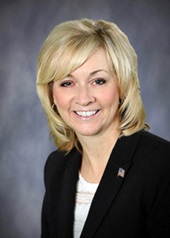
Rep. Kim Ferguson
Sponsored bills
Maddy summaryThis bill amends the composition of the Advisory Board to the Massachusetts School Building Authority by adding two new organizations to its membership. Specifically, it requires the inclusion of the Massachusetts Association of Vocational Administrators, Inc., and the Alliance for Vocational Technical Education Coalition alongside the existing Massachusetts Association of School Committees, Inc. The change aims to broaden the board's representation to include voices from vocational and technical education sectors. By updating the list of required members in state law, the legislation ensures these groups have a formal role in advising on school building projects.
Maddy summaryThis bill amends the Massachusetts education code to establish strict privacy protections for student and educator data collected by third-party technology providers. It defines specific categories of sensitive information, such as biometric data, search history, and medical records, that companies cannot use to identify individuals without explicit consent. The legislation requires operators of educational sites and applications to obtain clear permission before collecting or sharing personal data and mandates that any data shared with the state must be fully anonymized. By clarifying what constitutes private information and how it must be handled, the law aims to prevent unauthorized tracking and profiling of students and school staff.
Maddy summaryThis bill creates a new funding program within the Massachusetts School Building Authority specifically for vocational-technical education and regional vocational-technical schools. The legislation aims to improve access and capacity by directing capital investments toward infrastructure that supports industry-relevant workforce training and economic development. By establishing this dedicated tool, the bill seeks to ensure equitable access to public education and modern facilities for students pursuing technical careers.
Maddy summaryThis bill proposes establishing a universal school meal program in Massachusetts to provide free breakfast and lunch to all public school students. It would require the state to allocate funding for these meals and mandate that every school district participate in the program. The legislation aims to ensure that every child attending a public school in the Commonwealth receives nutritious food at no cost to their families.
Maddy summaryThis bill updates Nicky's Law to broaden the legal definition of "employer" for entities providing MassHealth day habilitation services to individuals with intellectual or developmental disabilities. By expanding the criteria to include organizations operating under specific department contracts, funding, or licenses, the legislation ensures these service providers are covered under existing employment protections. The change directly affects the organizations delivering these day programs and the staff who work within them, aiming to clarify their status under current state laws.
Maddy summaryThis bill requires the Massachusetts Department of Children and Families to submit an annual report on its foster parent recruitment efforts by October 31 each year. The report must be shared with state officials and made available to the public online, detailing how many new parents were recruited, the costs involved, current recruitment challenges, and the specific methods being used. By mandating this transparency, the legislation aims to provide clearer insight into the state's progress in expanding its foster care family network. The requirement takes effect on December 31, 2024, replacing an earlier version of the reporting rule.
Maddy summaryThis bill aims to improve survival rates for sudden cardiac arrest in Massachusetts by updating regulations for emergency response and public access defibrillation. It requires the state's 911 dispatch commission to include specific medical and communication experts on its advisory board and mandates that dispatch centers implement quality assurance programs for their CPR instructions. The legislation also establishes a statewide registry to help 911 operators locate Automated External Defibrillators (AEDs) and requires clear signage in buildings to indicate where these life-saving devices are located. Additionally, the bill classifies sudden cardiac arrest as a reportable disease, ensuring better tracking and data collection by the Department of Public Health. These changes collectively seek to streamline emergency responses and increase the availability of critical equipment for the public.
Maddy summaryThis bill requires public buildings in Massachusetts that are newly built, reconstructed, or remodeled on or after January 1, 2026, to include at least one universal changing station. The law defines these stations as enclosed restroom facilities accessible to people of any sex and designed for individuals of any age who need help with diapering. It expands the definition of public accommodations to include public parks and rest stops, ensuring these spaces also comply with the new requirement. The Architectural Access Board is tasked with creating specific rules to enforce this mandate by January 1, 2024.