

Maddy summaryHD 270 updates the membership structure of the Massachusetts Food Policy Council, a state advisory body focused on food policy. The bill specifies the council will have 20 members, including four legislative members (one House member, one Senate member, and two appointed by minority leaders), nine agency or expert representatives (such as agency commissioners and a soil health specialist), and seven members appointed by the governor with specific food system expertise (e.g., farmers, food distributors, and public health experts). It also adds provisions allowing council members to receive compensation under certain conditions, subject to state ethics rules. This change aims to broaden the council's representation to include more diverse voices in food policy discussions.
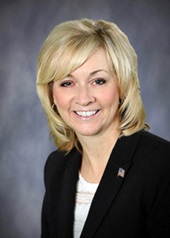
Rep. Kim Ferguson
Sponsored bills
Maddy summaryThis bill creates a legal presumption that certain contagious diseases contracted by full-time police, fire, or emergency medical service workers were incurred during their duties, if they passed required physical exams upon entry and had no pre-existing condition. It applies to diseases like COVID-19, hepatitis, tuberculosis, and HIV - those linked to exposure to blood or bodily fluids - excluding the common cold. Workers must apply within five years of leaving active service and demonstrate they regularly responded to emergency calls during their tenure. Benefits, if approved, would cover disability or death claims under existing workers' compensation laws (Chapters 32, 41, 152).
Maddy summaryH 4418 amends Massachusetts law to strengthen the Massachusetts Food Policy Council. It increases the council's membership from 18 to 20 members, adds specific positions (like the marine fisheries director and UMass food policy director), and creates a new full-time Food System Coordinator role. The coordinator will inventory state food programs, facilitate interagency collaboration, track progress on food system goals, and report to legislative committees and agencies. The bill also establishes rules for compensating council members while requiring compliance with ethics laws. This directly affects the council, state agencies involved in food policy, and the coordination of food system programs across Massachusetts.
By Representative Jones of North Reading, a petition (accompanied by bill, House, No. 613) of Bradley H. Jones, Jr., and others relative to the curriculum frameworks. Education.
Maddy summaryThis bill requires the Massachusetts Department of Higher Education to create regulations guaranteeing college credit at all state colleges and universities for students who earn a score of 3 or higher on Advanced Placement (AP) exams. It directly affects high school students taking AP courses and state institutions of higher education. The key provision mandates that state schools must accept these AP scores for credit, establishing a standardized process through new department regulations. This policy change ensures consistent credit recognition for qualifying AP exam results across all public higher education institutions in Massachusetts.
Maddy summaryH 4407 requires Massachusetts public colleges and universities to establish clear, written policies for granting college credit to high school students who earn qualifying scores on Advanced Placement exams, complete International Baccalaureate programs, or take dual enrollment courses. These policies must specify minimum score requirements, how credit applies toward degree requirements (e.g., general education or major courses), and how credits transfer between institutions, with all policies posted online for transparency. The state Department of Higher Education will review these policies every three years and report findings to the legislature. The bill also creates an Office of Early College to oversee statewide early college programs, which are partnerships between high schools and colleges allowing students to earn college credit while still in high school.
Maddy summaryH 4371 establishes a 15-member commission to study the misuse of service animals in Massachusetts, including intentional misrepresentation (e.g., falsely claiming a pet is a service animal). The commission will examine current laws, fraud prevalence, benefits for people with disabilities, and practices from other states, with a report due by April 2026. It will recommend potential policy changes, such as clarifying "service animal" definitions or creating civil penalties for fraud, and assess the feasibility of registering service animals. The bill does not create new laws but sets up a review process to inform future legislation.
Maddy summaryThis bill provides specific retirement benefits to Joanne Songy, the surviving spouse of Rutland police detective John D. Songy, who died from COVID-19 complications while on duty. It directs the Worcester regional retirement board and the state board of retirement to pay her benefits under existing laws (Chapter 32, Sections 100 and 100A), making the payments non-taxable where state law allows. The bill applies solely to this individual case, not creating new policy for other officers. It became effective May 29, 2020.
Maddy summaryHD 866 requires health insurance plans covering Commonwealth employees (active and retired) and other health benefit plans to provide comprehensive coverage for cognitive rehabilitation treatments related to acquired brain injury (ABI). The bill mandates coverage for specific therapies including cognitive rehabilitation, neurocognitive therapy, community reintegration services, and neurofeedback therapy without lifetime or unreasonable annual limits. Insurers must cover these treatments regardless of facility type (e.g., not just hospitals) and cannot apply stricter cost-sharing (like higher deductibles or copays) than for other medical benefits. This law also requires insurers to train staff on these benefits in consultation with the Brain Injury Association of Massachusetts.
Maddy summaryHD 2335 requires health insurers and Medicaid plans in Massachusetts to cover biomarker testing for patients when the test is supported by medical evidence, such as FDA approvals, CMS guidelines, or nationally recognized clinical practice guidelines. It directly affects patients needing personalized treatment (e.g., cancer care) and insurers, mandating coverage for diagnosis, treatment, or monitoring of diseases. Key provisions include strict timelines for prior authorization decisions (72 hours standard, 24 hours in emergencies), limits on requiring multiple biopsies, and clear processes for patients to appeal coverage denials. The bill ensures access to evidence-based testing without unnecessary delays or disruptions in care.