

Maddy summaryThis bill expands employment protections for domestic violence victims in Massachusetts by specifically covering contract workers who are currently excluded from existing leave laws. It mandates that employers allow these workers to take up to 15 days of leave within a 12-month period to seek medical care, legal assistance, housing, or protective orders related to abuse. While the bill grants the right to take this time off, it leaves the decision regarding whether the leave is paid or unpaid entirely to the employer's discretion. The legislation also outlines requirements for providing notice to employers and specifies acceptable documentation to verify the need for leave.
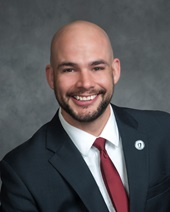
Rep. Joe McKenna
Sponsored bills
Maddy summaryThis bill expands workplace protections for domestic violence victims by granting them up to 15 days of leave per year specifically to address abuse. It directly affects contract workers, who are individuals performing services for an employer but are not classified as traditional employees under current state law. The leave can be used for activities such as seeking medical care, obtaining legal assistance, securing housing, or attending court proceedings related to the abuse. While the bill mandates this time off, it leaves the decision regarding whether the leave is paid or unpaid entirely to the employer. Additionally, the law requires workers to provide advance notice unless there is an immediate threat to their safety, in which case they must notify their employer within three workdays.
By Representative Sullivan-Almeida of Abington, a petition (accompanied by bill, House, No. 2277) of Alyson M. Sullivan-Almeida and others relative to unborn victims of Down Syndrome. Public Health.
By Mr. Fattman, a petition (accompanied by bill, Senate, No. 2386) (subject to Joint Rule 12) of Ryan C. Fattman and Joseph D. McKenna for legislation to establish a sick leave bank for Matt Blazes, an employee of the Worcester County Sheriff's Office. Public Service.
By Representative Durant of Spencer, a petition (subject to Joint Rule 12) of Peter J. Durant and others relative to eligibility for the emergency housing assistance program. Housing.
Maddy summaryThis bill updates Massachusetts medical marijuana laws to clarify who qualifies for access. It expands the list of recognized debilitating medical conditions to include post-traumatic stress disorder and opioid use disorder while maintaining the option for doctors to recommend other conditions. Additionally, it allows veterans receiving care at federal facilities to qualify as patients if their official medical reports indicate a debilitating condition. These changes directly affect current and potential patients, healthcare providers, and the state's medical marijuana regulatory commission.
Maddy summaryThis bill, introduced by Representative James K. Hawkins, aims to update regulations regarding the use of pesticides in Massachusetts. It directly affects agricultural operations, pest control companies, and individuals who apply chemical treatments to manage insects or weeds. The legislation seeks to establish clearer standards for pesticide application, storage, and disposal to ensure public safety and environmental protection. By modernizing existing rules, the bill intends to provide a more robust framework for managing chemical substances across the state.
Maddy summaryThis bill seeks to amend the Massachusetts Constitution to clarify how "fair share" funds, collected from high-income earners, must be spent. It requires that any new money allocated for these programs be added to existing budgets rather than replacing current funding levels. The change ensures that the state cannot use these specific revenues to cut other appropriations in the same fiscal year. This provision directly affects the state's budgeting process and the financial management of programs funded by the high-income tax.
By Representatives McKenna of Webster and Lipper-Garabedian of Melrose, a petition (subject to Joint Rule 12) of Joseph D. McKenna, Kate Lipper-Garabedian and others relative to carbon monoxide alarms in schools. Education.
By Mr. Ashe of Longmeadow, a petition (accompanied by bill, House, No. 3101) of Brian M. Ashe and others for the annual issuance of a proclamation by the Governor designating the last day of February as rare disease day. State Administration and Regulatory Oversight.