

Maddy summaryThis bill establishes standardized procedures for attaching broadband equipment to utility poles, directly affecting broadband providers, utility pole owners, and contractors. It creates a "One Touch Make Ready" process where a single contractor can handle all necessary pole modifications for simple attachments (like adding fiber lines), eliminating delays from multiple separate work orders. The bill defines key terms like "assigned space" and "common space" to clarify pole usage rights and ensures safety zones remain protected during installations. These changes aim to accelerate broadband network deployment by simplifying the pole attachment process.
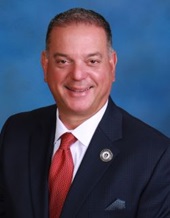
Rep. Angelo Puppolo
Sponsored bills
Maddy summaryThis bill expands access to family, friend, and neighbor-provided childcare by establishing a payment structure for caregivers who provide care in a child's home or are relatives, ensuring voucher funds cover the full daily value at an hourly rate. It sets a minimum hourly wage for these caregivers equal to the state's minimum wage and requires their care to be licensed unless reimbursement reverts to original payment levels. The legislation also creates a state advisory committee to gather input on improving support, resources, and oversight for these caregivers over a one-year period.
Maddy summaryThis bill amends an existing energy conservation law by removing an exception for energy-efficient installations completed before July 1, 1997. The change eliminates a grandfather clause that previously exempted older installations from current energy conservation standards. It directly affects property owners and contractors who installed energy-efficient systems before that date, requiring them to comply with current standards. The key mechanism is a technical deletion of specific words from the statute, narrowing the scope of the exemption. This is a procedural update to existing law with no new requirements or funding.
Maddy summaryHD 2223 establishes the Whole Child Grant Program to fund public school districts in Massachusetts for student and educator wellbeing. The bill creates a dedicated fund administered by the Department of Elementary and Secondary Education, providing $150 per pupil for districts with 20%+ low-income students, $100 for 10-20%, and $50 for under 10%. Funds must be used for specific, allowable purposes including hiring school nurses, counselors, social workers, and psychologists (following state and national staffing recommendations), implementing mental health programs, and developing policies on student safety and technology use. School districts must submit plans detailing fund allocation, agree to supplement existing funding (not replace it), and report annually on expenditures and progress. The program directly affects all public school districts, with increased support targeted to those serving higher concentrations of low-income students.
Maddy summaryHD 1243 requires private gas and distribution companies to increase transparency when awarding construction contracts over $100,000 for work on public ways. Companies must notify all qualified bidders within two business days of their decision, including the award criteria, bidder score, and winning amount. They must also post the contractor name, project location, and work duration on their website. This applies to all such contracts except single-bid situations or when disclosure would harm law enforcement, public interest, or commercial interests. The state department enforces these requirements.
Maddy summaryThis bill establishes a payment structure for family, friend, and neighbor (FFN) childcare providers - those offering unlicensed care in homes or caring for relatives - to ensure families using childcare vouchers or other funding can fully access their voucher value. It mandates a minimum hourly rate equal to the state’s minimum wage and requires the childcare department to create this structure through public hearings. The bill also creates a 60-day advisory committee with diverse representation (including caregivers, advocates, and community groups) to hold public hearings and address FFN care challenges like application processes, resource access, and quality standards. The committee must report findings to state legislators within a year, focusing on improving support for FFN caregivers and families.
Senate, March 12, 2026 -- The committee on Senate Ways and Means, to whom was referred the Senate Bill banning the retail sale of dogs, cats, and rabbits in pet shops (Senate, No. 2720),- reports, recommending that the same ought to pass with an amendment substituting a new draft entitled "An Act promoting pet equity, treatment and safety" (Senate, No. 3014).
Maddy summaryHD 183 establishes an annual three-day "free snowmobile weekend" in Massachusetts, allowing non-residents to operate snowmobiles on public lands and private lands with agreements from the Snowmobile Association of Massachusetts (or its affiliated clubs) without needing a Massachusetts registration or Trail Pass. This applies only during a mutually agreed-upon weekend in the winter season, provided non-residents show proof of valid registration from any U.S. state or Canadian province. The bill directly affects non-resident snowmobilers seeking to use Massachusetts trails during this designated period. It requires coordination between the Massachusetts Office of Law Enforcement and the Snowmobile Association to set the specific dates each year.
Maddy summaryThis bill prohibits the sale of fur products made from animals raised on fur farms (such as mink or fox) within Massachusetts. It directly affects sellers of new fur products, including retailers and online businesses operating in the state, but excludes used fur items, religious items, and products legally sold under federal law. The law defines "fur product" broadly (covering clothing, accessories, and home goods) but exempts items converted to leather or made from certain animals like sheep or deer. Sellers violating the ban face civil penalties of $500-$5,000 per product, enforced by the Attorney General, with rules to be issued within six months. The law takes effect one year after passage.
Senate November 19, 2025 -- The committee on Environment and Natural Resources, to whom was referred the petitions (accompanied by bill, Senate, No. 618) of Jason M. Lewis, Michael O. Moore, Michael D. Brady, James K. Hawkins and other members of the General Court for legislation to ban the retail sale of dogs, cats, rabbits, and guinea pigs in pet shops; (accompanied by bill, Senate, No. 650) of Patrick M. O'Connor, Michael O. Moore, Michael D. Brady, James K. Hawkins and other members of the General Court for legislation banning the retail sale of dogs, cats, and rabbits in pet shops; and (accompanied by bill, Senate, No. 651) of Patrick M. O'Connor, Michael O. Moore, Marcus S. Vaughn, Michael D. Brady and other members of the General Court for legislation to ban the retail sale of dogs, cats, and rabbits in new pet shops, report the accompanying bill (Senate, No. 2720).