

Maddy summaryThis bill updates Massachusetts state law to require most public meetings to be held as hybrid events, allowing citizens to attend both in person and online. It mandates that meeting notices be posted at least 48 hours in advance on official websites and in public buildings, including details on how to join remotely. The legislation defines hybrid meetings as those conducted simultaneously in a physical location and via internet technology, while also establishing specific rules for emergency situations and hardship waivers.
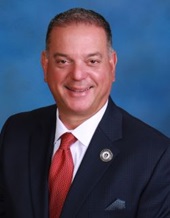
Rep. Angelo Puppolo
Sponsored bills
By Representative Roy of Franklin, a petition (accompanied by bill, House, No. 3108) of Jeffrey N. Roy and others for legislation to promote American manufacturing by requiring state or municipal agencies or authorities to give preference to materials and goods made in the United States. State Administration and Regulatory Oversight.
By Representative Xiarhos of Barnstable, a petition (accompanied by bill, House, No. 2422) of Steven George Xiarhos and others relative to the security of exercise equipment and free weights in correctional institutions. Public Safety and Homeland Security.
Maddy summaryThis bill prohibits licensed pet shops in Massachusetts from selling or offering dogs, cats, and rabbits for sale. It allows these businesses to display animals on behalf of rescue or shelter organizations, provided the shop does not own the animals. Local governments retain the authority to impose additional restrictions or bans on the sale of these pets. The law will take effect 90 days after it is passed.
By Representative Puppolo of Springfield, a petition (accompanied by bill, House, No. 2389) of Angelo J. Puppolo, Jr., relative to swimming pool alarms. Public Safety and Homeland Security.
Maddy summaryThis bill proposes to prohibit the retail sale of dogs, cats, and rabbits in new pet shops in Massachusetts. It achieves this by amending state laws to ban licensed pet shops from selling or offering these specific animals for adoption. The legislation directly affects businesses that operate as new pet shops and would prevent them from acting as sources for these pets. By restricting sales in this manner, the bill aims to reduce the number of animals sold in commercial settings.
Maddy summaryThis bill amends Massachusetts state law to prohibit new pet shops from selling dogs, cats, and rabbits. Under the proposed rules, existing pet shop owners who already hold a Class A license from the Department of Agricultural Resources may continue selling these animals, but only from their licensed locations. The legislation does not restrict local governments from passing their own bans on the sale of these pets. Additionally, the bill declares itself an emergency measure to take effect immediately.
Senate, 13, 2024 -- The committee on Environment and Natural Resources, to whom was referred the petitions (accompanied by bill, Senate, No. 549) of Patrick M. O'Connor, Adam Scanlon, Jack Patrick Lewis, Michael O. Moore and other members of the General Court for legislation to ban the retail sale of dogs, cats, and rabbits in new pet shops; (accompanied by bill, Senate, No. 550) of Patrick M. O'Connor, Angelo J. Puppolo, Jr., Steven S. Howitt, John F. Keenan and other members of the General Court for legislation banning the retail sale of dogs, cats, and rabbits in pet shops; and (accompanied by bill, House, No. 826) of Natalie M. Higgins, Kimberly N. Ferguson and others for legislation to further regulate the retail sale of certain domestic animals in new pet shops, report the accompanying bill (Senate, No. 2820).
By Representative Soter of Bellingham, a petition (accompanied by bill, House, No. 2952) of Michael J. Soter and others relative to the amount and valuation for eligibility for a tax exemption on commercial property. Revenue.
Maddy summaryThis bill creates a new state fund to support the Quabbin Reservoir Watershed Communities with money specifically for municipal services, public safety, and local development. It establishes a new fee on water usage from the Massachusetts Water Resources Authority, directing at least 90% of the collected revenue into this dedicated trust. The law mandates that the majority of the fund's spending go directly to these communities for operations and capital projects, while limiting the portion available to non-profits and other specific initiatives. Additionally, the bill increases the minimum annual payment in lieu of taxes for towns holding Quabbin land and expands the number of board members representing Connecticut River Basin interests.